
Black Aura Meaning: Protection, Mystery & Hidden Strength
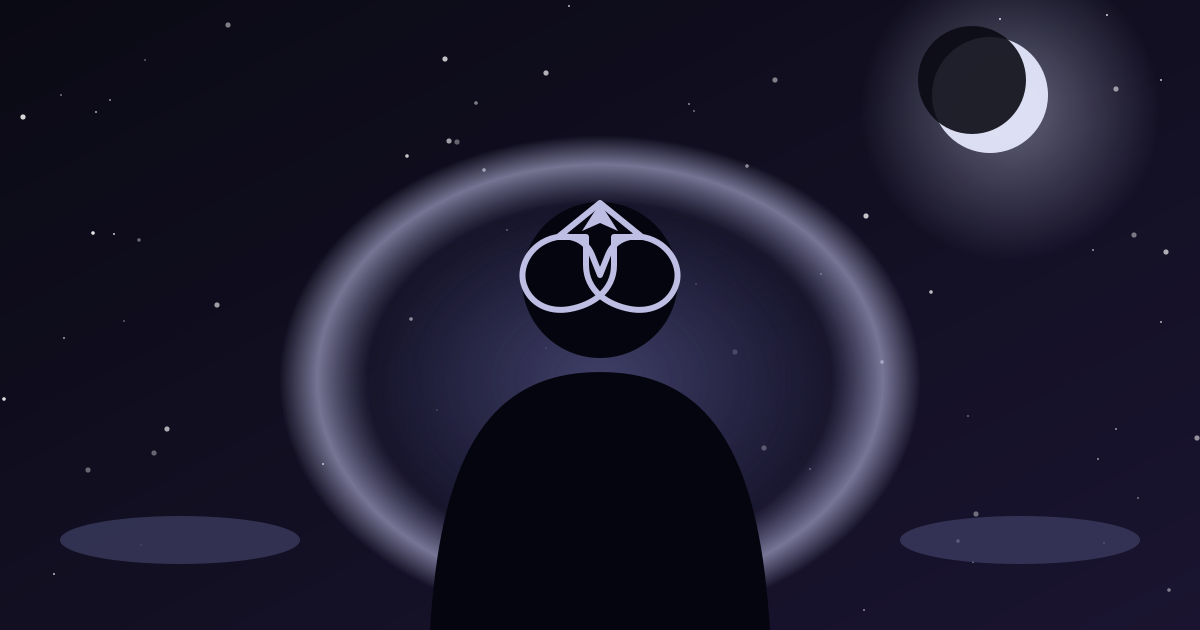
Black is the color of the night sky, of ink, of the pause between one chapter and the next. In aura tradition, a black aura is the most misunderstood color of all — feared at first glance, but experienced readers know it usually tells a subtler story: someone protecting their energy, processing something heavy, or quietly gathering strength for what comes next.
Aura colors are understood as reflections of your emotional and energetic state rather than fixed labels — they shift with mood, season, and life chapter. Black appearing as your dominant aura suggests that protection, introspection, and inner transformation are central themes for you right now. Let's explore what that means.
The Black Aura Personality
Black-aura individuals are traditionally described as private, perceptive, and profoundly self-contained. They are the people who notice everything and say little — the friends who listen to the whole story before offering a single sentence, the colleagues who stay calm while everyone else is spinning out, the souls who carry weight quietly and rarely ask anyone to carry theirs.
There is a magnetic quality to black auras. Like the night sky, they draw the eye while revealing nothing — which is exactly the point. Black-aura people tend to be selective about who gets access to their inner world, and that selectivity reads as mystery. They are often drawn to depth: psychology, philosophy, the occult, art, music made in dark rooms. Small talk bores them; they would rather discuss the meaning of a dream, the logic of a loss, or the architecture of a grudge.
They also possess a distinctive resilience. In aura tradition, black is the color of the person who has survived something — and not only survived it, but extracted wisdom from it. These are the people who rebuilt after heartbreak, who started over after failure, who walked through grief and came out quieter, wiser, and strangely unshakable.
Shades of Black: Velvet, Smoky & Shimmering
Not all black carries the same message, and aura readers distinguish several expressions. Rich velvet black — deep, even, and somehow soft — is considered the healthiest form: strong boundaries, healthy privacy, and emotions being processed in a contained, deliberate way. This is the black of the person who is doing the inner work.
Smoky or ash-gray black is traditionally read as depletion — burnout, overwhelm, or sadness that has lingered too long without relief. It is the aura of the person who keeps going on fumes, the one who answers "I'm fine" when they are anything but. Shimmering black, threaded with silver or violet light, is read as transformation in progress: old versions of the self dissolving, something new not yet formed — the cocoon phase.
Heavy, murky black that clings close to the body, in the tradition, signals emotions that feel stuck: unprocessed grief, long-held resentment, or exhaustion that rest alone won't fix. It is treated as a signal to pay attention to your inner life, never as a judgment of your character.
Strengths of the Black Aura
Black's gifts are the quiet, structural kind — the steel frame inside the building. Emotional resilience: black auras absorb impact that would flatten others and keep standing. Discernment: they see through performance quickly; flattery, manipulation, and empty reassurance simply do not work on them. Privacy as power: they understand that not everything needs an audience — their inner life is a walled garden, tended in silence.
Capacity for depth: where others skim, black auras dive. They can sit with difficult feelings — their own and others' — without flinching, which makes them remarkable confidants. Transformation skill: having rebuilt themselves before, they trust the process of becoming; endings don't terrify them the way they terrify everyone else.
In work, black-aura strengths shine in roles that reward discretion and depth: research, investigation, counseling, psychology, crisis work, strategy, art, writing, and anything that requires sitting with complexity until it yields. The black-aura professional is the one handed the sensitive case, the difficult client, the problem nobody else wants to touch.
Challenges and Growth Edges
Black's shadow is the cost of the wall. Emotional isolation: the same boundaries that protect can also imprison. Black auras can become so skilled at self-containment that they forget how to let anyone in — and loneliness behind a wall still hurts. Rumination: a mind that goes deep can also go in circles; black auras are prone to replaying the same scene, the same conversation, the same loss, on a loop.
Heaviness and withdrawal: when black deepens into the smoky, depleted shades, it often comes with pulling away from people, pleasure, and life itself — canceling plans, going quiet, disappearing into routines that numb rather than restore. Distrust as default: their superb discernment can curdle into assuming the worst; not everyone is performing, and not every kindness has an agenda.
If your black feels heavy rather than velvety, the tradition prescribes gentle re-entry: one honest conversation, one small pleasure reclaimed, sunlight and movement, and — when the weight is grief-shaped — naming the grief instead of carrying it silently. Professional support is always wise when low feelings persist; the spiritual and the clinical are teammates, not rivals.
Nurturing Your Black Aura
If black is your color — or the season you're moving through — a few practices resonate especially well. Nighttime rituals: black energy is lunar energy; journaling after dark, moon-gazing, and quiet evening walks align with its rhythm. Expressive release: write the unsent letter, make the dark art, playlist the heavy feelings — black auras need an outlet for what they won't say out loud. Protective stones: black tourmaline, obsidian, onyx, and hematite are traditional companions for black-aura work.
Boundaries with doors, not just walls: practice letting one trusted person all the way in — a friend, a therapist, a journal that takes everything. Light in measured doses: bright, loud positivity can feel like sandpaper to black auras; instead, choose small genuine joys — one good meal, one honest laugh, one hour of real rest — and let the light accumulate quietly.
Black Auras and Protection Work
Black is the traditional color of the shield. In aura lore, the black aura functions as an energetic boundary — a natural ward against other people's moods, demands, and chaos. Empaths and highly sensitive people often report their aura going dark in crowded, draining environments: the system raising the drawbridge. Far from a malfunction, this is described as the aura doing its job.
This protective quality is why black-aura people are so hard to rattle. Criticism slides off, drama goes around them rather than through them, and they can walk through emotionally messy situations with their own center intact. If this sounds like you, the tradition suggests honoring the shield consciously: visualization of a dark, gleaming boundary at the start of the day, cleansing rituals (salt baths, smoke clearing, time alone) after heavy interactions, and — critically — remembering to lower the shield at home, where love is waiting.
The paradox of the black aura is that its protection is most needed by the very people it also starves: the wall keeps out the harm, but it keeps out the help too. Learning to open the gate selectively is the black aura's master class.
Black in Relationships
As partners, black auras are the slow burn: guarded, intense, and profoundly loyal once trust is earned. They do not fall fast — they audit, observe, and test, sometimes frustrating partners who read caution as disinterest. It isn't disinterest. It's due diligence from someone who loves completely or not at all.
Once committed, black-aura partners are all in: fiercely protective, deeply attentive to what actually matters, and honest to the point of discomfort. Their partners often describe feeling truly seen — the black aura's discernment, turned lovingly toward one person, becomes a kind of x-ray empathy that notices the unspoken and remembers the forgotten.
The growth edge in love is vulnerability. Black auras can love someone for years without ever fully exposing their wounds, fearing that being fully known means being left. The tradition's counsel: the right partner doesn't leave when the wall comes down — they were waiting for the door all along. And watch for the withdrawal reflex: going silent during conflict punishes the person who loves you; saying "I need space, I'll be back at eight" honors both the shield and the bond.
Frequently asked questions
What does a black aura mean?
A black aura is traditionally associated with mystery, protection, and hidden strength — a guarded inner world and a resilient spirit. It can signal someone processing deep emotions or consciously shielding their energy, rather than anything negative about their character.
Is a black aura bad?
Not necessarily. Aura tradition reads black as the most misunderstood color: it often points to emotional processing, a need for rest, or protective boundaries. Experienced readers treat it as a season of the soul, not a verdict on the person.
Can a black aura change?
Yes. Aura colors are understood to shift with mood, season, and life chapter. Black auras are traditionally seen as temporary states that lift as emotions are processed, rest is taken, and boundaries are honored.
Are black auras rare?
A dominant black aura is considered one of the rarer sightings in aura reading — most people encounter it during intense life chapters rather than as a lifelong signature color.
What does a black aura mean in love?
In relationships, black auras are traditionally read as cautious lovers with deep emotional depths — fiercely loyal once trust is earned, but slow to open up. They need partners who respect their pace and their privacy.
Keep exploring

What Is My Aura Color? How to Discover Your Dominant Aura
What is my aura color? Discover your dominant aura through guided self-reflection questions, a quick 7-question check-in and full color meanings explained.
Read the meaning →
How to See Your Aura: 7 Techniques for Beginners
Learn how to see auras with 7 beginner-friendly techniques: hand gazing, peripheral vision, mirror work, partner exercises, candlelight and meditation.
Read the meaning →
Purple Aura Meaning: Spirituality, Intuition & Psychic Gifts
What does a purple aura mean? Explore the purple aura personality — deep spirituality, intuition and psychic sensitivity — plus shades, strengths, challenges, and relationships.
Read the meaning →
Red Aura Meaning: Passion, Power & Grounded Energy
What does a red aura mean? Discover the red aura personality of courage, vitality and leadership, plus its strengths, challenges, shades and love life.
Read the meaning →