
Indigo Aura Meaning: Intuition, Empathy & Spiritual Wisdom
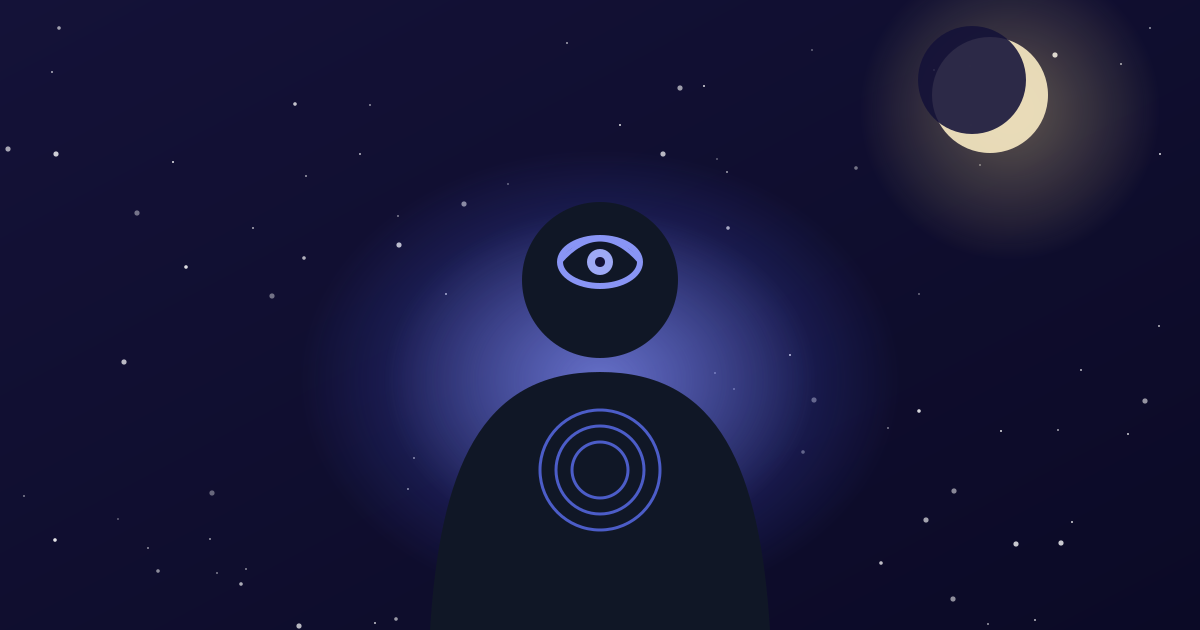
Indigo is the color of twilight just before the stars take over — deeper than blue, richer than purple, the shade of the ocean's floor and the night sky's farthest reach. In aura tradition, an indigo aura carries exactly those depths: intuition, empathy, and a spiritual wisdom that feels older than the person carrying it. Indigo is the traditional color of the third eye, the center associated with perception beyond the ordinary senses — and it is the aura color of the seers, the empaths, and the quiet ones who always know.
Aura colors are understood as reflections of your emotional and energetic state rather than fixed labels — they shift with mood, season, and life chapter. Indigo appearing as your dominant aura suggests that intuition, inner knowing, and empathic sensitivity are especially active for you right now. Think of it as the energetic equivalent of deep water: still on the surface, vast and alive underneath. Let's explore what that means.
The Indigo Aura Personality
Indigo-aura individuals are traditionally described as the old souls — people who seem to arrive in the world already wise. They are the friend who knew what you were going to say before you said it, the colleague who reads a room in seconds, the person strangers inexplicably confess things to. Indigo energy is perceptive — it takes in far more than the eye shows, registering tone, micro-expression, and atmosphere the way others register words.
These are deeply honest people with a near-physical allergy to pretense. Indigo auras don't just dislike small talk; they seem to experience it as static. They want the real conversation — the grief, the dream, the fear, the hope nobody else will say out loud. This makes them magnetic to people carrying heavy things and slightly intimidating to people hiding heavy things. There's a stillness to indigo that other colors lack: indigo doesn't perform, compete, or chase. It watches, understands, and speaks only when it matters.
Indigo is also considered the mystic's aura. Counselors, healers, writers, researchers, artists, and spiritual teachers — indigo energy flows naturally toward work that involves depth, truth, and the inner life. There's a contemplative quality to healthy indigo auras: a love of solitude, a rich dream life, and the sense that the most important things happen quietly. Read all of this as spiritual exploration and entertainment, of course — an indigo aura doesn't grant anyone special powers, but it does describe a way of being that values depth over noise.
Shades of Indigo: From Royal to Dark Ink
Not all indigos carry the same message, and aura readers distinguish several shades. Bright royal indigo is the fullest expression — strong intuition, spiritual awareness, and a clear inner compass. This is the indigo of the natural counselor: the person whose hunches keep turning out right and whose quiet advice changes lives.
Soft denim and periwinkle carry a gentler message, traditionally linked to calm empathy, tenderness, and quiet knowing. If you've been overwhelmed and notice this lighter indigo in your reading, the tradition treats it as a good sign — your sensitivity is settling into its healthy, restful register rather than its overloaded one. Deep ink and midnight indigo suggest profound emotional depth — the old-soul quality at full power, a capacity to sit with mystery, grief, and the unanswerable without flinching.
Murky, heavy, or clouded indigo, by contrast, is read as the classic shadow of this color: deep sensitivity under strain. Empathic overwhelm, too many absorbed emotions, withdrawal, or a heaviness that feels like carrying weather. It's not a verdict; it's a signal. The indigo tradition treats murky shades as an invitation to set boundaries, name what's actually yours versus what you've picked up from others, and give the deep water time to clear.
Strengths of the Indigo Aura
Indigo's gifts are the quiet, life-changing kind that people remember forever. Intuition: indigo auras know things before the evidence arrives — the job offer that feels wrong, the stranger who feels safe, the decision that lands before the reasoning does. Their track record with hunches is what earns them the "wise friend" title. Empathy: they don't just understand feelings; they feel them in the room — which makes them extraordinary listeners, friends, and healers.
Depth of perception: indigo energy sees through surfaces — the hidden motive, the unspoken need, the truth behind the story. This makes indigo people hard to fool and easy to trust, because they deal in what's actually there. Integrity and honesty: their allergy to pretense runs both ways — they are famously, sometimes uncomfortably, honest about themselves too. Spiritual depth: indigo auras are drawn to meaning — the big questions, the inner life, the practices that deepen rather than distract.
In work, indigo strengths shine in counseling, healing arts, writing, research, teaching, art, and any role where perception, honesty, and depth meet. Indigo-aura people make exceptional guides and creators — not because they're the loudest voice, but because they're the ones who see what's really going on.
Challenges and Growth Edges
Indigo's shadow is the cost of feeling so much and seeing so clearly. Empathic overload: the same sensitivity that makes indigo gifted can also flood them — absorbing the room's emotions until they can't tell which feelings are theirs. Crowds, conflict, and crisis can leave them drained in ways that look like exhaustion but feel like drowning in other people's weather.
Boundary trouble is the classic indigo edge in aura tradition: they know what everyone needs and forget to ask what they need. Saying no can feel like betrayal to an empath, so they say yes until the deep water turns murky. Withdrawal and melancholy is another trap — indigo auras can retreat into solitude not to recharge but to hide, turning healthy alone time into a cave. And there's the burden of knowing: seeing clearly can be lonely. Indigo people sometimes watch people they love walk into obvious mistakes and have to learn the hardest lesson of all — that knowing is not the same as being heard.
If your indigo feels heavy or clouded, the tradition prescribes the empath's basics: name which feelings are yours, limit exposure to emotional storms that aren't yours to weather, spend time in nature or with your body instead of your thoughts, and let solitude be restoration rather than escape. Clarity returns when the boundaries do.
Nurturing Your Indigo Aura
If indigo is your color — or the energy you want to cultivate — a few practices resonate especially well. Journal the inner life: indigo insight sharpens when it's written down — dreams, hunches, the feeling you can't explain. A journal turns scattered knowing into visible patterns. Protect your solitude: indigo recharges alone, and it needs to be real solitude — not scrolling, not background noise, but actual quiet with your actual thoughts.
Practice the boundary ritual: before entering emotionally loud spaces, visualize what the tradition calls your "own weather" — your feelings, your energy, distinct from everyone else's. It's a symbolic practice, but empaths swear by the clarity it brings. Move your awareness into your body: walking, swimming, stretching, anything physical — indigo lives so much in the head and heart that the body becomes the anchor that keeps sensitivity from becoming overwhelm.
Feed the third eye with beauty: deep blue and indigo surroundings, candlelight, star-gazing, art that moves you — color-therapy circles have long paired indigo with environments that feel vast and quiet. Honor your dreams: indigo lore ties vivid dreams to an active third eye — keeping a dream journal by the bed turns the night's strange cinema into material for the waking mind. And above all, trust the knowing without needing to prove it. Indigo's greatest gift is wasted on arguments; it's meant for guidance.
Indigo Auras and Intuition
Indigo auras are said to be the natural intuitives of the spectrum — the ones whose gut feelings have a track record. In aura tradition, strong indigo often accompanies a particular style of knowing: not the loud, certain kind, but the quiet, persistent kind. The hunch that won't leave. The sense about a person that arrives before the introduction. The dream that answers the question you fell asleep asking.
This intuitive quality shows up in ordinary life too. The indigo-aura friend is the one you call when something feels off and you can't explain why — they can usually name it. The indigo parent seems to know which kid needs attention without being told. Treat all of this as spiritual exploration and entertainment, of course — an indigo aura doesn't make anyone infallible, and hunches deserve the same honest checking as anyone else's. But the indigo tradition has a practical suggestion: start small. Notice the hunch, write it down, check it later. The track record builds the trust.
Indigo intuition grows on attention, not effort. The practice is simple: get quiet, notice the first impression, and stop overriding it with noise. Indigo was never meant to shout; it was meant to be heard.
Indigo in Relationships
As partners, indigo auras are loyal, deeply honest, and quietly intense — the ones who want the soul, not the performance. They remember everything that matters, sense what their partner needs before it's asked, and bring a depth to love that makes it feel fated rather than casual. Their partners often describe the relationship as seen — a word that matters more than it sounds.
The growth edge in love is communication. Indigos sense so much that they sometimes forget other people don't — expecting a partner to "just know" what they need, then withdrawing when they don't. The indigo-aura lesson in relationships: say it out loud. The depth you offer deserves a partner who meets you there, and meeting you there starts with telling them where "there" is. And honor the honesty contract — indigo's gift of truth-telling only works when it's offered with the tenderness it demands from others.
Frequently asked questions
What does an indigo aura mean?
An indigo aura is traditionally associated with deep intuition, empathy, and spiritual wisdom. Indigo-aura people are often described as the old souls and natural empaths — quiet, perceptive, honest, and drawn to meaning beneath the surface.
Is an indigo aura rare?
In aura-reading lore, indigo is considered one of the rarer dominant aura colors, usually described as appearing in people with unusually strong intuition and empathic sensitivity. It is treated as a meaningful, welcome color rather than a lucky or unlucky one.
What chakra is the indigo aura connected to?
Indigo is traditionally connected to the third-eye chakra — the energy center of intuition, perception, and inner vision. In aura tradition, bright indigo suggests this center is active, expressing as strong gut feelings, vivid dreams, and a knack for reading people and situations.
What does a dark or murky indigo aura mean?
Murky or heavy indigo is traditionally read as deep sensitivity under strain — empathic overwhelm, emotional heaviness, or too many unprocessed feelings. It is treated as a signal to set boundaries and rest, not a verdict on your character.
What does an indigo aura mean in love?
In love, indigo auras are traditionally seen as loyal, deeply honest partners who crave emotional truth and soulful connection. Their growth edge is communication — saying their needs out loud instead of expecting a partner to sense them the way they sense everyone else.
Keep exploring

Blue Aura Meaning: Calm, Intuition & Emotional Depth
What does a blue aura mean? Explore the calm, intuitive blue aura personality: its strengths, challenges, shades from sky blue to indigo, and relationships.
Read the meaning →
Purple Aura Meaning: Intuition, Spirituality & Mystical Energy
What does a purple aura mean? Explore the purple aura personality — intuition, spirituality, and mystical wisdom — plus shades, strengths, challenges, and relationships.
Read the meaning →
What Is My Aura Color? How to Discover Your Dominant Aura
What is my aura color? Discover your dominant aura through guided self-reflection questions, a quick 7-question check-in and full color meanings explained.
Read the meaning →
How to See Your Aura: 7 Techniques for Beginners
Learn how to see auras with 7 beginner-friendly techniques: hand gazing, peripheral vision, mirror work, partner exercises, candlelight and meditation.
Read the meaning →