
Lavender Aura Meaning: Calm, Imagination & Gentle Intuition
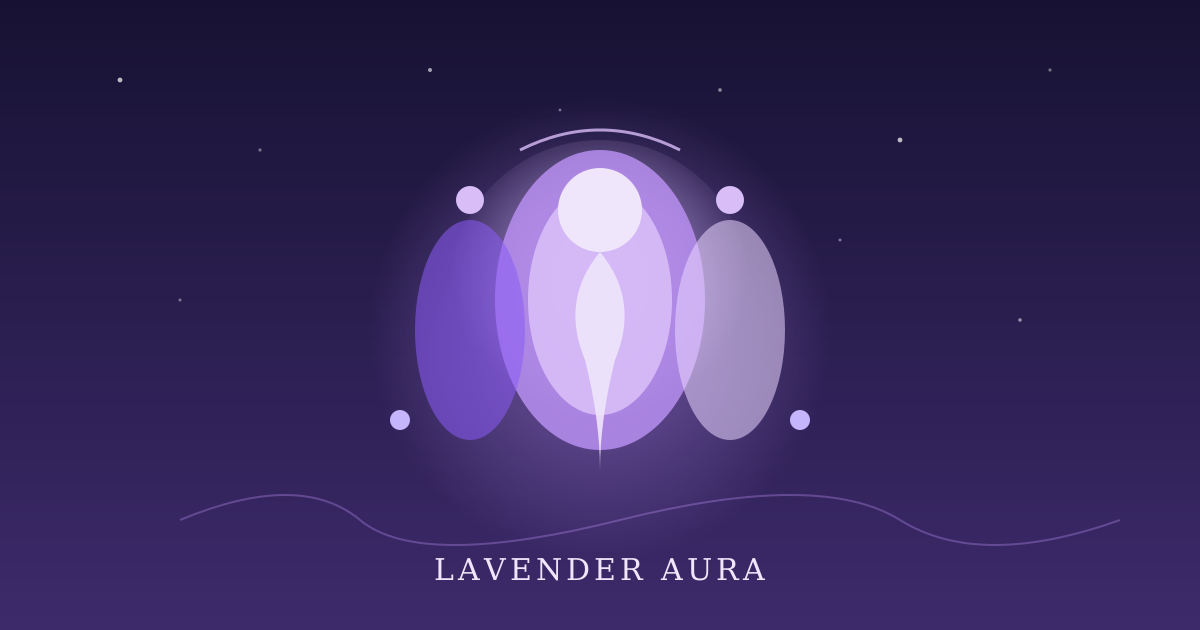
Lavender is the color of the pause between two breaths. In aura tradition, it sits at the softest edge of the violet family — purple with the intensity turned down and the light turned up. A lavender aura is read as the energy of someone whose inner life is vivid and tender at the same time: a person who daydreams in color, notices the mood of a room before anyone speaks, and carries a quiet calm that other people borrow without realizing it. Where a purple aura goes deep and mysterious, a lavender aura floats — lighter, gentler, and more open to the air.
Aura colors are understood as reflections of your emotional and energetic state rather than fixed labels — they shift with mood, season, and life chapter. Read everything here as spiritual exploration and entertainment. A lavender aura appearing as your dominant field suggests that imagination, sensitivity, and peaceful reflection are central themes for you right now. Let us explore what that means, shade by shade.
The Lavender Aura Personality
Lavender-aura individuals are traditionally described as the dreamers who make a room feel softer just by entering it. They are the friend who remembers the exact song playing during a conversation years ago, who keeps a journal full of half-finished stories, and who can sit in comfortable silence without reaching for a phone. There is a quality of stillness to lavender energy — not emptiness, but a rich quiet, the way a field of lavender smells stronger when you stop and breathe it in.
That stillness is paired with a vivid imagination. Lavender-aura people tend to live partly in an inner world of images, stories, and possibilities, and that inner world is not an escape hatch so much as a workshop. Ideas arrive there first: the novel, the garden design, the kind thing to say to a struggling friend, the career change that takes three years to name. Friends often describe lavender people as gentle but surprisingly original — their creativity does not announce itself loudly, it simply appears, fully formed, like a flower opening overnight.
There is also a deep sensitivity running through lavender energy. Lavender-aura people notice subtleties others miss: a shift in someone's tone, the heaviness in a room after bad news, the way light changes at dusk. This makes them natural listeners and peacemakers, the person friends call when they need to be heard rather than fixed. Their gentleness is not weakness; it is attention, practiced so long it looks effortless.
Lavender Aura Shades and What They Mean
Like every aura color, lavender is read in shades, and the shade changes the story. Bright, clear lavender — pale violet with a silvery glow — is traditionally read as a season of peaceful creativity: new ideas flowing easily, restful sleep, a meditation practice deepening, a heart opening gently after a hard chapter. It is calm energy with a sparkle in it, and it usually arrives when someone feels safe enough to dream again.
Deep lavender, leaning toward violet and lilac, suggests a more spiritual season: intuition sharpening, dreams growing vivid, an interest in the mystical or the unseen. This is lavender with depth — a person exploring the quieter questions of life, not in crisis but in curiosity. Deep lavender is often associated with inner work that has no deadline: journaling, prayer, long walks, and the slow sorting of what matters.
Pale, almost-white lavender sits closest to white and is read as lavender's purest face: peace, innocence of intention, and a heart uncluttered by resentment. Someone showing pale lavender may be healing, forgiving, or simply resting well. And cloudy or grayish lavender — the color dulled, as if seen through fog — is traditionally read as imagination tangled with avoidance: daydreams replacing decisions, a truth being postponed, or exhaustion masquerading as calm. The suggested response is not alarm but one small concrete step: answer the email, make the call, take the walk, and watch the color clear.
Is a Lavender Aura Rare?
Lavender is considered an uncommon dominant aura color, and the tradition gives a gentle reason: holding a lavender field takes a life with room in it for quiet, and most modern lives are not built that way. Between noise, deadlines, and constant input, the soft violet of lavender gets drowned out by louder colors. People who carry lavender as a dominant field tend to protect their quiet deliberately — through routines, boundaries, and chosen solitude — and that protection is rarer than it sounds.
That said, flashes of lavender are very common. Many people show lavender in passing — during a peaceful morning, a creative afternoon, a vacation, a season of healing, or the dreamy days after falling in love. Aura readers distinguish these passing flashes from a stable lavender field: the first is a beautiful breeze, the second is a climate. Both are welcome. If your lavender comes and goes, the tradition reads it as proof of your capacity for peace, not as a failure to hold it permanently. Auras shift, and that shifting is the point.
Strengths of the Lavender Aura
Lavender strengths are the quiet ones that change a life slowly. Imagination: lavender-aura people can picture what does not exist yet — a story, a home, a different version of a relationship — and that picturing is the first step toward building it. They do not brainstorm loudly; they daydream precisely, and the details they imagine often turn out to be the ones that matter. Calm presence: they steady rooms. In a crisis, the lavender person is often the one still speaking softly, still thinking clearly, still remembering that everyone in the room is a person.
Empathy without drama is another lavender gift. Lavender-aura people feel what others feel, but they do not turn it into a performance; they simply adjust — a gentler tone, a changed plan, a hand on a shoulder. And creative patience: lavender people can sit with an unfinished idea for months without forcing it, trusting that it will ripen. In work, lavender strengths shine in writing, art, healing professions, teaching, gardening, music, and any role that rewards a sensitive eye and a steady hand: the person whose work feels like a deep breath.
Challenges and Growth Edges
A color this soft has a shadow side too, and lavender tradition names it honestly. Drifting: when the inner world is this pleasant, the outer world can blur, and lavender-aura people can lose track of bills, deadlines, and practical details — not from carelessness, but because their attention was somewhere more interesting. Escapism: daydreams are a wonderful workshop but a poor hiding place, and lavender people can retreat into fantasy when a conversation gets hard or a decision gets scary.
Boundary softness is another classic lavender trap. Because lavender people feel others' moods so easily, they can absorb them — saying yes when they mean not yet, carrying a friend's sadness home like a borrowed coat, and mistaking other people's urgency for their own. And understated voice follows naturally: lavender people often have the most perceptive thing to say in the room and say it the most quietly, or not at all. The growth edge, in lavender tradition, is pairing softness with structure: one small daily task finished before daydreaming, one honest no practiced weekly, one idea turned into a real step. A field of lavender is beautiful because it is tended, not because it is wild.
Lavender Auras in Relationships and Work
As partners, lavender auras are tender, loyal, and quietly romantic — the ones who remember the small things, who listen all the way to the end of the sentence, and who make a home feel like a sanctuary. They love with attention rather than spectacle: the favorite tea made without asking, the walk taken together every evening, the note left on the pillow. Their growth edge in love is speaking up — naming a need before resentment grows, and trusting that a gentle voice can still hold a firm boundary.
At work, lavender-aura people thrive where sensitivity is a skill, not a liability: writing, counseling, teaching, design, music, healing arts, and any field where noticing the subtle thing is the job. They make excellent collaborators because they hear what is not being said in a meeting and name it kindly. The trap is the same as in life — too much drifting, and a reluctance to promote their own work. Lavender professionals do best with one visible project at a time, a practical collaborator who loves the details they skip, and a daily ritual that turns at least one daydream into one done thing.
Lavender vs. Purple, Pink, and White Auras
Lavender is often confused with its neighbors, so it helps to draw the lines clearly. Purple is traditionally read as deep spiritual energy: strong intuition, mystical depth, and inner authority. Lavender is purple softened with white, so it reads as gentler and dreamier — imagination and calm rather than intensity and mystery. Where purple seeks the hidden truth, lavender rests in the beautiful question.
Pink is the color of tender love energy: affection, warmth, and care for others. Lavender keeps some of pink's gentleness but turns it inward — less about loving others outwardly, more about an inner peace that quietly spills over. And white is the color of clarity and protection, a bright, clear field. Lavender borrows white's clarity but keeps violet's imagination, so where white sees clearly, lavender dreams clearly. Think of it this way: purple dives deep, pink holds close, white shines clear, and lavender drifts beautifully — and then writes down what it saw on the way back.
How to Tell If You Have a Lavender Aura
No test can prove an aura color, and any reader or photograph that claims certainty should be treated with healthy skepticism. What people actually do is gather clues. Do you feel drawn to lavender again and again — in clothing, in scent, in the colors you choose for your home? Do you daydream vividly and lose track of time in your inner world? Do friends describe you as calm, gentle, or dreamy, even when you feel busy inside? Do you need quiet the way other people need coffee, and come back from solitude more yourself than when you left?
Another clue is how you handle noise. Lavender-aura people are often the first to feel drained by a loud, crowded, or tense environment, and the first to recover in nature, in water, or in a quiet room with a book. If that sentence feels like it was written about you, take it as a meaningful resonance, not a diagnosis. Aura colors are best used as a mirror for self-reflection, a colorful language for noticing what is already true about you, rather than a label to wear or defend.
Nurturing and Balancing a Lavender Aura
If lavender is your color — or the energy you want to cultivate — a few practices resonate especially well. One daydream, one step: each morning, take one idea from your inner world and give it a single concrete action, however small — a sentence written, a seed planted, a message sent. Time in nature: lavender is a plant before it is a color, and walking among real plants, real sky, and real quiet restores lavender energy faster than almost anything else. A protected quiet hour: one hour a day with no input — no feed, no noise, no demands — so your imagination has room to breathe.
And protect the gift: practice one firm boundary a week, and treat rest as a practice, not a reward for exhaustion. A lavender that never rests becomes fog; a lavender that rests well becomes light. The most peaceful lavender appears in people who have learned to tend themselves — not by hardening, but by choosing where their softness goes. Keep one dream as your flagship, let the others be sketches, and remember that gentleness is not the absence of strength. It is strength, worn lightly.
Lavender Auras, Chakras, and Shifting Colors
In chakra language, lavender is often linked to the crown and the space just above it — the point where personal imagination opens into something larger and quieter. Some traditions place lavender at the soul star, the soft violet light above the head where intuition arrives as a whisper rather than a shout. That is why lavender-aura people often describe themselves as feeling both deeply inward and oddly connected at the same time: their own inner world matters intensely, and yet it seems to rhyme with everyone else's.
Expect your lavender to shift. Some seasons it will glow bright and clear, some seasons it will deepen into violet, and some years it will fade into white or pink as your life asks for clarity or tenderness instead. This is normal, and it is not a loss of lavender — it is lavender responding to your life. If your color ever feels dimmed or foggy, the tradition's advice is gentle and practical: take one small step, spend time outside, say one honest thing, and finish one small task. Then look again. Soft colors have a way of returning when they are given room to breathe, and they usually return clearer for having passed through a quiet season.
Frequently asked questions
What does a lavender aura mean?
A lavender aura is traditionally read as a soft blend of violet intuition and white clarity: a calm, imaginative, gentle energy. It is associated with daydreaming, creativity, sensitivity, spiritual openness, and a peaceful inner world that others find soothing to be near.
Is a lavender aura rare?
Lavender is considered an uncommon dominant aura color, though flashes of it are very common. It often appears as a temporary color during dreamy, creative, or healing chapters, and it is frequently described as one of the most peaceful colors to carry.
How is lavender different from a purple aura?
Purple is traditionally read as deep, intense spiritual energy: strong intuition, mystical depth, and inner authority. Lavender is purple softened with white light, so it reads as gentler, lighter, and more dreamlike — imagination and calm rather than intensity and mystery.
What are the challenges of a lavender aura?
The classic lavender challenges are drifting and escapism: losing track of practical details, retreating into daydreams when life gets hard, and struggling to set boundaries. The traditional remedy is gentle grounding — one small daily task, time in nature, and turning daydreams into one concrete step.
How do I know if I have a lavender aura?
No test can prove an aura color. People explore this through self-reflection: noticing whether they feel drawn to lavender, whether they daydream vividly and value quiet, and whether the lavender personality description resonates. Treat the result as entertainment and a prompt for self-reflection.
Keep exploring
Purple Aura Meaning: Intuition, Spirituality & Mystical Energy
What does a purple aura mean? Explore the purple aura personality — intuition, spirituality, and mystical wisdom — plus shades, strengths, challenges, and relationships.
Read the meaning →
Pink Aura Meaning: Love, Tenderness & Creative Devotion
What does a pink aura mean? Explore the pink aura personality — love, tenderness, compassion, and gentle creativity — plus shades, strengths, challenges, and relationships.
Read the meaning →
Magenta Aura Meaning: Passion, Creativity & Unconventional Spirit
What does a magenta aura mean? Explore the magenta aura personality — bold creativity, emotional honesty, and unconventional spirit — plus shades, strengths, challenges, and relationships.
Read the meaning →
What Is My Aura Color? How to Discover Your Dominant Aura
What is my aura color? Discover your dominant aura through guided self-reflection questions, a quick 7-question check-in and full color meanings explained.
Read the meaning →