
April Birthstone: Diamond Meaning, History & Buying Guide
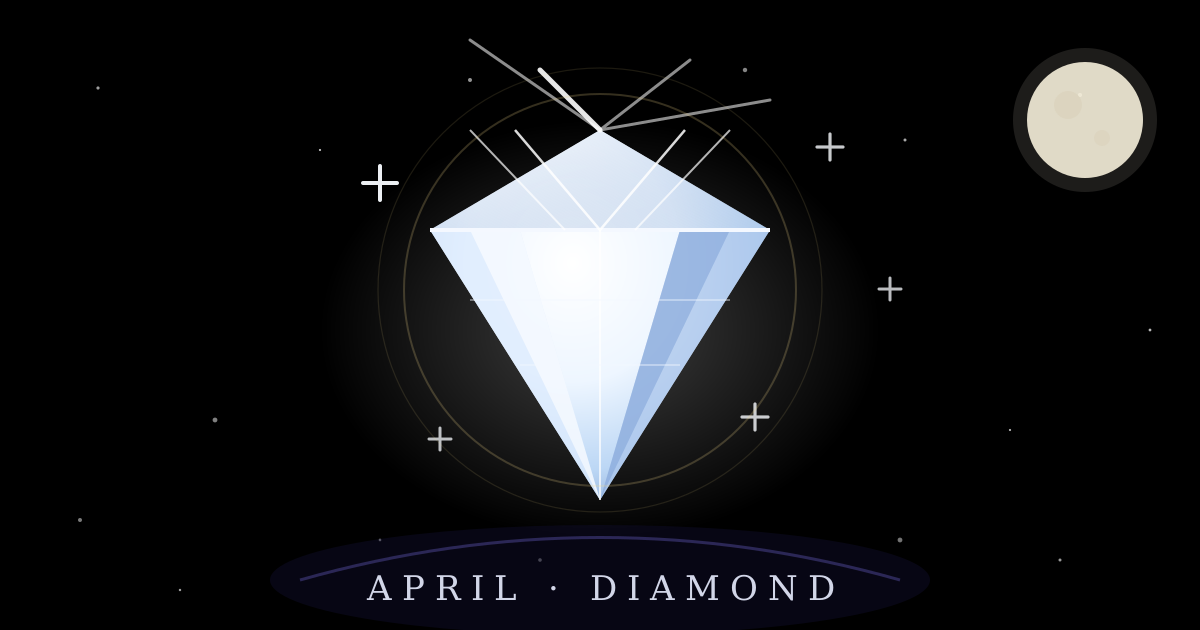
April's birthstone is diamond — and the month gets no ordinary gem. Diamond is the only birthstone made of a single element: pure, crystallized carbon, the same stuff as pencil lead and your own breath, rearranged under unimaginable pressure into the most brilliant, hardest, most coveted substance in the gem world. The word diamond comes from the Greek adamas — "unconquerable," "unbreakable" — and the stone has been living up to that name for at least 2,800 years, adorning gods' statues, warriors' armor, royal crowns, and finally, the most important ring most people will ever buy.
Few birthstones carry this much weight of meaning. A diamond forms deep inside the Earth — 90 to 120 miles down, where heat and pressure beyond anything on the surface forge ordinary carbon into crystal — and arrives at the surface only through rare, violent volcanic eruptions that happened hundreds of millions of years ago. Every diamond you will ever see is at least hundreds of millions of years old, most over a billion. It is a fragment of deep time you can wear, and humans have been awed by that since they first found these stones glittering in India's riverbeds.
Diamond Meaning and Symbolism
Diamond's symbolism is written into its name: invincibility. In ancient lore, diamonds stood for strength, courage, and clarity — the ancient Greeks believed diamonds were tears of the gods fallen to earth, and that carrying one made a person brave; Roman soldiers reportedly wore diamonds as protection in battle, convinced the unconquerable stone would make them unconquerable too. It became known as the stone of fearlessness, a talisman against weakness and doubt.
The stone's later symbolism grew from its brilliance: light itself seemed trapped inside a diamond, so it came to stand for clarity of thought, truth, and purity. That same brilliance made it the emblem of everlasting love — diamonds are famously difficult to destroy, and so the stone became the universal promise of a bond that does not break. Modern crystal traditions link diamond with the crown chakra, the center associated with higher clarity and spiritual connection, and dream dictionaries sometimes read a gleaming diamond in a dream as the mind signaling something precious, durable, or long-sought finally within reach. Whether you take the metaphysical view or simply love what the stone represents, diamond's message is a strong one: be brilliant, be brave, be unbreakable.
A Brief History of Diamond
The diamond story begins in ancient India, where diamonds were found in riverbeds and the famous Golconda mines more than two thousand years ago — so early that diamonds appear in Sanskrit texts, where they were graded by color and believed to protect kings and guide fortune. India held a near-monopoly on diamonds for centuries; the legendary Koh-i-Noor ("Mountain of Light," now in the British Crown Jewels) and the Hope Diamond both came from India's Golconda region. In the ancient world, diamonds were valued as amulets and carvings — not for sparkle, but for their legendary hardness and mystical power.
Diamond's journey to the modern ring began in the 1400s in Europe, when advances in cutting began to release the stone's hidden fire — the development of the table cut, then the brilliant cut, turned dull pebbles into mirrors of light. In 1477, Archduke Maximilian of Austria gave Mary of Burgundy a diamond ring at their betrothal — the first recorded diamond engagement ring — planting the seed that would flower centuries later. The 1860s discovery of diamonds in South Africa at Kimberley transformed the trade: stones flooded the market, prices wobbled, and the De Beers company rose to consolidate the industry. In 1948, De Beers's "A Diamond Is Forever" campaign fused diamonds to engagement and eternity in the public imagination — a piece of marketing so successful it became cultural law. Today, April babies inherit a birthstone that has traveled from Indian riverbeds to African mines to the hands of proposals worldwide.
The 4Cs: Cut, Color, Clarity, Carat
Every diamond is graded on the 4Cs — and knowing them is the difference between a smart buy and an expensive guess:
- Cut: The most important C. Cut is not the shape (round, oval, cushion) — it is how well the diamond's facets are proportioned and polished. Cut determines brilliance, the sparkle that makes a diamond a diamond. An excellent-cut 0.8-carat stone will outshine a poorly cut 1.2-carat stone every time. Prioritize cut above all else.
- Color: Graded D (colorless) to Z (light yellow). The sweet spot for most buyers is G–J: near-colorless to the eye, significantly cheaper than D–F. Color matters less in smaller stones and in yellow-gold settings, which hide warmth.
- Clarity: Graded from Flawless (FL) down to Included (I). Most inclusions are invisible without magnification. VS1–VS2 or SI1 grades are "eye-clean" in practice — flaws you cannot see without a loupe — and deliver far better value than flawless stones.
- Carat: The weight (1 carat = 200 mg). Prices jump at magic sizes — 0.5, 1.0, 1.5, 2.0. Buying just under a magic size (0.90 instead of 1.00) saves money with no visible difference.
The expert formula: buy the best cut you can, eye-clean clarity, G–H color, and carat weight just under a magic size — and you will have a diamond that looks like it cost far more than it did.
Diamond Varieties: Natural, Lab-Grown, and Fancy Colors
Not all diamonds are alike, and the market has changed dramatically in the last decade:
- Natural white diamonds: Mined, billion-year-old stones. Hold their resale value best; command the highest prices.
- Lab-grown diamonds: Chemically, physically, and optically identical to natural diamonds — pure carbon crystal, grown in weeks. Typically 70–90% cheaper. The honest trade-off: resale value is far lower, and they will never be rare. For a bigger, brighter ring on a budget, they are extraordinary value.
- Fancy colored diamonds: Diamonds in yellow, pink, blue, and green — colored by trace elements (boron for blue, nitrogen for yellow) or by structural quirks (pink). Natural fancy colors are among the most expensive gems on Earth — a pink diamond can cost a fortune per carat.
- Salt-and-pepper diamonds: Heavily included diamonds with a stormy, galaxy-like look — a trendy, affordable choice for alternative engagement rings.
April's official alternative birthstone is white topaz (and historically, opal shared the month in some lists) — for anyone who wants an April stone without diamond's price. But the diamond, unconquerable and unmistakable, remains the month's crown jewel.
Diamond in Jewelry: What to Know
Diamond ranks 10 on the Mohs hardness scale — the maximum. It will scratch anything and be scratched by nothing except another diamond. That makes it the ultimate everyday-wear gem: engagement rings, wedding bands, studs that never leave your ears. Two practical points every buyer should know. First, always buy certified: a grading report from GIA, AGS, or IGI is the only objective proof of what you are buying — never pay diamond prices for an uncertified stone. Second, diamonds love grease: the same surface chemistry that makes them sparkle also attracts skin oils, so a diamond ring dulls faster than you'd expect and shines back up instantly with cleaning.
For engagement rings, round brilliant is the classic (maximum sparkle), but oval, cushion, and emerald cuts look larger per carat and have their own character. Set in platinum or white gold, a diamond is icy fire; in yellow gold, it picks up warmth that flatters slightly warmer colors. Beyond rings, diamond studs are the most-worn diamond jewelry in the world — and tennis bracelets remain the quintessential anniversary gift. If you are buying for an April birthday, a diamond pendant or a pair of modest studs gives the birthstone's symbolism in everyday form.
Who Should Wear Diamond?
Beyond April birthdays, diamond is the traditional stone for 60th (diamond) and 75th wedding anniversaries — and, of course, the stone of engagement itself. Its lore of courage makes it a natural for anyone facing something hard: a new chapter, a bold decision, a challenge that needs steadiness. Diamond's clarity symbolism also appeals to thinkers, truth-tellers, and anyone who values seeing things clearly; some keep a small diamond as a symbol of mental sharpness and honest judgment. It is the gem of commitment in every form — proposals, milestones, vows renewed — and for April babies, it arrives with a billion years of pressure already survived. That is a birthstone that does not break, for people who don't either.
Caring for Your Diamond
Diamond is the lowest-maintenance gem on Earth — but not no-maintenance. Clean it by soaking in warm water with mild dish soap, gently scrubbing with a soft toothbrush (especially under the stone, where grease hides), and rinsing. Despite its hardness, diamonds can chip — especially at thin girdles and pointed corners — so remove diamond jewelry for sports, heavy chores, and anything involving hard knocks. Check prongs regularly: the stone is harder than its setting, and a worn prong is the most common way a diamond is lost. Store diamond pieces separately in soft pouches — diamonds scratch everything, including other diamonds. Treated with this simple care, a diamond's fire is genuinely forever — which, as the saying goes, is rather the point.
From Indian riverbeds to Roman battlefields to the first diamond engagement ring of 1477 to the proposal rings of today, diamond has never really left the human story. It is the color of clear light, the weight of deep time, and the symbol of love that does not yield — and for April babies, it is theirs by ancient tradition. That is a birthstone worth wearing.
Frequently asked questions
What is April's birthstone?
Diamond is the birthstone for April — the only gemstone made of a single element, pure crystallized carbon, and at 10 on the Mohs scale, the hardest natural substance known. April is the only month whose birthstone is the king of gems itself.
What does a diamond symbolize?
Diamonds symbolize strength, clarity, courage, and everlasting love. Ancient Greeks believed diamonds were tears of the gods fallen to earth; Romans wore them as armor for battle; and in modern lore they remain the ultimate symbol of commitment and resilience.
What is the most important of the 4Cs?
Cut is the most important of the 4Cs — it determines how brilliantly a diamond sparkles. A well-cut smaller diamond will outshine a poorly cut larger one, so experts advise prioritizing an excellent or ideal cut before chasing higher carat weight.
Are lab-grown diamonds real diamonds?
Yes — lab-grown diamonds are chemically, physically, and optically identical to natural diamonds; they are the same pure carbon crystal. The differences are origin (grown in weeks versus formed over billions of years), price (typically 70 to 90 percent less), and resale value, which is far lower than natural diamonds.
How do I care for diamond jewelry?
Soak diamond jewelry in warm water with mild dish soap, gently scrub with a soft toothbrush, and rinse. Diamonds attract grease, so regular cleaning keeps them bright. Despite being the hardest substance, diamonds can chip — protect prongs, remove jewelry for heavy work, and store pieces separately so they do not scratch each other.
Keep exploring
March Birthstone: Aquamarine Meaning, History & Jewelry Guide
March's birthstone is aquamarine — explore its seawater-blue meaning, ancient sailor legends, famous sources from Santa Maria to Mozambique, and expert tips for choosing aquamarine jewelry.
Read the meaning →
February Birthstone: Amethyst Meaning, History & Jewelry Guide
February's birthstone is amethyst — explore its calm purple meaning, royal history, varieties from lavender to deep violet, and tips for choosing amethyst jewelry.
Read the meaning →
May Birthstone: Emerald Meaning, History & Jewelry Guide
May's birthstone is emerald — explore its lush meaning, royal history from Cleopatra to the Mughals, famous mines, and expert tips for choosing emerald jewelry.
Read the meaning →
Birthstone Chart by Month: Every Stone, Meaning & History
The complete birthstone chart by month — all 12 months' stones, their meanings, alternative birthstones, fascinating stories, and the history of the tradition.
Read the meaning →