
Black Candle Meaning & Uses: Protection, Banishing & When to Burn One

Walk into a candle shop and ask for the black ones, and you will get one of two reactions: a knowing nod, or a nervous look. Somewhere along the way, pop culture decided that black candles belong to villains — that the color itself means curses, gloom, and things that go bump in the night. Ask the actual folk tradition, though, and the story flips completely.
In candle magic, black is the shield color. It is the color of absorption: the way black velvet swallows light, the way a quiet room swallows noise. Practitioners burn black candles to remove things — negativity, bad habits, anxious thought loops, toxic ties — and to protect what remains. If white candles are about inviting, black candles are about guarding the door. This guide covers what black candles mean, their classic uses, a simple protection ritual, and the honest cases where you should reach for a different color instead.
What Does a Black Candle Mean?
Strip away the movie imagery and the core symbolism is elegant and consistent across traditions:
- Absorption. Black absorbs. Practitioners picture a black candle soaking up negativity, tension, and "heavy" energy the way charcoal filters impurities from water — a purification image, not a dark one.
- Protection and boundaries. Black is the color of armor, of night that hides you, of the closed gate. It is burned at the start of serious workings to seal the space, and at thresholds — doorways, new chapters, hard conversations.
- Endings that make beginnings possible. Every ending is also a clearing. Black candles mark funerals, the last day of a bad habit, the final burnout of an old identity — the compost-dark soil that the next thing grows from.
- The void, honored. The night sky before stars, the silence before music, the blank page: black is not emptiness-as-nothing but emptiness-as-potential. That is why black shows up in scrying and meditation work.
Notice what is missing from that list: curses, evil, summoning dread. The folk literature is remarkably consistent — black's job is defensive. The misunderstanding is a Hollywood inheritance, and this is one of the most common beginner questions in the craft.
The Big Misconception: Black Candles Are Not Evil
Let us settle this directly, because it comes up constantly: black candles are not evil. The association is almost entirely a pop-culture artifact — gothic villains on screen, Halloween merchandising, and a general cultural habit of coding darkness as danger.
In practice, black is one of the most commonly burned ritual colors in the world, right alongside white and red. Churches burn black candles in mourning rites. Folk healers across traditions — Hoodoo, European folk magic, Latin American practices — use them for cleansing and protection workings. Nobody in those traditions considers the color itself sinister; it is a tool, like a locked door. A lock is not evil for keeping people out.
That said, intention matters in this tradition, and the honest caveat goes both ways: no candle color does the ethics for you. A black candle burned with a protective intention is a shield. Any candle burned with the intent to harm someone is a different matter — and this site does not teach workings aimed at controlling or hurting others, in any color.
What Black Candles Are Used For
Here are the classic uses, in roughly the order practitioners reach for them:
1. Protection and psychic shielding
The number-one use. A black candle burned at the doorway of a ritual — or in a room before a difficult week — is imagined as raising a wall. Practitioners pair it with protective oils like frankincense, myrrh, or cedarwood, and with words spoken aloud: what you are not letting in matters more than any recipe.
2. Banishing and "uncrossing"
Folk traditions have long used black candles to send negativity back where it came from — the classic banishing working. "Uncrossing" workings in Hoodoo-rooted practice use black candles dressed with uncrossing oil to remove crossed conditions: streaks of bad luck, persistent friction, energy that clings. The rule is consistent: you banish conditions and influences, not people. This is the tradition's own bright ethical line, and the tradition takes it seriously.
3. Absorbing negativity
Think of the black candle as an energetic air purifier. After a stressful day, an argument, a crowded commute that left you drained, practitioners light a black candle to "take it off" — sitting nearby for ten or fifteen minutes, breathing slowly, letting the day's residue feel, symbolically, drawn into the flame and consumed.
4. Endings, release, and quitting
The last day of a habit gets a black candle in some households: the smoker's final evening, the last night of doomscrolling, the week you hand in your notice. A cord-cutting ritual — releasing a person, habit, or old self — is traditionally done with a black candle for the "released" side. The flame becomes a witness to the ending, which is often exactly what an ending needs to feel real.
5. Scrying and the black mirror
Divination workers sometimes burn a black candle behind or beside a scrying surface — a black mirror, a bowl of dark water — because its dim, absorptive light does not compete with the subtle images they are watching for. Low, quiet light; low, quiet mind.
6. Shadow work and grief
"Shadow work" — the practice of facing the parts of yourself you avoid — pairs naturally with black candles, because the color dignifies rather than banishes the dark parts. Grief work too: a black candle lit on an anniversary of loss is a candle that says this matters and it is allowed to be dark for a while.
7. Ancestor and remembrance work
Many traditions burn black (or black-and-white) candles to honor the dead — the ancestors, the guides, the ones who came before. The darkness here is reverence, not fear: the quiet of the chapel, the hush of the memorial.
A Simple Black-Candle Protection Ritual
You do not need a long pedigree to do this one — the tradition treats it as beginner-friendly. Set aside about 20 unhurried minutes where you will not be interrupted.
1. Prepare the space
Clear a table near a wall. Lay down a dark cloth if you like the mood of it, and put your candle in a fireproof dish — a ceramic plate, a baking dish, a wide bowl. Keep a glass of water or a small extinguisher within reach. Fire safety is the first law of every working on this site.
2. Dress the candle
Anoint the candle with a protective oil — frankincense is the classic, cedarwood and rosemary are folk favorites — rubbing from the top down toward the base ("drawing the shield around you"). If you have no oil, skip it; intention outranks ingredients. Beginners can find the full technique in our guide on how to dress a candle.
3. Name what you are shielding against
Hold the unlit candle and say it plainly: what is getting in that you want kept out? A draining person, anxious thoughts, the feeling of being watched, a streak of bad luck. Specificity is the tradition's fuel. "I shield myself from my own spiral about work" beats vague "negativity" every time.
4. Light it and speak the wall
Light the candle. Say your statement aloud — your own words are always strongest, but a traditional shape is: "This flame is my boundary. What serves me may enter; what harms me cannot. The dark holds me safe." Sit with it for fifteen to twenty minutes. Breathe slowly. Picture the room filling with a quiet, heavy calm — the kind of darkness that is a blanket, not a threat.
5. Close the working
When you feel done, snuff the flame — pinch it, cap it, use a snuffer — in the folk manner (blowing is considered scattering the intention). Thank yourself for showing up. If you plan to reuse the candle for the same intention, store it away from daily candles; if the working feels complete, let it burn down on a later session. For a first pass at the wider craft, our beginner's guide to candle magic lays out the whole sequence.
When NOT to Burn a Black Candle
Black is powerful, which is exactly why the tradition keeps it on a leash. Reach for a different color when:
- You want to attract, not repel. Love work calls for red, pink, or white; money work for green or gold; celebration for anything bright. Burning black for a goal you are trying to draw toward you is, in the tradition's own logic, working against yourself.
- You are trying to change how someone feels about you. Black does not make people love, forgive, or obey — and the tradition is explicit that workings aimed at bending another person's will are out of bounds. For letting go of an attachment, though, a black candle beside a cord-cutting ritual is exactly the traditional choice.
- You are already anxious and spiraling. Be honest with yourself: if darkness currently reads as fear rather than shelter, a black candle will amplify the wrong story. Burn white or blue instead and come back to black on a calmer day.
- The room is a memorial you want kept light. Remembrance is black's honorable territory — but if a gathering is meant to be joyful and bright, match the mood. Read the room; the tradition does.
A quick cross-check against the wider craft: our complete guide to candle color meanings lists what each color traditionally covers, so you can double-check before you light.
Reading a Black Candle: Flame and Smoke Signs
Folk pyromancy — flame reading — treats the way a candle burns as commentary on the working. The classic interpretations, kept honest:
- Tall, steady flame: clear intent, clean path. The tradition's green light.
- Jumping, popping, crackling flame: restless or contested energy — or, prosaically, a cheap wick, trapped air in the wax, or a draft. Check the physical causes before the mystical ones.
- Low, struggling flame: the working met resistance, or the wick needs trimming. Trim wicks to about a quarter inch before every burn — it solves most "struggling flame" mysteries.
- Heavy smoke or soot: traditionally read as the candle "working hard" against something dense; practically, black candles are dye-heavy and soot more than others. Keep them away from white walls and trim the wick.
- Uneven burn / tunneling: in lore, a one-sided burn means the intention is leaning; in physics, it means drafts or a crooked wick. Rotate the candle or shield the draft and watch.
The honest hierarchy the old practitioners used: physics first, folklore second. Dye-loaded black candles smoke more, gutter more, and drip dark wax that stains — knowing that keeps you from mistaking chemistry for messages. For the full vocabulary of what candle flames mean and how to read wax after the burn, see our ceromancy guide.
Fire Safety for Black Candles
Black candles deserve one extra safety paragraph because of the dye:
- The wax stains. Dark wax on tablecloths, carpets, and white walls is close to permanent. Burn on a wide, dark, disposable-safe dish — never directly on furniture.
- They burn hotter and smokier. Heavy dye means more soot and sometimes a hotter flame. Keep them away from curtains, papers, and low shelves, and never in an enclosed lantern unless it is ventilated.
- Never leave them unattended. This is the universal rule, but it matters double here: dark wax drips are harder to see in dim light, and soot can mark walls faster than you expect.
- Trim the wick. A quarter inch, every burn. This one habit prevents most soot, most guttering, and most scary flames.
- Keep pets and drafts away. A cat tail through a black candle is a veterinary and a housekeeping emergency at once.
Common Mistakes to Avoid
Using black for attraction magic. The single most common beginner mix-up. Black repels and releases; it does not draw love, money, or success toward you. If you want more of something, burn the color that means more of it.
Aiming a black candle at a person. The tradition's ethical line is firm: black candles banish conditions, influences, and your own attachments — not people. Workings meant to harm or control someone are a different category entirely, and this site does not teach them.
Skipping the naming. A black candle lit with no stated intention is just a candle. The tradition's power, such as it is, lives in the naming — say exactly what is being banished or shielded against. Vague workings give vague experiences.
Burning through fear. If black candles make you uneasy, that is information, not failure. The folk sources are practical about this: use the color that settles you. A white candle lit with a calm heart outperforms a black one lit with dread.
A Grounded View: Why the Shield Works
You do not have to believe in energy to get something from a black candle. The ritual is doing several very ordinary things at once: it externalizes a decision ("I am done with this"), it marks a boundary in time (the evening the shield went up), and it gives your attention a job — watching a flame is a well-worn mindfulness anchor, and twenty quiet minutes of it will lower anyone's shoulders.
Psychologists call the larger pattern embodied symbolism: physical acts carry emotional weight that thoughts alone do not. Writing a boundary and burning a candle to seal it is the same species of thing as cleaning your desk to feel in control — the environment becomes a prop in the story you are telling yourself, and stories, told sincerely, change behavior. The candle will not rearrange the universe. But the decision it witnessed might rearrange your week.
Closing: The Guardian Color
Black has been patient with its bad reputation. Long after the movies moved on to other villains, folk practitioners kept burning it at doorways, at bedsides, at the ends of hard chapters — the quiet guardian color, doing the unglamorous work of keeping things out and closing things down.
So if the color ever spooked you, reconsider it. Light one the next time something needs to end cleanly, or the next time you want the room to feel held. Name what you are shielding against, sit with the flame, and notice what the dark feels like when it is on your side. It feels, practitioners say, like the deep part of the night sky — not empty, just vast enough to hold everything. That is what black candles have meant all along.
Frequently asked questions
Are black candles evil or dangerous?
No. In folk tradition, black is the color of protection, absorption, and endings — the shield color, not the evil color. Black candles are used for banishing negativity, protection, and release work. The evil association comes from horror movies and pop culture, not from actual candle-magic practice. Presented here as entertainment and cultural lore, not guaranteed outcomes.
What is a black candle used for in candle magic?
Black candles are traditionally used for protection, banishing negativity, absorbing heavy energy, ending bad habits or toxic situations, scrying, and shadow work. The core symbolism is absorption: like black velvet absorbs light, a black candle is imagined to absorb and neutralize what is unwanted.
Can I use a black candle for a love spell?
Folk tradition generally says no — black is a color of endings and release, not of attraction and warmth. Practitioners reach for red, pink, or white candles for love work, and use black candles to release an unhealthy attachment or to protect an existing relationship, not to draw someone in. This is cultural lore presented for entertainment, not a guaranteed method.
How do I do a simple protection ritual with a black candle?
Dress a black candle with a protective oil such as frankincense, place it in a fireproof dish, and light it while stating aloud what you are shielding yourself from. Visualize a wall of dark, quiet calm around you as the candle burns for 15 to 20 minutes. Never leave it unattended, and snuff the flame when you finish.
What does it mean if my black candle burns unevenly or the flame jumps?
In folk flame-reading, a tall steady flame means clear intent, a jumping or popping flame means restless or blocked energy, and uneven burning can mean the working met resistance. Practically, uneven burns usually come from drafts, cheap wicks, or dye-heavy wax. Treat the folk readings as entertainment and check the physical causes first.
Keep exploring

Candle Color Meanings: The Complete Guide
Candle color meanings explained: what each candle color means in magic, how to pick the right one for love, money, protection, or healing, plus pairings.
Read the meaning →
How to Do Candle Magic: A Beginner's Guide
How to do candle magic: a complete beginner's guide. What you need, the 8 steps of a candle spell, timing with moon phases, and common mistakes to avoid.
Read the meaning →
Candle Flame Meanings: How to Read Your Ritual's Fire
Candle flame meanings: what a dancing, flickering, tall, or dying flame means in candle magic. Learn pyromancy basics, plus how to read smoke and wax too.
Read the meaning →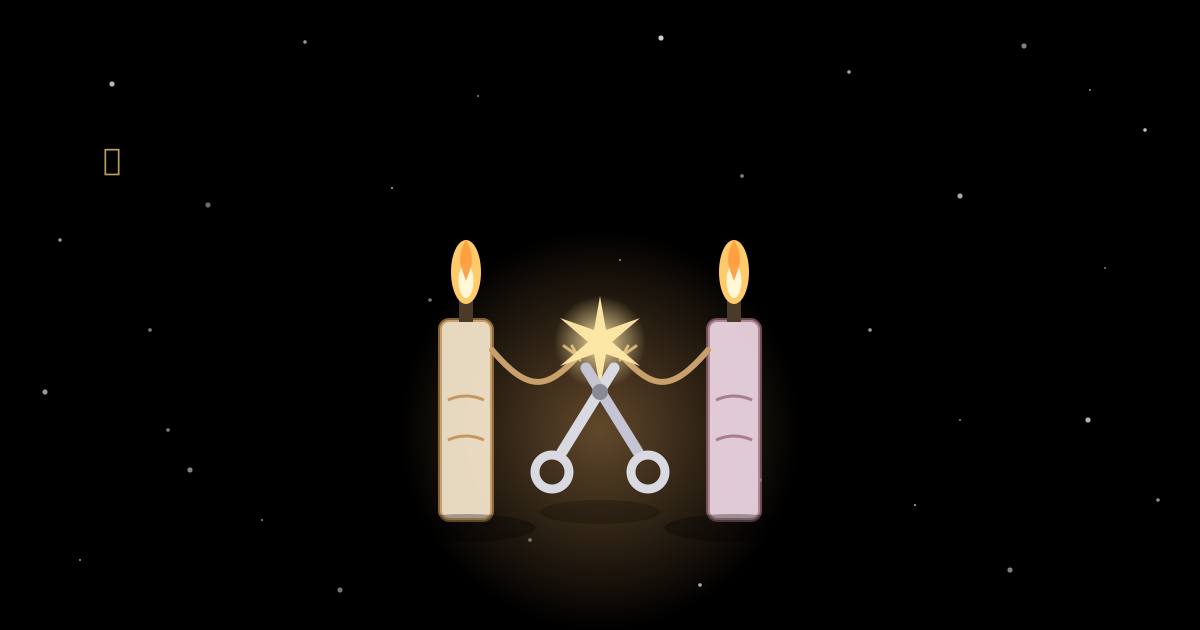
Cord-Cutting Candle Ritual: How to Do It Step by Step
Cord-cutting candle ritual: a step-by-step guide to releasing old ties with two candles, twine, and intention. Learn setup, timing, fire safety, and grounded tips.
Read the meaning →