
Third Eye Chakra Meaning: Ajna & Intuition
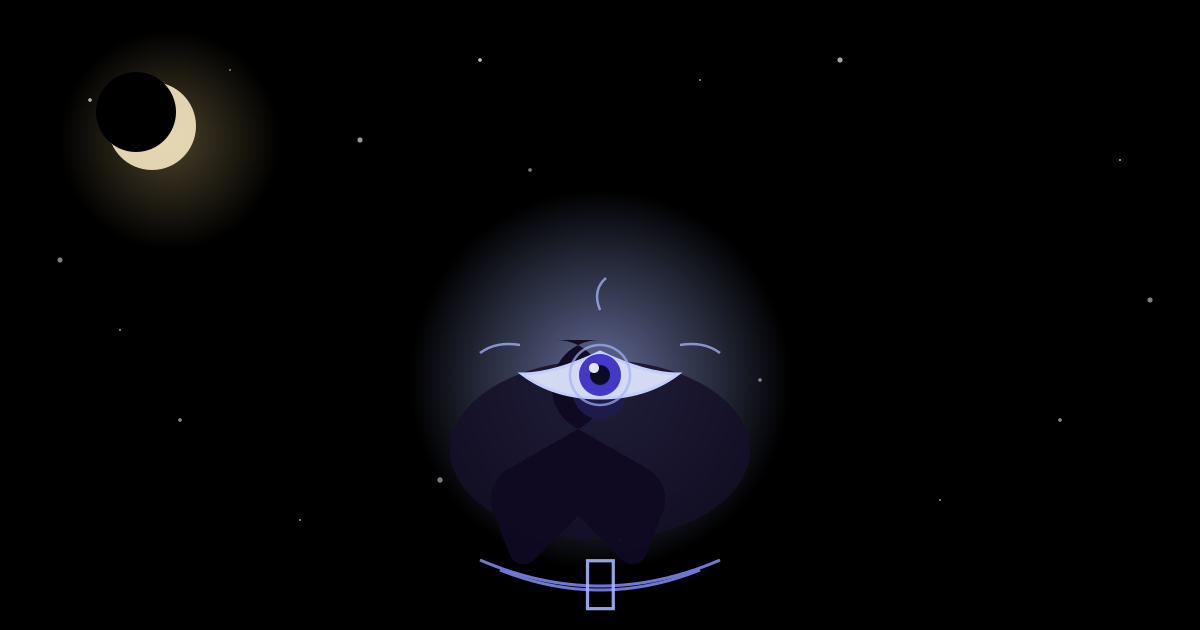
There is a moment most people know: you meet someone and something in you whispers be careful, and you talk yourself out of it, and months later you think, I knew. Why didn't I listen? Or the reverse — you take a leap that makes no spreadsheet sense, and the quiet knowing in your chest turns out to be right. That quiet knowing has a name in the chakra tradition: Ajna, the third eye, the indigo center at the brow between the two ordinary eyes.
The symbolism is not subtle. Two eyes look outward at the world of facts; the third eye, tradition says, looks inward and through — at patterns, at motives, at the meaning under the noise. It is the seat of intuition, imagination, dreams, and insight: the human capacity to perceive what cannot be measured yet. Working with it is not about developing psychic powers. It is about something far more practical and far harder: learning to hear yourself again in a world designed to keep you looking everywhere else.
Ajna: The Third Eye Chakra in Depth
Sanskrit name: Ajna (“command” or “perception”). Location: the brow, between and slightly above the eyebrows — the seat of the pituitary region in yogic anatomy. Color: indigo, the color of the sky just before full dark, when the last light of reason gives way to the night of dreaming. Element: light — not the light you see by, but the light you see with, the inner illumination of understanding. Seed sound: OM, chanted slowly until the sound dissolves into silence. Associated themes: intuition, insight, imagination, memory, dreams, discernment, the ability to perceive patterns and meaning beneath surface events.
The traditional symbol is a two-petaled lotus, flanked by two channels representing the sun and moon — or, read psychologically, the two great modes of knowing: logic and intuition, analysis and gut sense. Ajna's teaching is that perception needs both wings. A person who trusts only data can navigate a spreadsheet but miss a betrayal; a person who trusts only vibes can read a room perfectly and still make terrible plans. The third eye, in this reading, is not the rejection of reason — it is the integration of reason with everything reason cannot reach.
Modern research has quietly caught up to some of this. Studies of intuition describe it as the brain's rapid pattern-matching — the mind noticing statistical regularities and emotional cues before the conscious mind can articulate them. That “gut feeling” is often real information arriving through the back door. The third eye is the spiritual vocabulary for exactly this capacity: perception that moves faster than explanation, and the discipline to take it seriously without abandoning your critical mind.
Signs Your Third Eye May Need Attention
Remember: “blocked” or “overactive” third eye is symbolic language for patterns, not a diagnosis of anything. Common themes the tradition associates with a closed third eye include:
Mental and perceptual patterns
- Second-guessing every instinct — you feel the knowing and argue yourself out of it
- Needing exhaustive proof before making any decision, then still feeling unsure
- Feeling creatively dry: imagination that used to flow now feels like a drained well
- Difficulty picturing a different future — tomorrow feels like an extension of today
- Dismissing dreams, hunches, and coincidences as meaningless noise
- Feeling “blind” in situations — missing what seems obvious to everyone else afterward
The overactive third eye: visions without grounding
The third eye has a shadow, and it runs in the opposite direction. Tradition describes an overactive Ajna as perception unmoored: endless speculation about hidden meanings, vivid worst-case scenarios treated as premonitions, conspiracy thinking, paranoia, and living in imagined futures or replays of the past while the actual present goes untended. The pattern has a tell — the “visions” are almost always fear-flavored, which is how you know it is anxiety wearing intuition's costume. Genuine intuition, practitioners say, is usually quieter, calmer, and harder to dramatize.
If either pattern feels familiar, the third-eye framework offers a compassionate reframe: foggy perception is not a verdict — it is an invitation. And if anxiety, intrusive thoughts, or persistent difficulty distinguishing worry from reality is significantly affecting your daily life, please also speak with a qualified counselor or therapist. Spiritual practice and professional support are allies, not alternatives.
The Seat of Perception: Why the Third Eye Comes Sixth
There is a deliberate sequence to the chakras, and Ajna's position — second from the top, above the throat, below only the crown — is the point of it. The teaching is architectural: clear sight is built on lower foundations. Without the root's grounding, intuition becomes free-floating anxiety. Without the solar plexus's confidence, the gut sense gets argued into silence. Without the heart's openness, perception serves only the self. And without the throat's honesty, you can see the truth but never say it — the most common failure of perception there is.
The two-petaled lotus carries this same logic in miniature. Two petals, two channels, two wings: intuition and discernment. Discernment is the underrated half. A tradition that only taught people to “trust their gut” would be manufacturing gullibility. Ajna's full teaching is stricter: trust your perception, and then check it. The third eye opens onto insight, but discernment decides what to do with it. This is why the tradition places Ajna just below the crown — insight must eventually surrender to something larger than the ego's interpretations.
There is a quieter teaching in the symbol too. The third eye sits between the two ordinary eyes — perception, in this picture, is not a separate faculty but the meeting point of what you observe outside and what you know inside. Clear sight happens at the junction: the facts, witnessed honestly, plus the inner knowing, heard clearly. Lose either side and the picture distorts. Hold both, and something like wisdom becomes possible.
Third Eye Opening Practices
Candle-gazing meditation (trataka)
The classic practice, and the simplest: stare at a flame, then close your eyes and stare at the afterimage. Light a candle in a darkened room, sit comfortably, and gaze softly at the flame without straining — blink when you need to. After a few minutes, close your eyes and observe the glowing afterimage on the inside of your eyelids as it drifts and fades. The tradition says this trains the inner gaze, the same “seeing” Ajna governs. Even setting the symbolism aside, it is a remarkable exercise in attention: you will discover, quickly, how loud your mind is and how rarely you have actually watched anything.
Dream journaling
Dreams are the third eye's native language: symbolic, non-linear, and stubbornly honest. Keep a journal by your bed and write down whatever you remember each morning — no interpretation required at first. The practice, tradition says, builds the bridge between conscious and unconscious perception. Many practitioners report that the simple act of taking dreams seriously deepens both dream vividness and waking intuition, as if attention itself were the currency. Review the journal monthly; the patterns are often more instructive than any single dream.
Visualization practice
Close your eyes and build a room in your mind — not a metaphorical room, a literal one. Four walls, a door, a window, a chair. Walk around it mentally. Open the window. Notice the light. The tradition uses visualization to strengthen the “inner screen” Ajna governs: the same faculty that pictures a goal, rehearses a conversation, or imagines someone's perspective. If the images feel faint at first, that is normal — like any sense, inner vision improves with patient use, not with forcing.
Intuition journaling with receipts
This is the practice that turns vague “trust your gut” into something you can actually evaluate. Each day, write down your hunches — this meeting will go badly, call her, take the other route — with a timestamp. Then, days later, write down what actually happened. After a month you will have something precious: evidence of your own hit rate. Most people discover their intuition is better than they thought — and also learn its specific blind spots. That combination, the tradition would say, is Ajna opening under the supervision of discernment.
Palming and eye rest
An old yogic practice with a lovely logic: rest the outer eyes to wake the inner one. Rub your palms together until warm, close your eyes, and cup your hands over them — fingers on forehead, no pressure on the eyeballs — so you see total darkness. Sit in that warm dark for a few minutes, breathing slowly. Practitioners describe a sense of the brow softening and the mental chatter dimming. Whether you read it as Ajna or simply as rest for an over-screened mind, the effect is real: stillness, for eyes that never get it.
Time in nature, without analysis
Walk in a park, sit by water, watch weather — with no agenda and no narration. The instruction is specific: do not name the birds, do not plan the week, do not photograph anything. Just perceive. The tradition holds that the analytical mind is the fog Ajna must see through, and nature is the easiest place to let that mind idle. People routinely report that their clearest insights arrive not at the desk but on the walk home — which, in this framework, is the third eye doing its best work once the other two eyes stop shouting.
A 7-Day Intuition Practice
A gentle week of perception training — no force, no drama:
- Day 1: Five minutes of candle gazing. Then close your eyes and watch the afterimage fade. Notice how your mind tries to narrate it.
- Day 2: Write down three hunches about the day ahead — with timestamps. Do not act on them; just record.
- Day 3: Ten minutes of the visualization exercise: build your inner room in detail. Walk through it.
- Day 4: Palm your eyes for five minutes in warm darkness. Afterward, sit quietly and notice what feels different.
- Day 5: Record last night's dream in detail, even the fragments. Underline anything that surprised you.
- Day 6: Take a walk with no phone and no narration. When you catch yourself planning, return to just looking.
- Day 7: Review the week's hunch log against what actually happened. Journal: what did my perception know before I did?
Notice the pattern: none of these manufacture visions. Each one clears a little fog — and perception, the tradition promises, sharpens in cleared space on its own.
Living With Clear Sight: Integration
The tradition is clear that vivid experiences are not the goal — integration is. A striking dream or a startlingly accurate hunch is lovely; the real practice is what you do on an ordinary Tuesday. Practitioners describe the long-term shift in plain terms: pausing before deciding instead of reacting, noticing people's real feelings before their performed ones, catching your own self-deceptions earlier, and trusting the quiet signal without needing it to shout.
The third eye's final lesson is also its first: you already perceive more than you let yourself know. The practices in this guide do not install a new sense. They turn down the noise — the overthinking, the second-guessing, the cultural instruction to distrust everything unmeasured — until the perception that was always running underneath becomes audible. Attention, the tradition insists, is the real sacrament. The indigo center was never about seeing the future. It was about seeing the present, finally, clearly.
Frequently asked questions
What is the third eye chakra?
The third eye chakra (Ajna) is the sixth of the seven chakras, traditionally located between the eyebrows at the brow. Its name means "command" or "perception" in Sanskrit, and it represents intuition, insight, imagination, and the ability to see beyond surface appearances. Its color is indigo, its element is light, and its seed sound is OM.
What are the signs of a blocked third eye chakra?
Symbolically, a closed third eye is described as second-guessing every gut feeling, needing exhaustive proof before deciding, feeling creatively dry, struggling to imagine a different future, or dismissing dreams and hunches out of hand. An overactive third eye is associated with the opposite pattern — endless speculation, paranoia, vivid worries mistaken for premonitions, and living in imagined futures instead of the present. These are symbolic patterns for self-reflection, not medical diagnoses.
How do you open the third eye chakra?
Traditional and modern practices include candle-gazing meditation (trataka), dream journaling, visualization exercises, intuitive journaling with follow-up tracking, palming the eyes and resting them in darkness, and spending time in nature without analyzing it. The shared theme is training perception: quieting the noise so subtler signals can be noticed.
Does opening the third eye let you see the future?
The tradition does not promise literal prophecy, and this site makes no such promise either. What practitioners typically report is subtler: noticing patterns earlier, reading people and situations more accurately, dreaming more vividly, and trusting their own judgment more readily. Think of it as sharpened perception rather than a supernatural broadcast.
Keep exploring
The 7 Chakras: Meanings, Colors & Balancing Guide
The 7 chakras explained: meanings, colors, signs of imbalance, and gentle balancing practices. A complete beginner-friendly guide to the chakra system.
Read the meaning →
Crown Chakra Meaning: Sahasrara & Spiritual Connection
Crown chakra meaning: what Sahasrara represents — connection, unity, and spiritual surrender — plus the signs it needs attention and gentle opening practices.
Read the meaning →
How to Balance Your Chakras: A Complete Routine
How to balance your chakras: a beginner routine with a 20-minute guided meditation, a 5-minute daily version, mantras, yoga poses, and a weekly focus.
Read the meaning →
What Does It Mean to Dream About Water?
Water in dreams mirrors your emotional state. Discover what dreaming about water means — calm seas, floods, drowning — and how each reflects feelings.
Read the meaning →