
Third Eye Chakra Opening: 15 Signs Your Ajna Is Awakening
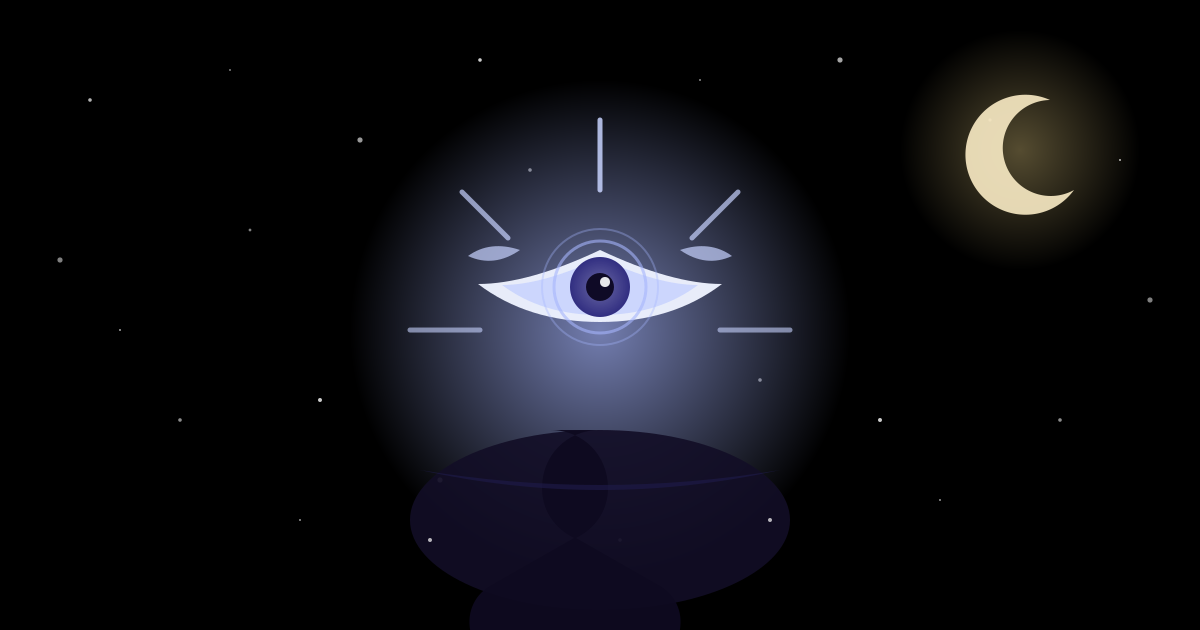
You know the feeling of walking into a room and sensing the mood before anyone speaks — the argument that just ended, the celebration someone is barely containing. Now imagine that sensitivity turning up, gradually, across your whole life. Dreams become cinematic. Coincidences pile up. You start noticing the same symbols everywhere, and your hunches about people start landing more often than chance should allow. This, in the chakra tradition, is what "opening the third eye" means: not gaining a new sense, but refining the ones you already have — attention, intuition, imagination, and dream-awareness — until the world looks richer in detail.
The tradition is specific about the address. Ajna, the sixth chakra, is pictured at the point between the eyebrows — the "command" or "perception" center. Its color is indigo, its symbol a two-petaled lotus, its element sometimes given as light itself, its seed sound OM. Where the lower chakras govern survival, pleasure, will, love, and speech — the business of being a person in the world — Ajna governs the witness: the part of you that observes the whole show. An opening third eye, then, is less about seeing ghosts than about seeing clearly: less self-deception, less noise, more of what was always there.
A note before the signs, in the spirit of the tradition's own honesty. Everything below is symbolic language for inner patterns, not a diagnostic checklist or a promise of psychic powers. The entertainment value here is real — the chakra map is one of humanity's most beautiful metaphors for the mind — but treat it as a mirror for self-reflection, not a medical manual or a guaranteed prediction engine. With that framing in place, here is what centuries of practitioners say an awakening Ajna feels like.
15 Signs Your Third Eye Chakra Is Opening
1. Your dreams become vivid, memorable, and strange
The single most reported sign. Dreams sharpen in resolution — more color, more plot, more emotion — and you start remembering them without trying. Some traditions call this the third eye "opening inward": the same perceptive energy, turned toward the sleeping mind. Keeping a journal by the bed is the tradition's first prescription, because the dreams are understood as the mind talking to itself in images.
2. Deja vu visits more often
That eerie sense of having lived this exact moment before. Tradition reads recurring deja vu symbolically as perception running ahead of conscious tracking — your attention registering familiarity faster than your narrative mind can file it. Skeptics note it correlates with fatigue and stress too, which the tradition would agree with: an overstimulated nervous system produces noise, not vision.
3. Tingling or pressure between the brows
During meditation or quiet moments, many practitioners report a gentle buzzing, warmth, or pressure at the Ajna point. The tradition treats this as the energetic signature of attention gathering there — like a muscle you are learning to use. It should be mild and pleasant. Persistent headaches, dizziness, or discomfort are not "signs of opening" — they are signs to rest, hydrate, and see a clinician if they continue.
4. Your intuition gets louder — and more accurate
You think of someone and they call. You take a different route home and later learn why you are glad you did. The tradition says an opening third eye shows up first as trustworthy hunches: the gut knows things the spreadsheet hasn't computed yet. The test the tradition sets is track record, not feeling — notice which hunches were right, and the signal separates from the static.
5. Synchronicities multiply
You learn a new word and hear it three times that week. You dream of an old friend and they message you that morning. Jung gave this pattern a name — synchronicity — and the chakra tradition reads it as the signature of a mind now noticing connections it used to filter out. Whether the universe is winking or your reticular activating system is finally on the job, the practical advice is the same: write them down. Patterns you record get stronger; patterns you dismiss dissolve.
6. Colors and patterns appear behind closed eyes
Meditators at this stage often report indigo and violet swirls, geometric patterns, or pulses of light with eyes closed. The tradition maps these to Ajna's domain — "the element of light," after all. Neurology has a plainer name for the phenomenon (phosphenes), and the two explanations can coexist peacefully: the tradition describes what it feels like from the inside; science describes the wiring. Both agree it is normal.
7. You crave solitude and quiet
Crowded rooms, loud restaurants, and endless small talk start feeling like static. The tradition frames this as the opening eye becoming selective — attention is a finite resource, and deeper perception needs quiet the way photography needs still air. Solitude stops feeling like loneliness and starts feeling like charging.
8. Sensitivity to light and screens increases
Bright overhead lighting feels harsh; you dim the screens, prefer candles and lamps, notice you squint more at noon. Symbolically, the tradition reads this as the "light element" turning up its gain. Practically, it is also what happens when you spend more time in contemplative practice — the eyes, like the mind, start preferring gentle input. Either way, the remedy is the same: softer light, more darkness, and time outdoors.
9. Your imagination wakes up
Daydreams get richer. You visualize easily — faces, places, whole scenes in high detail. Creative ideas arrive uninvited, the way they did in childhood. The tradition counts imagination as one of Ajna's core faculties, not a frivolous extra: the same inner screen that dreams on is the one that invents, plans, and empathizes. A brightening imagination is, in this framework, the third eye flexing.
10. You see through pretense — including your own
Flattery stops working on you. You notice the gap between what people say and what they mean, and — more uncomfortably — the gap between what you say and what you mean. The tradition calls Ajna the seat of discernment: clarity that cuts both ways. This sign is the least glamorous and the most valuable, because self-deception is the fog the whole practice is trying to burn off.
11. Symbols start speaking to you
You keep noticing the same animal, number, or image. A song lyric lands like a personal message. The tradition says the opening third eye is fluent in metaphor — dreams, myths, and omens are all just symbolic speech. Whether you treat this as the universe talking or your own pattern-matching mind serving you meaning on a platter, the tradition's instruction is identical: ask what it means to you, not what a book says. Your symbols are yours.
12. A pull toward the spiritual and the mysterious
Books on dreams, astrology, tarot, meditation — subjects you once dismissed — suddenly hold your attention for hours. The tradition reads this appetite as the eye looking for lenses: every symbolic system is a pair of glasses for a different kind of seeing. The tradition also warns against collecting systems like souvenirs — depth in one practice beats trivia in ten.
13. Your sleep changes
Waking at odd hours — famously the 3 a.m. "spiritual hour" — or sleeping lighter, or needing slightly less sleep while feeling more rested. The tradition associates the small hours with thinner veils between conscious and unconscious. The grounded view: contemplative practice changes sleep architecture, and lighter sleep means more dream recall, which feeds sign number one. Either way, protect your rest — an exhausted eye sees nothing.
14. Old emotions surface for review
Memories you thought were filed away knock on the door. Grief, embarrassment, old anger — the archive opens. The tradition says clarity illuminates the basement too, not just the view: you cannot have clear perception with unexamined material clouding the lens. This is the sign most people wish came with a warning label. Be gentle with yourself here, and if the material feels too heavy to carry alone, a therapist is the right co-pilot — spiritual practice and professional support are allies, never alternatives.
15. A quiet sense that "the veil is thinner"
The least describable and most reported: a feeling of being closer to things, as if a pane of glass between you and the world got a little cleaner. Moments of sudden presence — the light through leaves, a stranger's laugh, your own breathing — land with unusual vividness. The tradition's name for the destination was never "powers." It was clarity: seeing what is actually there, finally, without the smudges.
What Opening the Third Eye Is Not
The internet has strong opinions about the third eye, and most of them are noise. A few corrections, courtesy of the tradition itself. First, opening is gradual — the lotus opens petal by petal, and anyone selling a weekend "full activation" is selling theater. Second, it is not dangerous in the horror-movie sense; the tradition's actual warnings are mundane — headaches from forcing concentration, anxiety from too much introspection, grandiosity from mistaking imagination for revelation. Third, the goal was never X-ray vision. The yogic texts describe the fruit of Ajna practice as viveka — discernment, the ability to tell the real from the unreal, starting with your own stories about yourself.
The grandiosity trap deserves its own paragraph because it is the tradition's most repeated warning. The moment you start believing your hunches are infallible, that you "just know" what others are thinking, that ordinary doubt is for lesser minds — that is not the third eye opening. That is the ego borrowing its vocabulary. The tradition's test for genuine clarity is humility: the clearer the seeing, the less you need to announce it.
Gentle Practices to Support the Process
Meditate on the brow point, softly
Sit comfortably, close your eyes, and rest attention lightly between the brows — not a hard stare, more like listening. Twenty minutes daily is the traditional prescription, but five honest minutes beat an hour of fidgeting. If pressure builds, soften: the instruction is "rest," not "push." Forcing concentration at Ajna is how people earn headaches and call them spiritual.
Try trataka — candle gazing
One of the tradition's oldest concentration practices: gaze at a candle flame in a dark room for a few minutes, then close your eyes and watch the afterimage. It trains the exact faculty Ajna governs — sustained, relaxed visual attention. Start with five minutes. Blink normally. Stop if your eyes strain; the practice is meant to steady attention, not punish it.
Journal your dreams
Keep the notebook by the bed, write immediately on waking, date every entry. Within weeks you will have a personal symbol dictionary no book can give you — your recurring images, your private metaphors. The tradition treats the dream journal as the third eye's training log: you are teaching your waking mind to take the sleeping mind's reports seriously.
Spend time in darkness and nature
The eye of light needs darkness the way ears need silence. The tradition recommends time under real night skies, walks without headphones, rooms lit by a single lamp. Modern life is a floodlight; Ajna practice is learning to see by starlight. Even ten unplugged minutes outside after sunset counts.
Reduce the noise
Attention is the currency, and outrage feeds, doomscrolling, and background television are the taxes. The tradition is blunt: you cannot develop subtle perception while mainlining stimulation. A weekly digital sunset — screens off an hour before bed — is the smallest practice with the largest reported effect.
Grounding the Awakening: Don't Skip the Lower Chakras
Here is the part the flashy posts leave out. The tradition is emphatic that upper-chakra work without grounding produces floaty, anxious, ungrounded people — all vision, no roots. If you are meditating on Ajna, the tradition says to double down on the basics: sleep enough, move your body daily, eat real food, keep your promises, pay your bills, maintain honest relationships. The root chakra is the third eye's foundation, not its junior.
Watch for the warning signs of ungrounded practice: persistent anxiety, difficulty concentrating on ordinary tasks, feeling "not quite in your body," neglecting responsibilities, or using spiritual language to avoid real problems. The tradition's remedy is beautifully unglamorous — cook a meal, take a walk, call a friend, do the laundry. If overwhelm persists, speak with a counselor or therapist. The clearest seeing in the world is worthless if the seer is falling apart, and getting support is the most grounded practice there is.
The opening of the third eye, in the end, is not a destination with a certificate. It is a direction: toward finer attention, truer dreams, sharper discernment, and a quieter mind. The lotus has two petals in the old diagrams — ida and pingala, sun and moon, the twin currents of the nervous system — and the teaching is right there in the symbol. Clarity is not one thing. It is the meeting of two: the world as it is, and the mind still enough to see it. Everything else is commentary.
Frequently asked questions
What does it mean when your third eye chakra is opening?
In the chakra tradition, "opening the third eye" is symbolic language for a deepening of perception: dreams become more vivid, intuition feels sharper, coincidences seem more meaningful, and you notice patterns in life you previously overlooked. It is framed as an unfolding of inner awareness, not a supernatural event — a metaphor for paying finer attention to the subtle signals of your own mind.
What are the common signs of third eye chakra awakening?
Tradition lists vivid or lucid dreams, deja vu, a tingling or pressure sensation between the eyebrows during meditation, stronger gut feelings that prove accurate, noticing repeated symbols or number patterns, a growing appetite for solitude and quiet, heightened sensitivity to light and busy environments, a more active imagination, and a new interest in dreams, symbols, and spiritual ideas. These are symbolic patterns for self-reflection, not medical symptoms.
How long does it take to open the third eye chakra?
Tradition offers no timetable, and anyone selling one is selling something else. The chakra framework describes opening as a gradual unfolding that follows steady contemplative practice — meditation, dream journaling, study of symbols — over months or years, not a single dramatic event. The tradition warns that rushing or forcing it tends to produce headaches, anxiety, and fantasy, not clarity.
How do you support your third eye chakra opening safely?
Traditional guidance emphasizes grounding alongside any upper-chakra work: meditate gently on the brow point rather than forcing concentration, practice candle-gazing (trataka) in moderation, journal your dreams, spend time in nature and darkness, reduce mental noise, and keep up the "lower chakra" basics — sleep, exercise, honest relationships, practical responsibility. Spiritual practice and professional mental-health support work best as allies if anxiety or overwhelm persists.
Keep exploring
Third Eye Chakra Meaning: Ajna & Intuition
Third eye chakra meaning: what Ajna represents — intuition, insight, and inner vision — plus the signs it is out of balance and gentle practices to open it.
Read the meaning →
The 7 Chakras: Meanings, Colors & Balancing Guide
The 7 chakras explained: meanings, colors, signs of imbalance, and gentle balancing practices. A complete beginner-friendly guide to the chakra system.
Read the meaning →
How to Balance Your Chakras: A Complete Routine
How to balance your chakras: a beginner routine with a 20-minute guided meditation, a 5-minute daily version, mantras, yoga poses, and a weekly focus.
Read the meaning →
What Does It Mean to Dream About Flying?
Flying dreams are among the most vivid and liberating dream experiences. Discover what they symbolize — freedom, perspective, ambition — and what different flying scenarios mean.
Read the meaning →