
Fluorite Meaning: The Stone of Focus & Mental Clarity
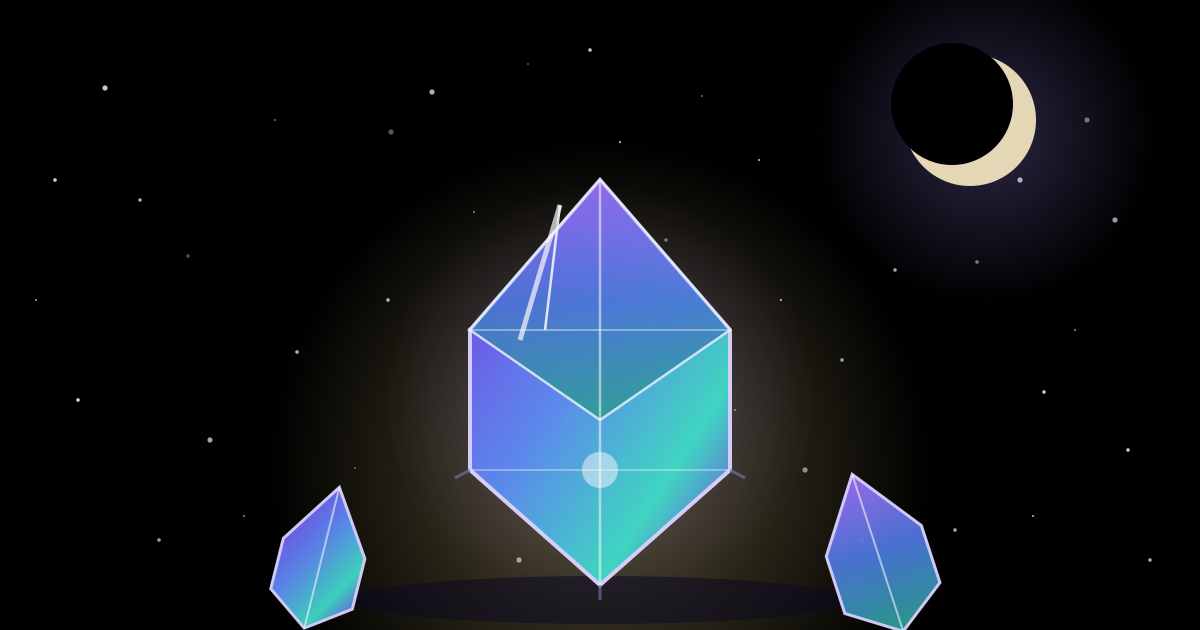
The Rainbow Cube
Fluorite is the show-off of the mineral world. Hold a piece to the light and colors pour through it — violet melting into teal, teal into blue, bands and phantom zones shifting as you turn it, like weather caught in glass. It is one of the most colorful minerals on Earth, found in nearly every color except a true red, and single specimens can carry purple, green, blue, and yellow in elegant zones that look painted on.
Mineralogically, fluorite is calcium fluoride — and it holds two honors no other stone can claim. First, it gave its name to fluorescence: under ultraviolet light, many fluorite specimens glow an unearthly blue-violet or green, a real optical phenomenon described scientifically in the 1850s. The word itself comes from the Latin fluere, to flow — miners originally used it as a flux to help metals flow in smelting. Second, fluorite cleaves perfectly into octahedrons: strike it and it breaks into natural eight-sided shapes, the signature of its cubic crystal system. Dealers sell flawless natural octahedrons that look sculpted, and they were not — the stone just grows and breaks that way.
Hardness matters for collectors: fluorite sits at 4 on the Mohs scale. It is softer than quartz (7) and easily scratched by a steel knife or nail — a practical test when checking authenticity, and the reason your fluorite piece deserves its own pouch instead of rattling around with harder stones.
The usual framing applies: everything here is spiritual and wellness tradition, not science or medicine. Fluorite is a beautiful symbol of clear thinking and organized effort — it is not a cognitive treatment, it cannot raise your IQ, and no stone replaces sleep, real study habits, or professional help for attention difficulties. If focus is genuinely suffering, the tools that work are medical advice, good sleep, exercise, and practical systems; the fluorite is the beautiful paperweight reminding you to sit down and begin.
What Fluorite Represents
Fluorite's reputation in crystal tradition is remarkably consistent across shops, books, and practitioners — the stone of the mind, kept where thinking happens:
- Focus and concentration: the signature meaning — a symbol for settling a scattered mind. Students, writers, and programmers are its core audience, and desk placement is practically a rite of passage in the hobby.
- Mental clarity: practitioners use it as a visual metaphor for cutting through confusion — the layered colors a reminder that complexity can be organized, not just feared.
- Discernment and decision-making: fluorite is the stone people reach for when they need to sort priorities: which task matters, which choice is real, which worry is noise.
- Order from chaos: the genius-stone nickname comes from this — the promise that a muddled project, desk, or day can be brought into structure.
- Protection of the mind-space: some traditions place fluorite at entryways as a symbolic threshold stone: enter this room with a clear head.
The through-line is sorting. Amethyst calms the storm; labradorite opens the intuition. Fluorite's job is filing — the drawer labeled, the inbox triaged, the pros-and-cons list actually written. Practitioners describe it as a stone of doing the mental housekeeping you have been avoiding. It does not think for you; it marks the chair where you do the thinking.
The Colors of Fluorite: What Each One Means
No stone gets a color key quite like fluorite's. In crystal tradition, each color carries its own emphasis — and since one piece can carry several colors, many people simply choose the piece they cannot stop looking at. The tradition considers that attraction meaningful in itself.
- Purple fluorite: intuition and discernment — the thinker's spiritual side. Practitioners use it for third-eye meditation and for decisions where logic alone is not enough. The deepest purples, often paired with green in the same stone, are the most prized for collection.
- Green fluorite: renewal and emotional reset — the color of fresh starts. It is the piece people buy after a breakup, a move, or a burned-out season: a symbol of letting the mind grow back in a healthier direction.
- Blue fluorite: calm communication — the softest fluorite, associated with orderly, honest speech. Writers who freeze at the keyboard favor it as a symbol for clear expression under pressure.
- Yellow fluorite: concentration and confidence — the study-session stone. Practitioners reach for it during exams, deep-work blocks, and any task requiring sustained, bright attention.
- Rainbow (banded) fluorite: the all-rounder — purple, green, blue, and clear zones in one piece. Symbolically it represents the whole mind working together: intuition, renewal, calm, and focus in one polished slab. The most popular decorative form in the trade.
- Clear fluorite: rare and subtle — used as a symbol of pure clarity, a blank page. Collectors value water-clear pieces; practitioners treat them as reset stones.
One honest note: color intensity varies enormously, and the market charges for it. A deeply saturated purple-green piece costs far more than a pale one of the same size — but in the folk tradition, the meaning does not scale with the price tag. The pale tumble you picked yourself carries the same symbolism as the showpiece. Choose with your eye and your budget, not the dealer's enthusiasm.
The Fluorescence: Fluorite's Famous UV Glow
This is fluorite's party trick, and it is genuine science. Shine a UV flashlight — the cheap 365nm kind hobbyists buy — onto a fluorite specimen in a dark room, and many pieces erupt in blue-violet or green light. The glow comes from trace impurities in the crystal lattice absorbing ultraviolet and re-emitting it as visible light; the moment you switch the UV off, the glow stops.
Fluorite is so famous for this that the phenomenon is named after it. The scientist who described fluorescence in 1852, George Stokes, studied it in fluorite, and the mineral lent its name to the entire field. Some fluorite also shows phosphorescence — a lingering afterglow for a few seconds — and thermoluminescence, flashing briefly when heated.
Practically, the UV test doubles as a fun authenticity check: glass and resin imitations usually stay dark or glow dull and uniform under UV, while real fluorite often fluoresces in zones that match its color banding. Not every piece glows strongly — lack of fluorescence does not prove a fake — but a vivid, zoned glow is strong evidence of the real thing.
How Practitioners Actually Use Fluorite
Fluorite rituals are the most mundane in the crystal world, and practitioners say that is the point — this is a stone of everyday discipline, not ceremony:
- The desk stone: the classic placement — a palm stone, tower, or polished slab beside the keyboard. Practitioners glance at it when attention scatters, using the moment as a cue to name the one task that matters next. It works because the cue is physical, not because the stone radiates anything.
- The study session opener: before a work block, some people hold fluorite and say the day's priority out loud. The ritual costs thirty seconds and functions like a starting whistle for the brain.
- The decision pair: a small piece in the pocket during hard conversations or negotiations — a tactile anchor that reminds you to slow down and think before answering. Rubbing a smooth tumble gives restless hands something to do.
- The creative chaos sorter: artists and writers use rainbow fluorite during brainstorming, then physically move it aside when it is time to edit. The two positions symbolize the two modes: open mind, then organized mind.
- The exam-week companion: students keep yellow or rainbow pieces at their study spot through exam season — then give the stone a rest afterward, which practitioners frame as the stone reminding them that rest is part of the system too.
A simple daily ritual: each morning, place your fluorite on top of the day's to-do list — or tap it before opening your laptop — and name the single task that would make today feel won. One task, one stone, one tap. Practitioners love this because it externalizes prioritization: the decision is made before the distractions arrive. The fluorite is the period at the end of the plan.
Cleansing and Caring for Fluorite
Fluorite is tougher than selenite but still softer than the stones most people are used to. Treat it kindly:
- Water: brief rinsing is fine; soaking is not. Long baths, salt water, and harsh cleansers can dull the polish and pit the surface. Rinse for seconds, dry immediately.
- Sunlight: keep fluorite out of long direct sun — some specimens fade with prolonged UV exposure, losing color permanently. A sunny windowsill is a bad permanent home.
- Storage: at hardness 4, fluorite scratches easily. Store it separately from quartz, amethyst, and anything harder; a soft pouch or its own display spot works perfectly.
- Cleansing methods: smoke, sound, and moonlight are all safe. Running water for a few seconds is fine if you dry it right away. Avoid salt baths entirely.
The care routine is itself a small meditation on the stone's meaning: handle it gently, keep it separate, give it a stable place. The stone of order asks for an ordered home.
Spotting Real Fluorite vs. Fakes
Fluorite is abundant and affordable, so outright fakes are less common than with citrine or moldavite — but the market has its own traps:
- Real fluorite: natural color zoning — bands and patches that shift through the stone, often visible even in polished pieces. Many specimens fluoresce blue-violet or green under UV. Breaks into natural octahedrons along cleavage planes. Scratches with a steel knife; cannot scratch glass easily.
- Glass imitations: uniform, saturated single colors with no zoning; perfectly smooth with swirl marks or bubbles visible under magnification. Feels harder than fluorite and usually stays dark under UV.
- Resin fakes: suspiciously light for their size, feel warm to the touch (stone feels cool), and molded seams can sometimes be spotted. No fluorescence, no cleavage.
- Dyed fluorite: unnaturally vivid blues or pinks, with dye concentrated in cracks and fractures — hold it to light and look for color pooling along fissures.
- Price check: a common tumbled piece or small octahedron costs pocket change. Anyone charging premium prices for ordinary banded fluorite is selling a story — save your budget for genuinely exceptional specimens.
Quick field test: the UV flashlight. A $15 UV light is the most fun tool in mineral collecting, and real fluorite's zoned glow is hard to fake convincingly.
Buying Fluorite Without Overpaying
- Start with a palm stone or tumble: the cheapest entry, perfect for the desk or pocket. Rainbow tumbles cost almost nothing and carry the full color range.
- Natural octahedrons: fluorite's signature form — small, perfect eight-sided crystals. They look sculpted and cost very little; an ideal first display piece.
- Polished slabs and towers: show off the banding beautifully. Check the back of slabs for filler or repair — some pieces are stabilized, which is fine if disclosed.
- Choose with your eyes: hold the piece to light before buying. The zoning should shift and glow; flat, lifeless color is a warning sign.
- Buy from mineral dealers: rock shops, mineral shows, and established crystal shops know their fluorite. Ask where it was mined — Illinois, China, Mexico, and England's Weardale are famous sources, and a dealer who knows the locality usually knows the stone.
Buy the piece that catches your eye in normal light first — the UV glow is a bonus, not the test. Fluorite you love looking at is fluorite you will actually keep on the desk, and a desk stone that lives in a drawer is just a souvenir.
Closing: The Sorted Mind
Fluorite endures on a million desks — beside keyboards, on study tables, in exam-week pockets — because it answers a permanent modern need: the need to turn chaos into a list. Not inspiration, not calm, not protection — just the quiet symbolism of a mind putting things in their right order.
So set the stone where the thinking happens tonight. Name the one task that matters tomorrow. Let the banded rainbow on your desk be the last thing you glance at before closing the laptop — not a guarantee of a productive day, but a small ceremony of intention. Fluorite doesn't organize your thoughts. It reminds you to.
Frequently asked questions
What is fluorite good for spiritually?
In crystal tradition, fluorite is the stone of focus, mental clarity, and order — nicknamed the 'genius stone.' Students and creatives keep it on desks as a symbol of clear thinking and organized effort: purple fluorite for intuition and discernment, green for growth and fresh starts, blue for calm communication, yellow for concentration, and rainbow fluorite for all-round balance. These are traditional meanings, not scientific claims — the stone is a focus cue, not a cognitive treatment.
Does fluorite really glow under UV light?
Many specimens do — and it is real physics, not folklore. The word 'fluorescence' comes from fluorite: under ultraviolet light, many fluorite pieces glow blue-violet or green. Not every piece fluoresces strongly, and the glow stops the moment the UV source is removed. It is one of the most fun properties of any common mineral, and a quick way to test a real piece against glass or resin imitations.
Can fluorite go in water?
Brief rinsing is fine, but do not soak fluorite or use salt water. At hardness 4 on the Mohs scale it is softer than quartz and can be dulled or pitted by prolonged soaking, salt, or harsh cleansers. Cleanse with running water for seconds, dry immediately, or use smoke, sound, or moonlight instead.
Which color of fluorite should I choose?
Choose by intention: purple fluorite for intuition and spiritual discernment, green for emotional renewal and new beginnings, blue for calm, honest communication, yellow for concentration and study, and rainbow (banded) fluorite as the all-rounder for general balance. Visually, pick the piece you cannot stop looking at — in crystal practice, attraction to a stone is considered part of its meaning for you.
How can you tell real fluorite from fake?
Real fluorite shows natural color zoning — bands or patches of purple, green, and blue that shift through the stone — and many pieces fluoresce blue-violet under UV light. Fakes tend to be uniform single-color glass or resin: too perfect, too light, and silent under UV. The octahedral cleavage (it breaks into natural eight-sided shapes) and relative softness (a steel knife scratches it; quartz does not) are also telltale signs.
Where should I put fluorite in my home?
Practitioners put fluorite where thinking happens: the desk or study (the classic placement for focus rituals), the creative studio, the meditation corner, and the entryway as a symbolic 'clear head' threshold. Keep it out of long direct sunlight — some fluorite fades with prolonged UV exposure — and out of windowsills that catch rain.
Keep exploring
Amethyst Meaning: The Stone of Calm & Intuition
Amethyst meaning & uses: the violet stone of calm, intuition & restful sleep. Meditation practices, dream work, varieties, and how to protect its color.
Read the meaning →
Crystals for Anxiety: Calming Stones & Grounding Rituals
Crystals for anxiety: amethyst, rose quartz, lepidolite & more. An honest guide to calming stones, 5-minute grounding rituals, and real coping tools.
Read the meaning →
How to Cleanse and Charge Crystals: Complete Guide
How to cleanse and charge crystals: water, smoke, moonlight, sound & selenite methods. Which stones to keep dry, plus a simple monthly ritual.
Read the meaning →
Selenite Meaning: The Moonlight Stone of Cleansing & Calm
Selenite meaning & uses: the moonlight stone of cleansing and calm. Charging plates, threshold towers, wand sweeps — plus the one rule: keep it dry.
Read the meaning →