
Labradorite Meaning: The Stone of Magic & the Aurora Within
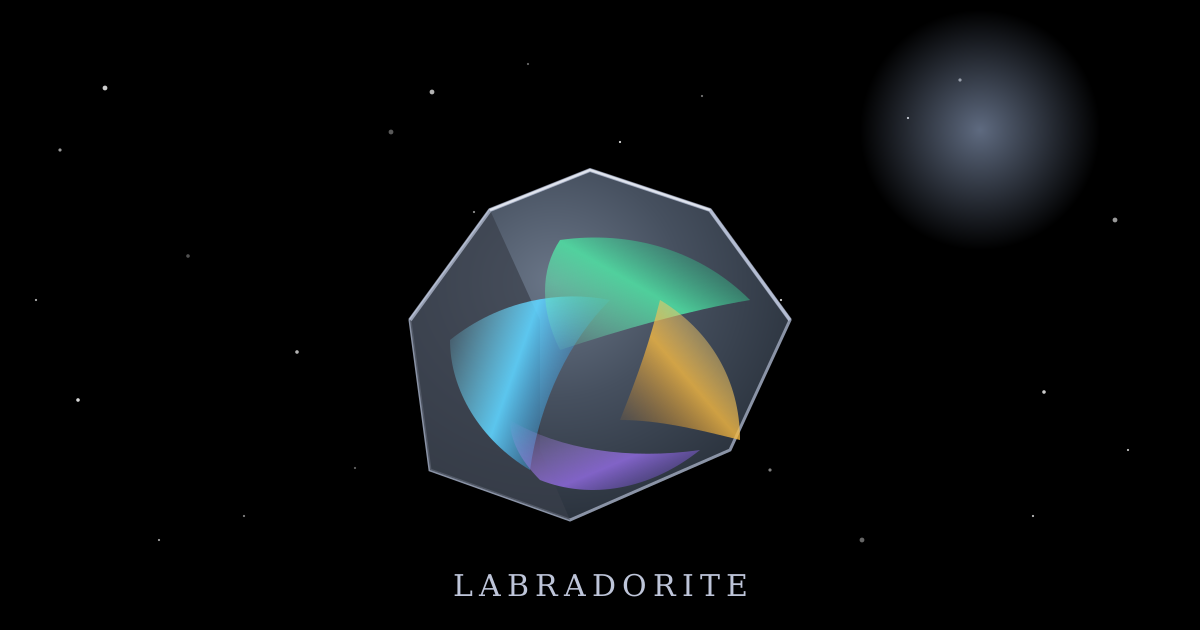
The Aurora, Trapped in Stone
Pick up a raw piece of labradorite and your first impression is underwhelming: grey, ordinary, a stone you would step over on a beach. Then you tilt it — and the northern lights wake up inside the rock. Waves of electric blue, teal green, and molten gold sweep across its surface like an aurora compressed into a fist-sized sky, flaring and fading as the stone turns. No other common crystal performs this trick quite like labradorite, and it is why the stone has been called the Stone of Magic for as long as anyone has been selling stones.
The phenomenon has a name as beautiful as the effect: labradorescence. Like moonstone's glow, it comes from light scattering through microscopic alternating layers inside the feldspar — but where moonstone whispers in soft blue-white, labradorite shouts in full aurora color. The stone was named for the Labrador Peninsula in Canada, where Moravian missionaries first documented it in the 1700s, though it had been known to Inuit communities long before. An Inuit legend says the aurora borealis was once trapped inside these rocks, and a warrior's spear broke most of it free — the labradorite we hold today still carries the last remnants of that captured sky. Whether or not you believe the old stories, there is something genuinely thrilling about watching an ordinary grey stone ignite from the right angle, and that thrill is the whole of labradorite's magic: it rewards the patient observer.
Mineralogically, labradorite is a plagioclase feldspar — a cousin of moonstone's orthoclase, which explains the family resemblance in the flash. It sits at Mohs 6 to 6.5, softer than quartz, and the finest material comes from Madagascar, Finland, Canada, and Russia. The white variety is the one sold as "rainbow moonstone" in most shops — a trade name that has caused decades of confusion, which we will untangle below.
The usual framing applies: everything here is spiritual and wellness tradition, not science or medicine. Labradorite is a beautiful tool for reflection, ritual, and creative spark — it cannot change outcomes, shield you from real consequences, or substitute for professional help. Its honest value is the ritual it invites: pausing, tilting the stone, watching the light move, and in that small act of attention, hearing yourself think.
What Labradorite Represents
Labradorite's traditional meanings orbit the flash — a hidden brilliance revealed only from the right angle — and they have made it one of the most beloved stones in modern crystal practice:
- Magic and the unseen: the signature meaning — labradorite is the stone of mystics, psychics, and everyone who senses more than they can explain. Practitioners call it the stone that "reminds you magic is real," meaning the meaningful kind: synchronicity, intuition, wonder.
- Protection for sensitive people: tradition describes labradorite as a shield against emotional overwhelm — not by blocking feeling, but by deflecting other people's storms so highly sensitive people can keep their footing in crowds, difficult conversations, and draining environments.
- Transformation and change: the stone's flash is hidden until the angle changes, and practitioners read that as a parable — labradorite is carried through reinventions: career shifts, moves, identity changes, the long arc of becoming someone new.
- Intuition and inner knowing: paired with dream work, journaling, and meditation, labradorite is the stone of listening inward — traditionally linked to the third-eye chakra as the stone of the seer's sight.
- Creativity and imagination: artists, writers, and makers carry it as a muse-stone. The flash is inspiration made visible: the good idea arriving sideways, glowing briefly, demanding to be noticed before it fades.
- Strength through difficulty: because it shines brightest when the angle is right, tradition frames labradorite as the stone of perseverance — the reminder that dark phases can still hold hidden light.
The common thread is brilliance concealed in the ordinary. Black tourmaline is the bouncer; moonstone is the gentle night-light; citrine is the optimist. Labradorite is the one that looks like nothing special until you look closer — the stone for people who suspect their own unglamorous Tuesday selves might contain something more interesting than anyone suspects.
Reading the Flash: Labradorite Varieties
Labradorite is sold in several forms, and the flash — not the price tag — is what matters most:
- Classic blue-flash labradorite: grey body with vivid blue and teal flashes — the workhorse variety, affordable and everywhere. This is the stone most people mean when they say labradorite.
- Golden and sunset labradorite: flashes of gold, orange, and copper alongside the blue — less common and priced a little higher. Practitioners associate it with confidence and forward motion.
- Rainbow labradorite: full-spectrum pieces showing blue, green, gold, and violet in one stone. The most prized of the standard varieties; expect to pay more for strong, saturated flashes.
- White labradorite ("rainbow moonstone"): a pale, translucent variety with soft rainbow flashes — the one sold as rainbow moonstone in nearly every crystal shop. It is genuine, gorgeous labradorite; only the moonstone label is wrong. If the flash matters more to you than the mineral name, buy it happily — just know what it is.
- Spectrolite: the premium grade from Finland, where the full rainbow spectrum runs stronger and more saturated than anywhere else. Named by its discoverer, Finnish geologist Aarne Laitakari, and priced like the collector's stone it is.
- Carved pieces and palm stones: labradorite is frequently carved into skulls, moons, spheres, and freeforms, and tumbled into pocket stones. Spheres and freeforms show the flash best, since you can rotate them to chase the light.
The body is always grey to dark grey in the classic variety — that is how you know the flash is real and not painted on. If a "labradorite" has a vividly colored body (bright red, neon green) rather than just a flash, it has been dyed, coated, or is a different material entirely. And the flash always moves: tilt the stone slowly under a lamp, and the colors should sweep across the surface. A flash that sits frozen in one spot is a coating, not labradorescence.
How Practitioners Actually Use Labradorite
Labradorite rituals lean playful and exploratory — this is a stone for experiments, not solemn ceremony:
- The empath's pocket shield: carried into crowds, open offices, family gatherings, and anywhere emotional weather runs high. Practitioners describe it as an energetic boundary stone — a reminder to notice which feelings are yours and which drifted in from the room. The ritual version: before entering, hold the stone and silently name what is yours to carry today.
- The transition touchstone: for reinventions — new careers, new cities, new identities. The stone's hidden flash is the parable: the new life is in there, you just have not found the angle yet. Practitioners keep it visible during the awkward middle of big changes as proof that grey phases pass.
- Dream work and intuition practice: kept on the nightstand alongside a dream journal. The ritual is the journaling — writing dreams down each morning does more for recall than any stone — but labradorite makes the practice feel like an adventure, and adventure is what keeps habits alive.
- The creativity flash: held or set on the desk during creative blocks. Practitioners use it as a prompt: tilt the stone, watch the flash move, and ask "what is hiding in my draft from the wrong angle?" The answer usually arrives faster than expected — because the question is a good one, not because the stone cast a spell.
- Meditation companion: held during quiet meditation as a focal object. Watching the flash drift under closed-lid visualization gives restless minds something to follow — a gentler anchor than breath-counting for people who find breath-counting irritating.
- The aurora window: displayed where light strikes it — a windowsill, a desk lamp's edge — so the flash appears throughout the day. Practitioners describe this as ambient magic: small moments of wonder interrupting ordinary afternoons. There is genuine psychology here — micro-moments of awe measurably lift mood — and labradorite is an efficient awe machine.
A simple practice practitioners love: the "flash check." Hold your labradorite and tilt it slowly until the brightest flash appears. Now ask yourself: what part of my life looks dull from the current angle but might flash if I tilted my perspective? Write one sentence of answer. The stone is the prompt; the sentence is the work. Change happens in the honest answers, not in the feldspar — but the ritual makes the honesty easier, and that is the whole point of the stone.
Caring for Labradorite: Keep the Magic Intact
Labradorite is sturdier than moonstone but still deserves respect:
- Brief rinses are fine; skip the long soaks: at Mohs 6 to 6.5, labradorite tolerates quick washes but prolonged water exposure, salt water, and harsh cleaners can dull the polish over time. Warm water, mild soap, soft cloth — the whole toolkit.
- Moonlight and smoke cleansing: the traditional methods practitioners prefer — moonlight, incense or palo santo smoke, sound bowls. All carry zero physical risk to the stone and fit its mystical theme. This is the one cleansing corner of crystal practice where tradition and mineral safety perfectly agree.
- Store it separately: harder stones (quartz, tourmaline, topaz) will scratch labradorite in a shared pouch or dish. Give it its own soft bag, especially polished pieces with mirror finishes that show scratches.
- Sunlight is fine briefly: unlike amethyst and citrine, labradorite is not notably sun-sensitive, so a morning on the windowsill will not bleach it. Extended baking in harsh summer sun is still unwise for any polished stone — shade keeps the finish fresh.
- Watch the edges on carved pieces: labradorite's cleavage planes make it chip-prone at thin edges, so handle spheres and carvings carefully and do not knock them against harder stones.
The polish is the flash's stage: labradorite only performs on a smooth, polished face, so the gentle handling that preserves the polish preserves the magic too. A well-kept piece keeps its aurora for decades.
Buying Labradorite Without Getting Burned
Labradorite is honestly priced in most shops, but a few labeling games exist:
- The rainbow moonstone question: if a shop labels white labradorite as rainbow moonstone, the stone is genuine — only the name is a trade label. Judge it on the flash, not the label: strong rainbow play in a translucent white body is worth buying at fair labradorite prices, not moonstone prices.
- Tilt before you buy: the single most important buying move. Under the shop's lights, tilt the piece through a full arc and watch the flash move. The best face is often just one orientation — carvers orient it toward the viewer. If a seller shows you only one fixed angle, ask to see it tilt.
- Coated and dyed pieces: real labradorite has a grey body with flashes of color. Brightly colored bodies — vivid red, electric green, neon purple stone — signal dye or iridescent coating. Some coated pieces are openly sold as "aura labradorite" and are pretty enough on their own terms; just do not pay natural prices for them.
- Glass and resin imitations: rarer than with moonstone, but they exist. Signs: unnaturally uniform flash, tiny round air bubbles, a body that feels too light or too warm (real stone feels cool and has real weight).
- Spectrolite premium: Finnish spectrolite with full-spectrum flash genuinely commands higher prices — it is the collector's grade. But "spectrolite" stamped on ordinary Madagascar material is marketing; true spectrolite comes with Finnish provenance.
- Price reality: tumbled blue-flash labradorite is genuinely affordable — a pocket stone costs less than a fancy coffee. Fair prices for strong rainbow flash or spectrolite run much higher, and that is legitimate. Suspicion is warranted only when a "spectrolite" sphere costs the same as a tumbled stone.
Start with what you can verify: buy in person, tilt the stone, watch the aurora move. The flash is the whole purchase — everything else is packaging. A $6 tumbled stone with a fierce blue flash that you carry through a career change will serve you better than a $120 dull sphere you bought for the shelf.
Closing: Look From Another Angle
Labradorite endures — in pockets, on altars, on the desks of makers and dreamers — because it answers a permanent human question: what am I not seeing from here? Every grey, ordinary, nothing-special piece of it contains an aurora, waiting for the right angle and the right light. The Inuit story said the northern lights were trapped in these stones and mostly set free; the part that stayed behind is still teaching the lesson.
So tilt the stone. Tilt the problem. The flash you have been missing is usually one small rotation away — in the stone, and in the life. Labradorite does not create the light. It reminds you that the light was always there, hiding in the grey, waiting for you to change your angle. That is not magic in the storybook sense. It is something better: a practice you can actually do.
Frequently asked questions
What is labradorite good for in crystal practice?
By tradition, labradorite is the stone of magic, intuition, and change — used as a protective shield for sensitive people, a touchstone during life transitions, and a creativity spark for artists and makers. Practitioners describe it as a stone that turns attention inward while guarding against emotional overwhelm. Like all crystal practice, this is spiritual tradition and mindfulness ritual, not science or medicine.
Is labradorite the same as rainbow moonstone?
Rainbow moonstone is white labradorite sold under a trade name — mineralogically it IS labradorite, not moonstone. True moonstone is orthoclase feldspar with a soft blue-white glow called adularescence; labradorite is plagioclase feldspar with a bolder flash called labradorescence, and the white variety shows rainbow flashes. So rainbow moonstone is genuine labradorite — just mislabeled as moonstone.
Why does my labradorite look dull from some angles?
That is the nature of the stone. Labradorescence — the aurora-like flash — comes from light scattering through microscopic internal layers, so it only appears at specific viewing angles. A labradorite that looks grey and ordinary from one direction can blaze blue, green, and gold when tilted under a lamp. Carvers orient the best face toward the viewer, so always tilt the stone slowly under good light before judging it. A flash that never appears from any angle suggests poor material or a fake.
Can labradorite go in water or sunlight?
Labradorite is moderately soft (Mohs 6 to 6.5), so brief rinses are fine but long soaks, salt water, and harsh cleaners should be avoided — they can dull the polish over time. Unlike amethyst or citrine it is not notably sun-sensitive, but prolonged intense sun can dry and dull some specimens, so shaded windowsills are the safer habit. Traditional cleansing methods that carry zero physical risk are moonlight, smoke, or sound.
Which chakra is labradorite associated with?
In chakra-based crystal traditions, labradorite is most often associated with the throat chakra (honest expression) and the third-eye chakra (intuition and insight), matching its reputation as a stone of inner knowing. Some traditions extend it to all the upper chakras. This is spiritual symbolism, not anatomy — the value practitioners report is the ritual of pausing to check in with intuition, not any effect on the body.
Keep exploring

Moonstone Meaning: The Stone of New Beginnings & Inner Light
Moonstone meaning & uses: the stone of new beginnings, intuition & emotional calm. Rainbow moonstone vs. true moonstone, fakes, moon rituals & gentle care.
Read the meaning →
How to Cleanse and Charge Crystals: Complete Guide
How to cleanse and charge crystals: water, smoke, moonlight, sound & selenite methods. Which stones to keep dry, plus a simple monthly ritual. Keep your
Read the meaning →
Selenite Meaning: The Moonlight Stone of Cleansing & Calm
Selenite meaning & uses: the moonlight stone of cleansing and calm. Charging plates, threshold towers, wand sweeps — plus the one rule: keep it dry.
Read the meaning →
What Does It Mean to Dream About Flying?
Flying dreams rank among our happiest. Discover what dreaming about flying means — freedom, ambition, confidence — and what turbulence reveals.
Read the meaning →