
Corn Moon Meaning: Why September's Full Moon Is Called the Corn Moon
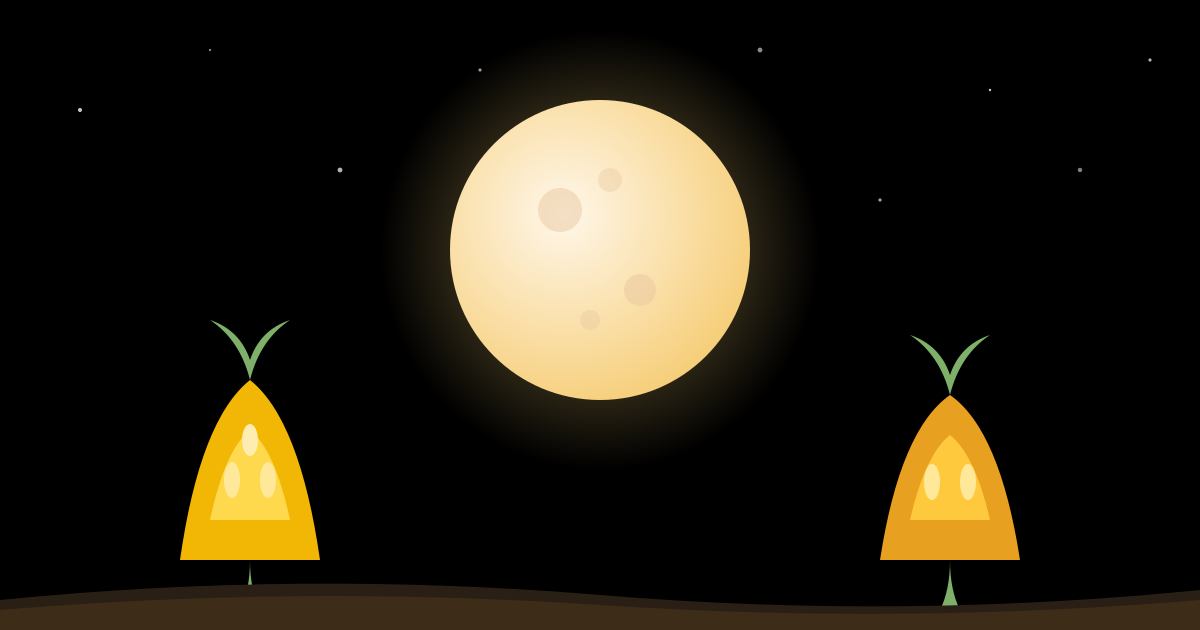
What Is a Corn Moon?
The Corn Moon is the full moon that falls in September, and its name is as practical as a farmer's almanac entry. In September, across the corn belt of North America, the harvest reaches its peak. Fields that stood green all summer turn gold, the ears harden, and the work of gathering begins in earnest. The moon that rises over that harvest took its name from the crop coming in, just as May's moon is named for flowers and June's for strawberries. The named moons are a folk calendar of the working year, and the Corn Moon marks the month when the year's biggest crop comes home.
That practicality is the point, and it is also the most common misunderstanding to clear up. The Corn Moon is not a type of moon the way a supermoon or a blood moon is. A supermoon is a full moon near perigee, genuinely closer and larger-looking. A blood moon is a total lunar eclipse, genuinely red. The Corn Moon is neither. It is a full moon in September, given a seasonal nickname by the people who lived by the harvest. Go outside on Corn Moon night and you will see a normal full moon, bright and round, rising around sunset and shining until dawn. What makes it feel different is the landscape it rises over: gold fields, cooler air, and the first real sense that the year is turning toward its end.
The name belongs to a system that runs through the whole year. The Wolf Moon in January, the Snow Moon in February, the Pink Moon in April, the Flower Moon in May, the Strawberry Moon in June, the Sturgeon Moon in August — each name marks what was happening in the natural world when that moon rose. The Corn Moon is the autumn entry in that calendar, and it arrives at a hinge point: summer's growth is finished, winter's rest has not yet begun, and the work in between is gathering, counting, and storing.
Why Is It Called the Corn Moon?
The name comes from North American folk tradition, popularized in modern times by the Old Farmer's Almanac, which attributes many full moon names to Algonquin-speaking peoples and other Native nations of the northeastern United States. The attribution is general rather than precise: the Almanac's list blends names from several traditions into one popular calendar, and not every name can be traced to a single source. What is consistent is the logic. September is when corn — the staple crop that fed whole communities through winter — was harvested, so September's moon is the Corn Moon.
Other names for September's moon tell the same harvest story from different angles, and they are worth knowing because you will meet them in older almanacs and regional folklore. The Barley Moon, used in some European traditions, marks the barley harvest. The Fruit Moon marks the month when orchard fruit ripens for picking. The Singing Moon, a name that appears in some Celtic-influenced lists, is said to mark the songs sung at harvest time. Each name is a different community noticing the same thing: September is when the year's food is gathered, and the moon that lights the late-evening work is the harvest's own moon.
One detail of the tradition matters more than the rest, because it causes genuine confusion every September. In many years the Corn Moon and the Harvest Moon are the same moon, and in other years they are not, and the reason is a quirk of how the two names are defined. The Corn Moon is defined by its month: it is September's full moon, always. The Harvest Moon is defined by its position: it is the full moon closest to the autumn equinox, which usually falls in September but sometimes falls in October. When September's full moon is the one nearest the equinox, that moon carries both names at once. When October's full moon is nearer the equinox, October's moon takes the Harvest Moon title and September's moon keeps the Corn Moon name on its own. Neither naming is wrong; they simply answer different questions, one about the calendar and one about the season.
When Is the Corn Moon?
The Corn Moon is the full moon that falls in September, and its exact date moves from year to year because the lunar cycle lasts about 29.5 days while calendar months run 28 to 31 days. Some years it arrives in early September, some years late, and the difference decides whether it also earns the Harvest Moon title that year. Check a current moon-phase calendar for the precise night rather than memorizing a date.
Watching it needs no equipment and no special timing beyond the usual full moon advice, but September gives you one gift the summer moons do not: the moon rises noticeably earlier in the evening relative to sunset for several nights in a row around the equinox, because the moon's path makes a shallow angle with the horizon at this time of year. That is the famous Harvest Moon effect, and it applies to the Corn Moon too when it falls near the equinox. The most dramatic view is at moonrise, when the moon looks largest near the horizon — an optical illusion, but a lovely one — and takes on a warm amber color from the thick air near the horizon. If you can, watch it from somewhere with a harvest in view: a field edge, a farmers market at dusk, or even a kitchen table with the season's first corn on it. The name makes more sense when the moon is rising over something actually being gathered.
The Spiritual Meaning of the Corn Moon
In modern spiritual folklore, the Corn Moon gathers around one central image: the harvest, understood honestly. Not the glossy version of harvest — baskets overflowing, everyone smiling — but the real one, which includes counting what actually grew, admitting what did not, and deciding what to carry into winter. The spring moons are about planting and the summer moons about tending, but September is the month when pretending ends. The field shows exactly what you planted and how you tended it. The Corn Moon's lore is about that reckoning, and about the gratitude that only becomes real once the counting is done.
Reaping what you sowed
The first theme is the bluntest one: you harvest what you planted. The folklore does not soften this into a promise that good intentions guarantee good outcomes — weather exists, and so does luck — but it insists on the connection between the spring's choices and the autumn's results. The reflective prompt is concrete rather than mystical: look at one area of your life and name, without flinching, what you actually planted there this year. The course you took or skipped, the relationship you tended or neglected, the habit you kept or dropped. The Corn Moon's question is not whether the harvest is fair, but whether it is legible. Can you trace this September back to last March? If you can, you know what to plant differently next spring.
Gratitude with receipts
The second theme is gratitude, and the Corn Moon's version of it is stricter than the generic kind. Full moon lore in general leans toward gratitude, but the Corn Moon's gratitude is supposed to come with receipts: named, specific, counted. Not "I am grateful for abundance" but "I am grateful for the three clients who stayed, the garden bed that finally produced tomatoes, the friend who called every week in July." The folklore's argument is that vague gratitude evaporates, while specific gratitude teaches you what actually works. A harvest inventory — a written list of what the year has genuinely yielded, in all its unevenness — is the Corn Moon's core practice for exactly this reason. It turns a feeling into information.
Storing for winter
The third theme is the most practical and the easiest to skip: storing enough for the season ahead. A harvest that is eaten all at once is not a harvest, it is a feast, and winter does not care about feasts. The folklore translates this into every currency that matters: money set aside before the lean months, rest banked before the busy season, goodwill maintained before you need it, food in the pantry before the weather turns. The question it asks is uncomfortable in a culture built on spending the good times: what are you putting away right now, while there is something to put away? The Corn Moon is the year's reminder that abundance has a second job after celebration, and that job is storage.
Letting the field rest
A quieter theme runs alongside the others, and it is the one farmers understand best: after the harvest, the field must rest. The Corn Moon's lore does not end with gathering; it ends with the permission to stop. The field that is planted without a fallow season exhausts itself, and so does the person who treats every season as a growing season. The folklore's final assignment is not another project but a planned rest: a week, a weekend, or even an evening in which nothing is planted, tended, or harvested. Rest is not the opposite of harvest. It is what makes the next harvest possible.
Corn Moon vs. Harvest Moon vs. Hunter's Moon
The three autumn moons are easy to mix up, so here is the clean distinction. The Corn Moon is September's full moon, named for the corn harvest. The Harvest Moon is the full moon closest to the autumn equinox, usually in September but sometimes in October, named for the extra evening light that once let farmers work late into the fields. The Hunter's Moon is the full moon that follows the Harvest Moon, usually in October, named for the time when game was fattest and hunting prepared communities for winter. The progression tells a story all by itself: gather the crops, gather by the last light, then gather the meat — and then winter.
There is also a distinction worth making with the newer, internet-era labels that sometimes get attached to September's moon. A Corn Moon is not a supermoon unless it also happens to fall near perigee, and it is not a blood moon unless a lunar eclipse coincides with it. Those labels describe astronomy; Corn Moon describes the calendar and the harvest. A single full moon can carry more than one label at once — a Corn Moon that is also a supermoon is simply a September full moon near perigee — but the names answer different questions, and keeping them separate keeps the folklore honest.
A Simple Corn Moon Ritual: The 15-Minute Harvest Inventory
The Corn Moon's ritual is deliberately indoors-friendly and deliberately honest: fifteen minutes, a pen and paper, no altar, no script. You will need a quiet corner and the willingness to count rather than dream. The point is to take stock, not to set intentions — September is for auditing, not planting.
First, spend five minutes listing what this year has actually yielded so far, in concrete terms. Not hopes, not plans, but results: the projects finished, the money saved, the relationships deepened, the skills gained, the health regained. Write them as a harvest list, one line each, and let it be uneven. A real harvest always is — some rows abundant, some rows thin, some rows empty because the seed never went in. The folklore says that seeing the unevenness on paper is the ritual, because the harvest you will not count is the harvest you cannot learn from.
Then spend five minutes on the two Corn Moon questions. What are you grateful for, with receipts — named, specific, counted? And what are you storing for winter: money, rest, goodwill, food, or a skill you will need when the lean months come? Answer in writing if you can; the folklore does not require a journal, only honesty, but a list you can reread in January is worth more than a feeling you forget by October.
Finish with five minutes of pure enjoyment, because a harvest that is never tasted is only storage. Eat something from the season — corn on the cob if you can get it, apples, squash, bread still warm — and eat it slowly, without a screen. The folklore's instruction here is explicit, because the rest of lunar culture is so industrious. A ritual that ends in eating is not a failed ritual. It is the Corn Moon doing exactly what September does: turning work into food, and food into a reason to be glad the field existed at all.
The Honest Fine Print
This is a mystical-entertainment site, and the usual honesty applies: the Corn Moon will not make your plans bear fruit, guarantee abundance, or predict your winter. It is an ordinary full moon in September with a lovely folk name, and the folklore around it is modern storytelling layered over older seasonal naming, not a force of nature and not a prediction about your life. The internet's wilder claims about full moons in general — that they cause sleeplessness, accidents, or emotional chaos in everyone — are not supported by the evidence in any reliable way, and the Corn Moon is no exception.
What the Corn Moon genuinely offers is a well-timed excuse to take stock. It arrives in the month when stock-taking is hardest to avoid, and a named, storied full moon is a better prompt to pause than a blank calendar square. Take the symbolism, leave the superstition, and go count something real. The harvest is real regardless of what the Moon was doing, and counting it honestly is a practice worth keeping long after September ends.
Your Corn Moon Game Plan
September's full moon comes once a year, so it is worth marking rather than letting it pass unnoticed. If you want to catch it:
- When to look: on the September full moon night, at moonrise around sunset, when the moon looks largest and most amber near the horizon.
- Where to look: anywhere with a harvest in view — a field edge, a farmers market at dusk, or a kitchen table with the season's produce on it — so the name makes sense in the landscape.
- The ritual night: take the 15-minute harvest inventory on the full moon night itself, or any evening in the week around it — the folklore is generous about timing.
- The follow-through: the lore's real assignment comes after: put something away for winter this week — money, rest, or a pantry shelf — and let one field in your life rest on purpose. A full moon is a prompt; the season after is the answer.
The Corn Moon has been rising over September's harvests for as long as people have named moons after the seasons. Go outside on the brightest night of early autumn, look at what has been gathered, and let the visible harvest remind you of your own: it took all summer to get here, and it is finally, unmistakably, in.
Frequently asked questions
What is a Corn Moon?
The Corn Moon is the traditional name for the full moon in September, named for the corn harvest that peaks that month in North America. It is an ordinary full moon with a seasonal folk name, not a different kind of moon, and it does not look golden like corn in the sky.
Is the Corn Moon the same as the Harvest Moon?
Not quite. The Harvest Moon is the full moon closest to the autumn equinox, which usually falls in September but sometimes in October. When September's full moon is the one nearest the equinox, it carries both names at once. When October's full moon is nearer the equinox, October's moon is the Harvest Moon and September's moon keeps the Corn Moon name on its own.
What is the spiritual meaning of the Corn Moon?
In modern spiritual folklore, the Corn Moon symbolizes harvest: reaping what you sowed, taking honest stock of the year so far, gratitude with receipts, and storing enough — energy, money, rest — for the winter ahead. It is the year's audit moon, arriving when results can no longer be postponed or imagined. The practice is reflective entertainment, not a guaranteed result.
When is the Corn Moon?
The Corn Moon is the full moon that falls in September. Its exact calendar date moves each year because the lunar cycle is about 29.5 days, so check a current moon-phase calendar for the precise night. It rises around sunset and shines all night, often looking large and amber near the horizon.
Does the Corn Moon look like corn?
No. The Corn Moon looks like any other full moon — bright white or golden, especially near the horizon when the thick air warms its color. Its name refers to the corn harvest happening on Earth in September, not to the color or shape of the moon itself.
Keep exploring
Harvest Moon Meaning: Spiritual Significance of September's Full Moon
What is the Harvest Moon? The astronomy behind September's famous full moon, why it looks so big and orange, its spiritual meaning of gratitude and gathering, and a simple harvest moon ritual.
Read the meaning →
Hunter's Moon Meaning: Spiritual Significance of October's Full Moon
The Hunter's Moon is October's full moon of gratitude and preparation. Discover its folklore, spiritual meaning, the 2026 date, and a simple moonrise ritual.
Read the meaning →
Full Moon Ritual Guide: Release & Manifest Under the Full Moon
Learn exactly how to perform a powerful full moon ritual for release, gratitude, and renewal — step-by-step guide with supplies, timing, and intention ideas.
Read the meaning →
Strawberry Moon Meaning: Why June's Full Moon Is Called the Strawberry Moon
Why is June's full moon called the Strawberry Moon? The Algonquin strawberry-harvest folklore behind the name, its spiritual symbolism of ripening, sweetness and gratitude, and a simple 15-minute berry gratitude ritual.
Read the meaning →