
Hunter's Moon Meaning: Spiritual Significance of October's Full Moon
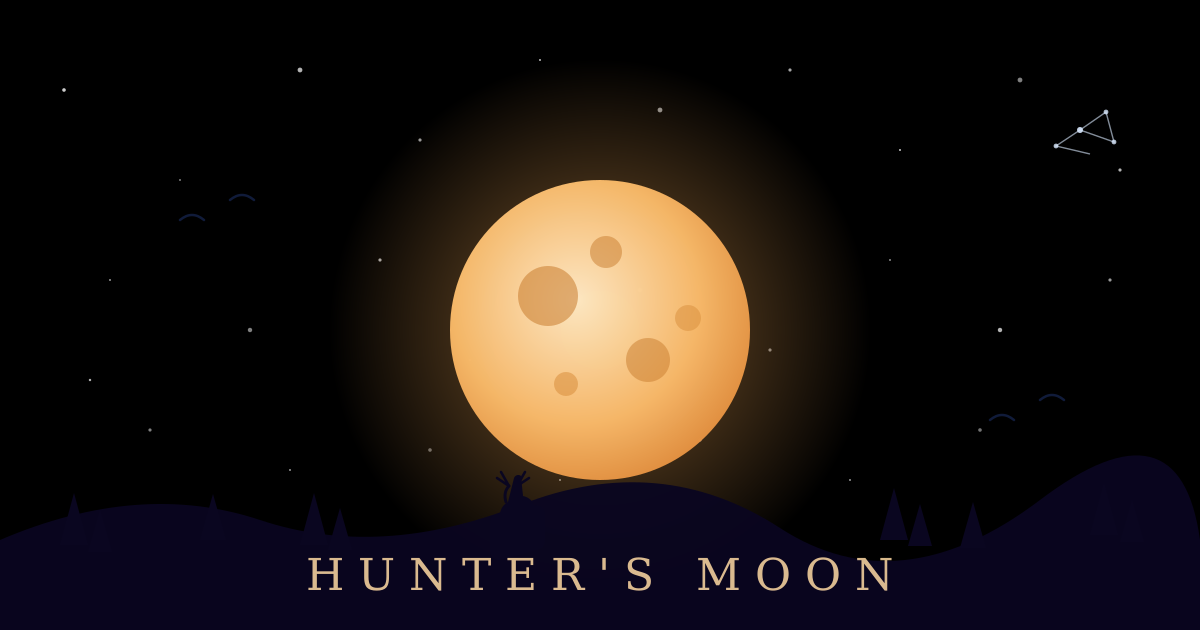
There is a particular October evening that everyone remembers once they have seen it: the sun dips below the horizon, and in the east a moon rises so large, so amber, so improbably close that it seems to fill the whole treeline. That is the Hunter's Moon — the year's most cinematic full moon, arriving just as the world turns toward winter. In 2026 it reaches peak illumination on Monday, October 26 at 12:12 AM EDT, but the best show comes the evening before: step outside on Sunday, October 25 around sunset, face east, and watch it climb.
The Hunter's Moon has carried meaning for as long as people have watched the seasons change. It is the moon of the in-between — summer's warmth still in the air, winter's hush on the way — and traditions across the Northern Hemisphere have treated it as a threshold: a time to take stock, give thanks, and gather your strength for the darker months ahead. Whether you approach it as folklore, as spirituality, or simply as a beautiful night to look up, the Hunter's Moon rewards attention.
Why Is It Called the Hunter's Moon?
The name is older than the almanacs that recorded it, rooted in the agricultural rhythms of the pre-industrial world. After the harvest came in, the fields stood cleared and bare; the autumn winds stripped the last leaves from the trees; and the deer, ducks, and other game animals had spent the summer and early fall fattening on the abundance of the growing season. In that open, thinned-out landscape, game was easier to spot — and, crucially, the moon rose bright and early, soon after sunset, giving hunters extra hours of light to track animals through the fields and woods.
For generations, this was the season to hunt in earnest: to bring in meat, preserve it, and lay in a store of provisions that would carry families through the long winter. The Hunter's Moon was, in the most literal sense, a working moon — the light by which survival preparations happened. Old Farmer's Almanac traditions trace many full-moon names to these seasonal tasks, and the Hunter's Moon is among the most evocative: the moon of the gatherers becoming the moon of the providers.
Some traditions also call October's moon the Travel Moon, the Dying Grass Moon, or the Sanguine Moon — names that echo the same themes of movement, decline, and the rich blood-red color the moon sometimes wears as it rises through autumn haze. But it is the Hunter's Moon name that stuck, and its image endures: the amber moon, the emptying fields, the quiet urgency of preparing for cold.
Hunter's Moon vs. Harvest Moon: What's the Difference?
The two autumn full moons are often confused, so here is the clean rule. The Harvest Moon is the full moon closest to the autumnal equinox — the one that gave farmers extra evening light to bring in the crops. In 2026, that was September 26. The Hunter's Moon is simply the next full moon after the Harvest Moon. In 2026, that is October 26.
Their meanings follow their seasons. The Harvest Moon celebrates the gathering-in: abundance, reward, the sweetness of effort paying off. The Hunter's Moon marks what comes next: preparation, provision, the shift from gathering to guarding. One is the feast; the other is the packing of the pantry. Together they form autumn's two-movement overture to winter.
One quirk worth knowing: because the Harvest Moon follows the equinox rather than the calendar, the Hunter's Moon does not always land in October. In years when the Harvest Moon falls in early October, the Hunter's Moon can slide into November — the Almanac keeps a running record of these wanderings, which is why the name follows the sequence, not the month.
The Spiritual Meaning of the Hunter's Moon
Spiritually, the Hunter's Moon is the moon of the inner harvest. Where the Harvest Moon asks "what have you grown?", the Hunter's Moon asks the harder follow-up: "what have you gathered — and is it enough to carry you through the dark?" It is a full moon of honest accounting, and practitioners across folk-magic, lunar-witchcraft, and modern spiritual traditions read it in strikingly similar ways.
The central themes are gratitude, preparation, and focus. Gratitude, because this is the last full moon before the year's true inward turn — the moment to name, specifically and out loud, everything the year has yielded: the opportunities, the lessons, even the hard things that taught you something. Preparation, because winter is coming in every sense: the season asks you to tend your reserves — your rest, your savings, your boundaries, your closest relationships — the way farmers once tended their stores. And focus, because the hunter is the moon's totem image: patient, observant, single-pointed. The Hunter's Moon is said to sharpen intention the way cold air sharpens the senses.
There is also a thread of courage and release running through Hunter's Moon lore. The hunt requires stepping into the unknown; spiritually, this moon invites you to pursue one goal you have been circling all year — to finally take the shot. And it asks you to set down what would only weigh you down in the coming stillness: a grudge, a draining habit, a plan that no longer fits. The hunter travels light; so should you, heading into winter.
The 2026 Hunter's Moon in Taurus: Grounded Full Moon Energy
Astronomically, the full moon of October 26, 2026 falls in Taurus — the earth sign of the bull, opposite the Scorpio sun. Lunar practitioners read each full moon through its sign, and Taurus lends this Hunter's Moon a distinctly grounded flavor.
Taurus energy is about the senses and the stable: good food, warm rooms, honest work, money that is earned and kept. Paired with the Hunter's Moon's preparation theme, it suggests a full moon for practical spirituality — not lofty visions but tangible tending. Review your finances. Mend something in your home. Cook a nourishing meal and share it. Make one concrete plan that makes your winter safer or softer. Taurus does not ask you to dream bigger; it asks you to build sturdier.
This is also a moon that rewards embodiment: long walks under the moonlight, stretching, a bath by candlelight, time with your hands in something real — kneading bread, working soil, carving a pumpkin. The Hunter's Moon in Taurus is, in the end, a reminder that the spiritual and the physical are not separate rooms. The provisions you lay in for winter are both literal and inner, and both matter.
How to Celebrate: A Simple Hunter's Moon Ritual
You do not need an altar or a coven to honor the Hunter's Moon. The moon itself is the centerpiece — everything else is just a way of paying attention. Try this simple ritual on the evening of October 25 or 26.
1. Watch the moonrise
The magic hour is sunset. Find an open view toward the eastern horizon — a field, a rooftop, even a east-facing window — and watch the moon come up. Rising through the thick air near the horizon, it will look enormous and amber. (This is the famous moon illusion: your brain exaggerates the size of objects near the horizon. Knowing the science does not make it less breathtaking.) Spend a few minutes in silence before doing anything else. Let the month's noise fall away.
2. Write your harvest list
Bring a journal and write down what this year has harvested for you — not just the wins, but the growth. The friendship that deepened. The skill you finally learned. The hard season you survived. Aim for at least ten entries; specificity matters more than grandeur. Read the list slowly when you are done, and say thank you — to the universe, to your own effort, to whoever comes to mind.
3. Light an amber candle
Orange, amber, or gold candles echo the Hunter's Moon's rising color and carry the traditional associations of warmth, courage, and harvest. As you light it, name one goal you want to pursue with a hunter's focus before the year ends — one thing, stated plainly. Then write down the single next step, small enough to do this week.
4. Release what you will not carry
On a separate slip of paper, write down one thing you are choosing to leave behind before winter — a worry, a resentment, an obligation that is not yours. Read it once, then tear it up or burn it safely (a fireproof bowl, outdoors, with water nearby). As the pieces scatter, the release becomes physical, which is the whole point: the body learns what the mind agrees to.
5. Share the warmth
The old harvest season ended in shared meals, and the Hunter's Moon keeps that thread. Share something warm: a pot of soup with a neighbor, a phone call to someone you miss, a donation of winter coats you no longer wear. Generosity under the full moon is one of the oldest forms of magic there is — it turns abundance into community, which is the only store that never spoils.
Hunter's Moon Dreams: What to Watch For
Full moons are famously vivid for dreamers, and the Hunter's Moon — with its themes of pursuit and preparation — tends to color the dreamscape in particular ways. Dreams of being chased or chasing something are the classic Hunter's Moon dream: the hunt playing out in the sleeping mind. If you are doing the chasing, dream dictionaries often read it as your ambition pursuing you back — a goal demanding attention. If you are being chased, it may point to something you have been avoiding that is finally catching up.
Dreams of forests, fields, animals, and open landscapes also cluster around this moon — the imagery of the season itself. A deer in a dream is often read as gentleness or grace entering your life; a wolf, as instinct asking to be heard. And preparation dreams — packing, storing food, readying a house — mirror the moon's provisioning theme: your subconscious rehearsing for a season it senses coming.
Keep your journal by the bed for the nights around October 25–27. Full-moon dreams are not prophecies, but they are often unusually honest — the sleeping mind, like the hunter's moonlit field, has nowhere to hide.
However you spend it — under the moonrise with a journal, at the table with people you love, or simply glancing up on your way home — let the Hunter's Moon do what it has always done: light the way through the thinning year, and remind you that you have gathered enough, and are strong enough, for whatever winter brings.
Frequently asked questions
When is the Hunter's Moon in 2026?
The Hunter's Moon peaks on Monday, October 26, 2026 at 12:12 AM EDT. The best time to watch it rise is Sunday evening, October 25 — find an open view toward the eastern horizon around sunset and you will see it glowing large and low. It will look nearly full on the nights immediately before and after as well.
Why is it called the Hunter's Moon?
The name comes from the seasonal shift after the harvest: fields were cleared, leaves had fallen, and game animals had fattened up over the summer, making them easier to spot. The bright moon rising soon after sunset gave hunters extra evening light to track game and lay in meat for the winter. It is the full moon that follows the Harvest Moon.
What is the spiritual meaning of the Hunter's Moon?
Spiritually, the Hunter's Moon symbolizes the inner harvest: taking stock of what the year has grown, expressing gratitude, and sharpening your focus on what still matters before winter. Traditions associate it with courage, preparation, gratitude, and release — a time to gather your strength and let go of what will not serve you in the darker months ahead.
What is the difference between the Hunter's Moon and the Harvest Moon?
The Harvest Moon is the full moon closest to the autumnal equinox (September 26, 2026 this year), and the Hunter's Moon is simply the next full moon after it (October 26, 2026). The Harvest Moon celebrates gathering the crops; the Hunter's Moon marks preparing for winter. In some years the Hunter's Moon can fall in November if the Harvest Moon falls in October.
How can I celebrate the Hunter's Moon?
Keep it simple: watch the moonrise around sunset, write a gratitude list of what this year has harvested for you, light an orange or amber candle, and release one thing you do not want to carry into winter. Many people also journal intentions for the darker months, spend time in nature, or make a seasonal meal to share.
Keep exploring
Blue Moon Spiritual Meaning: Rare Lunar Energy & How to Work With It
What is a blue moon? Discover the astronomy behind the rare second full moon, its spiritual significance, and a simple blue moon ritual.
Read the meaning →
Full Moon Ritual Guide: Release & Manifest Under the Full Moon
Learn exactly how to perform a powerful full moon ritual for release, gratitude, and renewal — step-by-step guide with supplies, timing, and intention ideas.
Read the meaning →
The 8 Moon Phases & Their Meanings: A Complete Spiritual Guide
Explore the spiritual meaning of all 8 moon phases — from new moon intentions to full moon release — and learn how to align your rituals with each phase.
Read the meaning →
What Does It Mean to Dream of Being Chased?
Being chased in a dream is one of the most common nightmares. Discover what dreaming of being chased means — anxiety, avoidance, and how to face it.
Read the meaning →