
Supermoon Meaning: Spiritual Significance of the Year's Biggest Full Moon
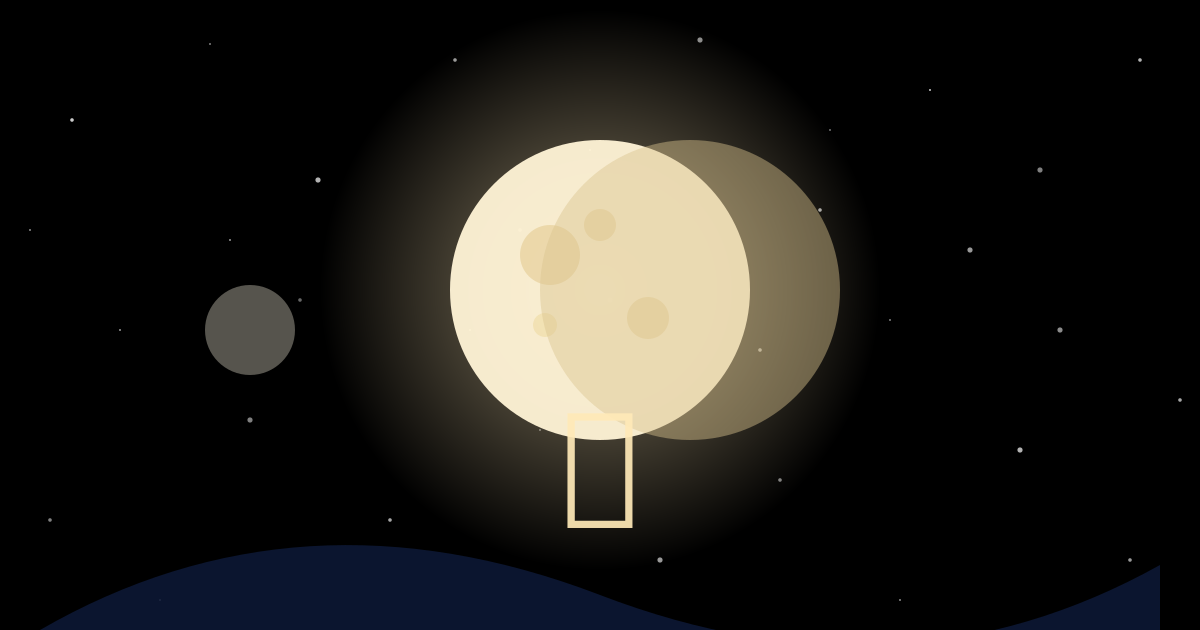
Every few full moons, the moon puts on a show that needs no telescope, no almanac, no expertise — just eyes and an open patch of eastern sky. It rises enormous, golden, and so improbably large that strangers stop on sidewalks to point at it. That is the supermoon: the year's biggest full moon, and the only lunar event that regularly turns ordinary evenings into shared, wide-eyed moments of wonder.
The supermoon is rare enough to feel special (just three or four happen each year, always in a row) and common enough to be catchable — you can plan for the next one. In 2026 two supermoons are still ahead: the Beaver Moon on November 24 and the Cold Moon on December 23, the closest and largest full moon of the entire year. This guide covers the real astronomy behind supermoons, what they mean in spiritual traditions, and a simple ritual for making the most of the brightest nights of the year.
What Is a Supermoon? The Astronomy
The Moon does not circle Earth in a perfect round path — it travels an ellipse, and that ellipse brings it closer to us and farther away over each 27.5-day orbit. The closest point is called perigee; the farthest, apogee. Most of the time, the full moon falls somewhere in between. But when a full moon coincides with the Moon being at or near perigee, you get a supermoon.
The difference is measurable. At perigee, the Moon is roughly 356,000 to 362,000 kilometers away, versus about 406,000 kilometers at apogee. According to NASA, a supermoon can appear up to 14% bigger in diameter and 30% brighter than a full moon at its farthest point. That is the extreme comparison — against an average full moon, the change is subtler, and honestly most people would not confidently pick the supermoon out of a lineup of monthly full moons without measurements.
What makes supermoons feel enormous anyway is the moon illusion: when the moon hangs low near the horizon, rising through the thick air at dusk, your brain exaggerates its size against familiar landmarks. A supermoon at moonrise is the double dose — the genuinely closest full moon, dressed in the illusion's costume — which is why the best supermoon photos are all moonrises, glowing orange above rooftops, mountains, and treelines.
One piece of trivia worth knowing: the word itself is not an astronomer's term. Astrologer Richard Nolle coined "supermoon" in 1979, defining it as a new or full moon within 90% of the closest perigee. (New moons at perigee exist too — they're invisible, so nobody holds rituals for them.) Scientists tend to prefer "perigee full moon," but "supermoon" won the public, and after the headline-making series of 2016, it became part of the cultural calendar.
The 2026 Supermoons: Dates and Distances
2026 brings three supermoons, and the year's full-moon calendar has one more quirk: a monthly Blue Moon on May 31 (two full moons in one calendar month), giving 2026 thirteen full moons in total. Here are the supermoon nights:
January 3 — Wolf Moon (supermoon). The year's first supermoon rose at 5:03 a.m. EST, about 225,130 miles (362,312 km) away. January's full moon carries the old name "Wolf Moon" from the tradition that wolves howled most hungrily in the deep of winter.
November 24 — Beaver Moon (supermoon). The next supermoon, and the one to mark your calendar for: full at 9:53 a.m. EST, about 224,170 miles (360,768 km) distant. The best viewing will be the evening of Monday, November 23 at moonrise, and again on the evening of November 24 — the moon will look nearly full both nights.
December 23 — Cold Moon (supermoon). The grand finale: full at 8:28 p.m. EST at roughly 221,667 miles (356,740 km) — the closest, largest, and brightest full moon of 2026. Watch it rise on the evening of December 23, when it will climb into the dark just in time for the evening.
Supermoon vs. Micromoon
Every supermoon has an opposite: the micromoon, a full moon near apogee, when the Moon is at its farthest. In 2026 the June full moon — the Strawberry Moon on June 29 — plays that role. A micromoon can look up to 14% smaller and dimmer than the farthest-perigee full moon.
In spiritual and astrological reading, the pair makes a neat symbolic scale: the supermoon is the full moon at maximum presence — everything amplified, illuminated, impossible to ignore — while the micromoon is the full moon at minimum presence, quiet and inward. Most traditions treat the micromoon as a whisper and the supermoon as a shout. You can hold rituals under either; the energy is simply dialed to different volumes.
The Spiritual Meaning of a Supermoon
Spiritually, the supermoon is not really a separate event from the full moon — it is a full moon turned up to full volume. Every classic full-moon theme runs through it: illumination (hidden things revealed), release (letting go at the cycle's peak), gratitude (the harvest of the month), and emotional clarity (feelings surfacing). The supermoon tradition simply holds that all of it lands harder, brighter, closer.
The most consistent spiritual reading is the magnifier. Practitioners across lunar witchcraft, folk magic, and modern manifestation traditions describe the supermoon as a lens: whatever is already present in your life — the relationship that's been simmering, the decision you've been circling, the feeling you've been avoiding — comes into sharper focus. It does not create situations out of thin air; it makes the ones already there impossible to look away from. That is why many people report supermoons as emotionally intense nights: sleep runs light, dreams run vivid, and long-postponed conversations suddenly feel urgent.
There is a gentler thread too. Because the supermoon is the moon at its closest, some traditions read it as the moon of nearness and belonging — a night to strengthen bonds, to gather people you love under the same sky, to feel your place in something larger. And as the biggest light of the year, it carries an old association with courage: things feel doable under a supermoon, the way a brightly lit room feels safer than a dim one. Manifestation practitioners often save their most important intentions of the year for supermoon nights, treating the amplified light as amplified intention.
The honest framing, which lunar traditions tend to respect: the supermoon is an amplifier, not a magic wand. It clarifies and intensifies; it doesn't override cause and effect. The ritual below works with that grain.
The Beaver Moon Supermoon: November 24, 2026
Since the next supermoon is the November Beaver Moon, it is worth knowing its own flavor. The name comes from the old seasonal note that beavers grew most active in November, building dams and stocking lodges before the waters froze — the last window of industriousness before winter's stillness.
Read together, "supermoon + Beaver Moon" becomes a moon of preparation made visible: taking stock of what you have stored — savings, rest, relationships, resolve — and doing the last strengthening work before the dark months. With the year's closest full moon still a month behind it, the Beaver supermoon also serves as the opening act: a rehearsal under bright light for December's grandest moon. If there is one goal you want clearly in sight before the year ends, name it under this moon.
A Simple Supermoon Ritual
The full moon's classic work is release plus intention, and a supermoon asks for the same ritual at its most deliberate. You need nothing special: a moonrise, a pen, paper, and ten unhurried minutes.
1. Catch the moonrise
The evening before or of the full moon, be outside a few minutes before sunset, facing east with a clear view of the horizon. The supermoon will climb huge and amber — let that be the opening of the ritual. A few minutes of silent watching counts as the cleansing step; the old traditions treat moonlight itself as the purifier.
2. Write the magnified list
Ask the magnifier question: what in my life has gotten too big to ignore? Write down whatever surfaces — a worry, a hope, a conversation, a habit — without editing. The supermoon's job is revelation; yours is just honesty on paper. Keep it to one page; the point is clarity, not cataloging.
3. Release one, charge one
Circle one item you are ready to release, and one intention you want amplified. Release the first in the traditional full-moon way — tear the paper or burn it safely outdoors, letting the act be physical. Then write the intention fresh on a clean slip, hold it up to the moonlight for a moment, and keep it somewhere you will see daily. Release and intention: the supermoon's two hands.
4. Close with gratitude
End where the Beaver Moon begins: name three provisions — literal or inner — that you have stored up and are genuinely thankful for. The old full-moon cycle closes in gratitude, and the supermoon, as the brightest light of the year, is the fitting place to say thank you out loud, under the largest moon you will see all year.
Supermoon Dreams: What to Watch For
Full moons are famous for vivid dreams, and supermoons come with more than their share of lore — lighter sleep, stranger dreams, waking at 3 a.m. for no reason. Sleep scientists attribute some of this to the extra light; dream traditions read the content itself.
The recurring motifs around supermoons are magnified versions of ordinary dream images: giant versions of familiar things, floodlights and spotlights, eyes watching, tides rising. Dreams of water swelling are the classic supermoon dream — the moon's pull on the tides playing out in the sleeping mind — often read as emotions rising toward the surface. If your supermoon-night dreams feel unusually literal, that is the theme: the magnifier at work while you sleep.
Keep a journal by the bed on November 23–25 and December 22–24. Supermoon dreams are not predictions — treat them as unusually loud echoes of what is already on your mind, which is exactly what a magnifier would produce.
However you spend it — on a sidewalk pointing at the sky with strangers, under the moonrise with a journal, or simply noticing how bright your bedroom gets — the supermoon is the year's reminder that the sky still knows how to astonish. The next two are coming soon: November 24, and the closest full moon of 2026 on December 23. Mark the calendar, step outside at moonrise, and look up.
Frequently asked questions
What is a supermoon?
A supermoon is a full moon that coincides with the Moon being at or near perigee — the closest point in its elliptical orbit to Earth. Because it is closer, the moon can appear up to 14% bigger and 30% brighter than an average full moon, according to NASA. The term was coined by astrologer Richard Nolle in 1979 and only became widely used in the last decade.
When is the next supermoon in 2026?
The next supermoon is the Beaver Moon on Tuesday, November 24, 2026, reaching full at 9:53 a.m. EST. It will be about 224,170 miles (360,768 km) from Earth. The final supermoon of 2026 is the Cold Moon on December 23 at 8:28 p.m. EST — the closest and largest full moon of the entire year at roughly 221,667 miles (356,740 km). The first 2026 supermoon was the Wolf Moon on January 3.
What is the spiritual meaning of a supermoon?
Spiritually, a supermoon is read as a full moon turned up to full volume: every classic full-moon theme — illumination, release, gratitude, emotional clarity — felt more intensely. Many traditions treat the supermoon as a magnifier rather than a separate event: whatever is already present in your life comes into sharper focus, and practitioners often use it for the most important release rituals and intentions of the year.
Is a supermoon really visibly bigger?
A little. Compared with a micromoon (a full moon at apogee, the farthest point), a supermoon looks about 14% larger in diameter and 30% brighter. Compared with an average full moon, the difference is subtle — most people would not notice it side by side without photographs. The real show comes when a supermoon rises near the horizon, where the famous moon illusion makes it look enormous regardless.
What is the best way to watch a supermoon?
Watch it rise, not peak. Full moons rise around sunset, and a supermoon rising through the thick air near the horizon looks dramatically large and golden thanks to the moon illusion. Pick the evening of the full moon (or the night before or after), find an open view east with something on the horizon — buildings, hills, trees — and be outside a few minutes before sunset.
Keep exploring
Blue Moon Spiritual Meaning: Rare Lunar Energy & How to Work With It
What is a blue moon? Discover the astronomy behind the rare second full moon, its spiritual significance, and a simple blue moon ritual.
Read the meaning →
Full Moon Ritual Guide: Release & Manifest Under the Full Moon
Learn exactly how to perform a powerful full moon ritual for release, gratitude, and renewal — step-by-step guide with supplies, timing, and intention ideas.
Read the meaning →
The 8 Moon Phases & Their Meanings: A Complete Spiritual Guide
Explore the spiritual meaning of all 8 moon phases — from new moon intentions to full moon release — and learn how to align your rituals with each phase.
Read the meaning →
What Does It Mean to Dream of Being Chased?
Being chased in a dream is one of the most common nightmares. Discover what dreaming of being chased means — anxiety, avoidance, and how to face it.
Read the meaning →