
Jera Rune Meaning: The Harvest, Patience & Reaping What You Sow
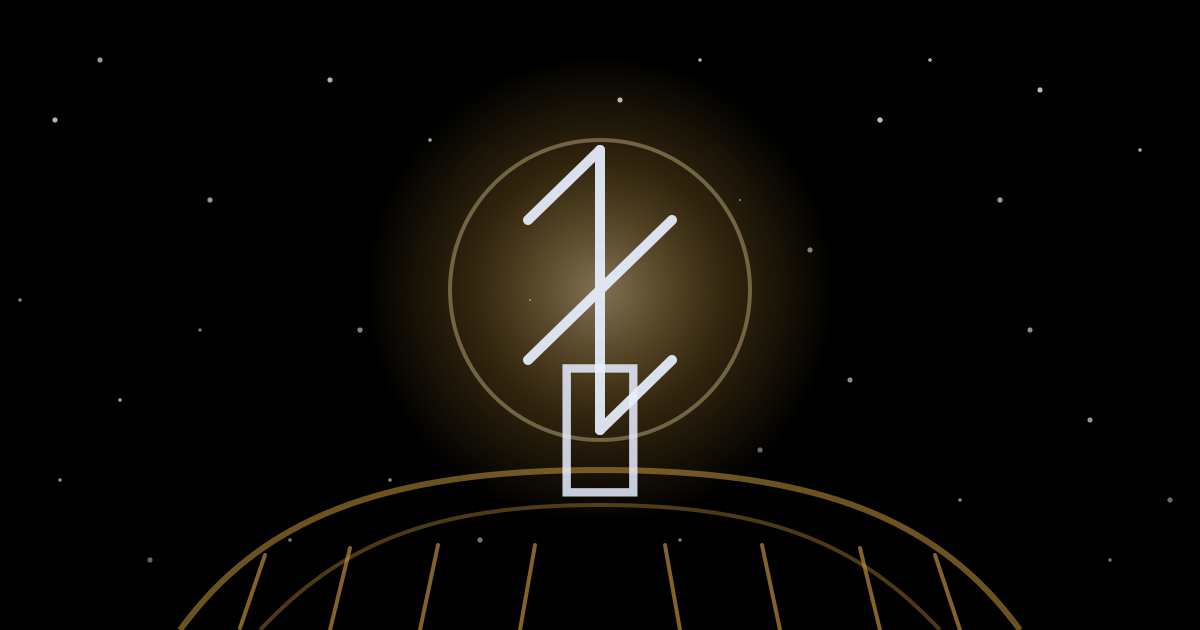
Every year, farmers perform the same miracle, and every year it works the same way: seed goes into cold ground, nothing happens for months, and then — without a single shortcut — the field turns gold. Jera (ᛃ) is the rune of that miracle. Its Proto-Germanic name, *jēran, means "year," and it is the ancestor of our modern word year itself. When Jera appears in a reading, it is telling you that you are inside a cycle, not a dead end: something you planted — a skill, a relationship, a plan — is moving through its seasons, and the harvest is coming in its proper time.
Jera is the twelfth rune of the Elder Futhark and the final rune of the first aett, Freyr's family of eight — a position that gives it a special gravity. It closes the first half of the rune row the way harvest closes the growing year: everything that came before it has been preparation, and everything after it begins from the gathered yield. Look at its shape — two angles turning into each other like a wheel — and you can see the year turning on its axis. This is not a rune of sudden luck. It is the rune of earned reward, and it has a farmer's honesty about what "earned" really means: the work was done, the waiting was endured, and the season did the rest.
Jera's Core Meaning in Divination
In a casting, Jera is the signal of the lawful harvest. Rewards are ripening from sustained effort: the promotion that follows years of solid work, the savings that quietly became a down payment, the reputation built post by post and finally noticed. The rune does not promise that reward arrives tomorrow. Its promise is deeper and more reliable: the mechanism is working. What you put in is what comes out, at the rate the world actually produces results. Readers call Jera the karma rune of the Futhark — not as punishment, but as the simple, neutral law of sowing and reaping.
The rune's second great theme is patience as a strategy, not a consolation prize. Modern life trains us to treat waiting as failure — as proof that something is broken. Jera inverts that completely. The farmer does not stand over the field in March and declare the soil a failure; she understands that growth is happening where she cannot see it. When this rune appears, it usually arrives for the person who is about to abandon something worthwhile three weeks before it would have worked. The guidance is specific: do not uproot the crop to check the roots. Keep tending. The season is doing its job.
Jera also governs cycles and timing. Everything it touches comes in seasons — not straight lines. Progress looks like a spiral: the same lessons returning at a higher level, the same work repeated until it transforms into ease. Drawing Jera often marks a turning point, the end of one cycle bleeding into the start of the next. Pay attention to what is finishing, because this rune says the ending is the beginning's raw material. The harvest you are gathering now becomes the seed of the next year.
The Harvest You Can't Rush: Jera and Natural Timing
Here is what makes Jera unique among the runes: it has no reversed position. Its shape reads the same upright and upside down, and most rune readers treat this as deliberate — the wheel turns, and you cannot flip a wheel. Jera's "shadow" meaning comes not from direction but from timing: the harvest gathered too early, when the grain is still green, or gathered too late, when it has rotted in the field. Both errors are the same mistake at different speeds — refusing the season's authority.
The too-early harvest is the more common modern error. It looks like launching before the product is ready, demanding a commitment before the trust is built, pulling the plant up to check whether the roots are growing. Jera warns that premature reaping destroys what it wants to save: the unripe fruit is not food, and the rushed project is not a launch. The rune's question in this case is blunt — who are you hurrying for? The grain ripens for no one's calendar.
The too-late harvest is quieter and sadder. It looks like the opportunity let to rot: the skill never shipped, the apology never made, the savings spent instead of sown — and then the resentment, the fantasy that the world was unfair rather than the season simply over. Jera is honest here, too: cycles turn whether or not you are ready. Miss the harvest and you do not get a second autumn — but you do get a new spring. The rune's wisdom is that every missed harvest is a lesson about planting, not a verdict on your worth.
Jera in Love and Relationships
In love readings, Jera is the rune of the long game. It favors relationships that ripen slowly — the friendship that deepens over years, the courtship built on steady showing-up rather than grand gestures, the marriage improved by a thousand unglamorous kindnesses. Where some runes celebrate the spark, Jera celebrates the harvest: the point, months or years in, when you realize trust has quietly grown dense and tall around you.
For new relationships, Jera's counsel is almost entirely about not forcing the season. You cannot harvest love in the planting month. The rune blesses the patient work — the regular calls, the remembered details, the willingness to let someone reveal themselves at their own pace — and warns against the green-fruit harvest of demanding commitment from ground that has barely been sown. If you are wondering whether this one is serious, Jera's answer is to watch what keeps growing across the seasons, not what flares across a single evening.
In established partnerships, Jera marks the reward of the tended marriage: the ease that arrives after the hard years of negotiation and repair, the way two people who kept showing up discover they have grown something neither could have grown alone. It is also the rune of cyclical repair — relationships, like fields, go fallow and get replanted. A rough patch is not a failure; it is winter. Jera asks only that you remember what you planted here, and tend it through the cold months instead of abandoning the field.
Jera in Career, Money, and Goals
Career-wise, Jera is traditionally read as the rune of the compounding career: reputations built project by project, skills deepened year by year, the slow climb that finally crests into visibility. It favors the person who has been doing the unglamorous work — and tells them the bill is coming due in their favor. If you have been sowing steadily and seeing nothing, this is the rune that says the soil is not empty. The growth is underground, and underground is where it should be.
The rune is especially strong around projects with natural gestation periods: degrees, books, businesses, apprenticeships — anything that cannot be rushed without being ruined. When Jera appears beside a long project, it is read as a green light to stay the course, and a red light to any scheme promising the same result faster. Jera is the enemy of the shortcut. Every shortcut in its territory gets rerouted back through the field.
With money, Jera is one of the most welcome runes in the row. It governs honest accumulation: savings that compound, investments that mature, assets that appreciate because time passed, not because luck struck. The rune favors diversification the way a farmer diversifies crops — some quick, some slow, some for insurance — and it warns against pulling up the harvest to count the roots. Do not check the portfolio daily. Tend it seasonally. The old Norse would have nodded knowingly at modern index funds: same principle, newer field.
For goals of any kind, Jera offers the farmer's calendar as a planning tool: work in seasons, expect in seasons. Spring is for planting (starting, learning, committing). Summer is for tending (the long middle, the daily grind, the invisible growth). Autumn is for harvest (launches, asks, collecting). Winter is for rest and accounting (review, repair, seed-saving). Most failed goals, Jera suggests, failed because someone tried to harvest in spring or plant in autumn. Match your actions to the season, and the season will match your effort.
The Mythology Behind Jera: The Year Wheel and the Harvest
The medieval rune poems give Jera some of the warmest lines in the whole tradition. The Anglo-Saxon rune poem calls ger the hope of men — the moment when, as the poem puts it, the earth gives its bright fruits to rich and poor alike. The Old Norwegian poem calls the plentiful year a blessing for all people, with the summer good and the fields full-grown. The Icelandic poem agrees: the harvest is good for the land. Across all three poems, Jera is never about conquest or glory. It is about the year being good to everyone — the most communal of the runes' blessings.
That communal note matters. For the Norse and Germanic peoples, the harvest was not a metaphor — it was survival, and it was shared. A good year fed the whole hall; a bad year starved it. Jera's shape, the turning double-angle, echoes the great wheels of the northern imagination: the year wheel, the sun's journey, the cycle of the seasons that no king could stop and no prayer could hurry. To draw Jera was to remember that you belong to something larger than your effort — the cycle that turns whether you help it or not, but rewards you generously when you do.
The rune's position as the twelfth also matters: twelve is the number of the full cycle — twelve months, twelve signs, the completed round. And tucked at the end of the first aett, Jera functions as the futhark's own turning point: harvest your learning from the first eight runes, then carry it forward into the second aett's storms. Scholars note this is exactly how the Norse organized knowledge — not in abstract systems, but in cycles you live through. Jera is the rune that turns the row from theory into the weather you will actually face.
And then there is the quiet linguistic gift: every time you say the word "year," you are speaking Jera. The rune's name survived the millennium not in some scholarly text but in the ordinary word for the cycle we all still live inside. Jera is not a lost rune. It is the rune we all name, every time we count the seasons of a life.
How to Work With Jera: A Simple Practice
Jera's practices are seasonal, because Jera is seasons. The simplest is the planting ritual: choose one real, small thing you want to grow in your life, and give it a planting ceremony — write it on paper, plant an actual seed with it, or simply speak the commitment aloud on a date you will remember. Then define the tending: one small action per week, no more, no less. The Norse farmer understood that a field needs attention, not obsession. Weekly tending beats hourly staring.
For a deeper practice, draw a year wheel. Sketch a circle divided into four seasons and write, in each quarter, what that season is for in your current life: what are you planting this spring, tending this summer, harvesting this autumn, resting through this winter? Most people discover they have been trying to do all four jobs at once. The wheel's wisdom is permission to do one job well, and to let the other seasons be seasons. Review the wheel quarterly — a ten-minute harvest review changes how the next season goes.
Jera also rewards the practice of harvest gratitude as inventory. Once a month, list what has ripened: the skills that came easy this month that were hard last year, the relationships that deepened, the bills that got easier. This is not sentimentality; it is the farmer's stock-taking, and it does something specific to your mind — it proves the cycle is real, which makes the next winter of waiting bearable. People who keep a harvest list report a strange side effect: they stop abandoning projects in the green-fruit stage.
Jera and the Other Runes
Jera reads best in company, and its neighbors tell you which season you are in. Beside Isa, the ice rune, it is midwinter — the waiting season, when growth is frozen and the work is patience itself; the harvest will come, but not yet, and the rune's counsel is rest, not effort. With Sowilo, the sun rune, the field is in full summer light: energy, visibility, and the golden assurance that the ripening is on schedule and will be seen.
Near Nauthiz, the need rune, Jera shows the honest side of the harvest: this reward was not easy, it was endured for — the winter that tested you is exactly why the harvest means something. With Raidho, the journey rune, the seasons become the road itself: every journey has its planting, tending, and harvest phases, and the wise traveler does not rush the autumn. And beside Perthro, the rune of fate and the dice cup, the harvest takes on the element of the unexpected — the crop that grew better than planned, the bonus yield, the reminder that the cycle sometimes gives back more than you sowed.
As always, treat the runes as a tradition of reflection and storytelling, not a source of guarantees — entertainment and insight, never certainty. Approach Jera with respect for its Norse roots and its central invitation, and let the harvest rune do what it has done for centuries: remind you that the field is real, the season is true, and the reaping will come.
Frequently asked questions
What does the Jera rune mean?
Jera (ᛃ), the twelfth rune of the Elder Futhark, means the year and the harvest. It is the rune of natural cycles, patience, and lawful reward — you reap what you sow, but only in its proper season. It signals that long effort is ripening and results are on the way.
Can Jera be reversed?
Jera has no true reversed position because its shape reads the same upright and upside down. Its shadow meaning instead comes from timing: a harvest gathered too early or too late, results forced before they are ripe, or a cycle that has not yet turned. The message is always about season, not direction.
What does Jera mean in love?
In love readings, Jera describes relationships that mature at their own pace. It favors steady investment over grand gestures — trust and devotion that ripen gradually — and reassures that the patient work of building a partnership is about to bear fruit.
Is Jera a good rune for money?
Jera is traditionally read as one of the best runes for honest financial growth. It favors long-term investments, skills that compound, and businesses built slowly over quick wins. The rune promises that sustained effort pays — but warns against expecting the harvest before the season is right.
How is Jera connected to the word 'year'?
Jera's Proto-Germanic name, *jeran, literally means "year" or "harvest." It is the linguistic ancestor of the modern English word "year," and of related words like German "Jahr." The rune embodies the full annual cycle: sowing, tending, waiting, and harvesting.
Keep exploring
Sowilo Rune Meaning: Victory, the Sun & Unstoppable Energy
Sowilo (ᛊ) is the Elder Futhark rune of the sun, victory and unstoppable life force — one of the most purely positive runes. Learn its meanings in readings, love, career and daily practice.
Read the meaning →
Raidho Rune Meaning: Journeys, Movement & Life's Path
Raidho (ᚱ) is the Elder Futhark rune of the wheel and the road — movement, rhythm, and right timing. Learn its meanings in readings, love, career and travel.
Read the meaning →
Ansuz Rune Meaning: Wisdom, Communication & Odin's Voice
Ansuz (ᚨ) is Odin's rune of wisdom, communication and divine inspiration. Learn its meanings in readings, love, career, reversed readings and daily practice.
Read the meaning →
Tiwaz Rune Meaning: Justice, Honor & Victory
Tiwaz (ᛏ) is the Elder Futhark rune of Tyr, the Norse god of justice — honor, integrity, sacrifice for a just cause, and victory earned the right way.
Read the meaning →