
Laguz Rune Meaning: Water, Intuition & the Flow of the Unseen
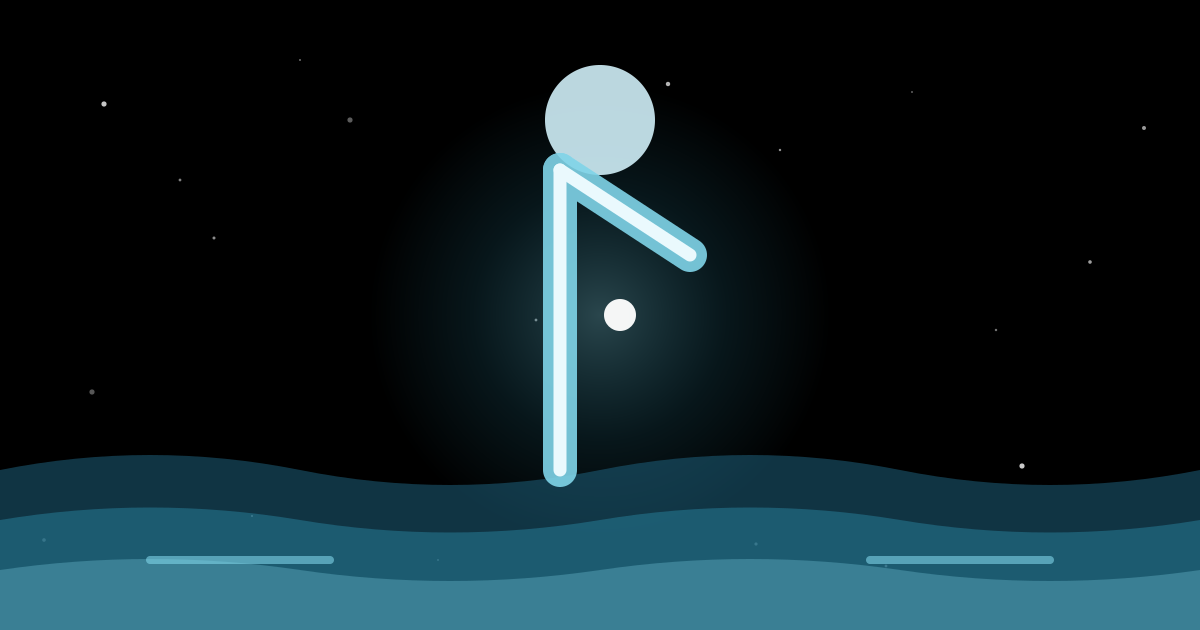
Some runes are about action: the hammer, the arrow, the torch. Laguz is about something quieter and older. Laguz (ᛚ) is the rune of water — the lake, the river, the sea, and everything that moves beneath the surface of things. Its name comes from the Proto-Germanic word for water, and in Old Norse it survived as lögr, the word for a body of water. The rune itself looks like a single upright staff with one angled branch reaching upward, like a reed bending in a current, or a wave breaking against a shore. It is one of the simplest shapes in the futhark, and one of the deepest.
The Old English rune poem does not give Laguz a long, dramatic entry. Instead it describes water in its most everyday, life-giving form: the lake that seems endless to those who must cross it, and yet the water that carries ships and sustains life. That is Laguz in a single image — something that can look vast and frightening from the bank, and yet turns out to be the very thing that carries you forward. Drawing Laguz in a reading carries that same reassurance. Whatever you asked about, the rune says: stop struggling against the current, listen to what you already know beneath the noise, and let the water do some of the work.
Laguz's Core Meaning in Divination
In a rune casting, Laguz is the sign of intuition speaking clearly. It appears when your gut already knows something your mind is still arguing about — when a hunch keeps returning, when a dream lingers all morning, when you meet someone and feel, instantly, whether to trust them. Laguz does not argue its case with evidence. It arrives the way water arrives: quietly, persistently, and from underneath. Readers treat a Laguz draw as permission to trust that inner signal, even when you cannot yet explain it in words.
Laguz is also the rune of emotion and the inner life. Where other runes describe what you do, Laguz describes what you feel — and it insists that feelings are information, not noise. Grief, tenderness, longing, quiet joy: all of them are currents, and all of them are trying to tell you something about where you are and what you need. If you draw Laguz during an emotionally charged time, the rune is not telling you to suppress what you feel. It is telling you to let yourself feel it fully, the way a lake holds whatever flows into it without overflowing.
The rune carries flow and surrender, too. Water does not force its way through rock; it finds the path around, over, and eventually through. Laguz in a reading often means that the harder you push, the less progress you make — and that the moment you stop forcing, the way opens. A project that stalls until you step back. A conversation that only moves forward once you stop rehearsing it. A decision that resolves itself the morning after you finally sleep on it. Laguz is the rune of the current: swim with it, and you travel farther with less effort than fighting it ever could.
Laguz Reversed: When the Water Turns
Turn Laguz upside down and the water goes wrong. Reversed Laguz is the rune of intuition blocked or emotion out of balance: confusion, fear, feeling overwhelmed, or ignoring a gut feeling you know is right. It can mark a time when feelings are flooding every decision — panic choosing for you, anxiety narrating every outcome — or the opposite trouble, when feelings have been shut down so completely that you feel numb, flat, and directionless. The rune does not say your intuition is broken. It says the channel is blocked, and the blockage deserves attention.
Reversed Laguz often points to fear of your own depths. Many people avoid still water because they are afraid of what they might see in it. A dream you keep dismissing. A feeling about a relationship you keep explaining away. A truth about your work or your health that you have been circling for months. Reversed Laguz asks a direct question: what are you not letting yourself know? The answer is rarely as frightening as the avoidance has made it seem — and naming it is usually the first step toward the water clearing.
The reversed rune also warns against being pulled under by other people's currents. Empathy is Laguz's gift, but unchecked empathy becomes absorption: taking on a partner's anxiety as your own, drowning in a friend's crisis, letting someone else's mood set the weather of your whole day. If Laguz reversed appears in a reading about a relationship or a workplace, it may be asking where your feelings end and someone else's begin. Healthy water has banks. Without them, there is only flood — and a flood helps no one, least of all the person trying to rescue everyone else.
Laguz in Love and Relationships
Laguz in love is deep emotional connection. It describes a bond felt in the gut before it can be explained: the sense of knowing someone, of being known, of moods syncing without a word spoken. This is not the fireworks of first attraction, nor the steady hearth of long companionship — it is the underwater current between two people, the empathy that lets you sense what your partner needs before they ask. If a reading asks about a relationship and Laguz appears, the answer is tender: the feeling is real, and it runs deep.
For singles, Laguz often means trust your instincts about someone new. The rune suggests that your first feeling about a person is worth more than the checklist your mind builds afterward — not as a rule to follow blindly, but as data to weigh seriously. It can also mean a romance that begins in feeling rather than logic: a connection that makes no sense on paper and perfect sense in the heart. Laguz asks the single seeker to stay open to that kind of meeting, and to notice the difference between butterflies of excitement and the quieter tug of genuine recognition.
For couples, Laguz can mark emotional closeness deepening: a season when tenderness returns, when conversations go past logistics into real feeling, when two people start dreaming in the same direction again. It can also be a gentle nudge toward honesty — feelings left unsaid tend to stagnate, and still water that never moves turns stale. A couple drawing Laguz is reminded that the relationship, like a lake, needs both depth and movement: the courage to say what is felt, and the patience to let the other person feel it too.
Laguz in Career, Money, and Goals
Laguz's career face is instinct over spreadsheet. It appears when a professional decision cannot be made on numbers alone: the job that looks perfect and feels wrong, the opportunity that looks risky and feels right, the project that everyone else dismisses but keeps pulling at you. The rune does not say ignore the facts — it says include the feeling. Many careers turn on a single intuitive call made at the right moment, and Laguz blesses the person brave enough to make it. If you draw Laguz while weighing a career move, it leans toward the option your gut has already chosen.
With money, Laguz is the rune of flow rather than force. It can describe income that arrives through creative work, care work, or work that follows your natural talents rather than fighting them — the writer who earns by writing, the healer who earns by healing, the person whose livelihood finally matches their nature. The rune also counsels a gentler relationship with spending and saving: money, like water, needs to move to stay healthy, but it also needs banks. Hoarding it out of fear dams the flow; spending it out of panic drains the lake. Laguz's wealth is balance: enough moving, enough held.
For personal goals, Laguz is the dream rune. It favors goals pursued through imagination and inner work as much as outer effort: the novelist who dreams the next chapter, the athlete who visualizes the race, the seeker who journals their way to clarity. If you draw Laguz while working toward something, the rune's message is to make room for the unconscious part of the work — sleep on it, dream on it, walk beside water and let your mind wander. The answer you have been chasing with effort may be waiting in the quiet you have not allowed yourself.
The Mythology and Symbolism Behind Laguz
Laguz's roots run into the heart of Norse cosmology: the world-encircling sea. In Norse myth, the world of humans sits ringed by ocean, and beneath the waves coils Jormungandr, the great serpent whose movements stir tides and storms. Water in that world was never just scenery — it was the boundary between the known and the unknown, the road to other lands, and the home of powers too deep to bargain with. Laguz is that sea compressed into a glyph: beautiful, necessary, and not fully tameable. To draw Laguz was to be reminded that the deepest parts of life cannot be controlled, only navigated.
The rune's single angled branch carries the symbolism of a current breaking from the main flow. Some readers see in it a reed or a hook — the tool of the fisher, who works with water rather than against it. Others see a wave cresting, or a person leaning into a stream. All of these readings agree on one thing: Laguz is not the whole ocean, but the point where the ocean touches your life. It is the stream you can step into, the feeling you can actually feel, the dream you can actually remember. The vastness becomes personal at exactly that angled branch.
As the twenty-first rune, Laguz sits in Tyr's aett, the third family of runes, among the runes of maturity, challenge, and inner mastery. Its position is telling: by the time a reader reaches Laguz, the futhark has already covered wealth, strength, protection, and victory. What remains is the inner work — and Laguz opens that work with the simplest, hardest lesson of all: that feeling deeply is a form of knowing, and that the unseen currents of a life deserve as much respect as its visible achievements. Drawing Laguz is drawing the deep end, and discovering that you already know how to swim.
How to Work With Laguz: A Simple Practice
The classic Laguz practice is the still-water sit. Each morning for one week, sit quietly for ten minutes with a bowl of water before you. Breathe slowly, look at the surface, and notice what feelings rise without judging them or trying to fix them. Do not narrate, do not analyze — just watch, the way you would watch a lake. People who keep the practice report a surprising effect: by the end of the week, feelings that once arrived as floods start arriving as ripples, noticed early and named calmly. Attention, it turns out, is the bank that keeps the water in its bed.
For dreamers, try the bedside journal. Keep a notebook and pen beside your bed, and each morning write down whatever you remember — even a single image, a color, a feeling. Do not worry about interpretation at first; Laguz's teaching is that dreams, like rivers, reveal their pattern only over time. After a month, read back through the entries and look for repeating images, places, or emotions. The pattern that emerges is often the very message your waking mind has been too busy to hear.
Laguz also invites a flow check for stuck decisions. When you are torn between two options, sit quietly and picture each one as a river: which one flows, and which one feels dammed? Which one excites a quiet sense of movement, and which one feels like pushing water uphill? The exercise is not magic — it is a way of letting your body vote when your mind is deadlocked. Many people find that the answer was already there, waiting in the feeling they had been overriding with pros and cons.
For a deeper working, walk beside real water. A river, a lake, the sea — or even a quiet fountain if that is what is near. Walk slowly, without headphones or a destination, and let your thoughts drift the way leaves drift on a current. The Norse understood water as a teacher precisely because it cannot be hurried or argued with; it simply moves, and watching it move reminds the watcher that they, too, are allowed to move at their own pace. End the walk by naming one feeling you noticed and one small step it suggests. That is Laguz, doing its work.
Laguz and the Other Runes
Laguz's pairings are stories of feeling meeting form. With Perthro (the lot cup, mystery), it is the deep unknown in its purest form: dreams, fate, and the parts of life that cannot be mapped in advance, approached with trust rather than fear. This pairing often appears around turning points where the way forward is genuinely unclear — it is the rune of stepping into the water anyway.
With Ansuz (wisdom, communication), Laguz is intuition given voice: the hunch that becomes a sentence, the dream that becomes advice, the feeling that finally finds words. Beside Berkana (growth, the birch), the water nourishes: feelings tended like a garden, emotional healing that grows slowly and steadily, the way rain grows a forest. And near Isa (ice, stillness), Laguz is water frozen — feeling held in suspension, a necessary pause before the thaw, the lake waiting under winter for spring.
With Raidho (the journey, the road), Laguz tells the story of the voyage: travel over water, the journey of the soul, the long crossing that changes the traveler more than the destination does. It is a reminder that some journeys are not about arriving at all — they are about what the water teaches you on the way across.
As always, remember that the runes are a spiritual and cultural tradition to explore for reflection and entertainment — not a guarantee of outcomes. Treat Laguz as a mirror for your own inner currents rather than a prediction engine: it will not chart your feelings for you, but it will teach you to listen to them, trust them, and let them carry you where you need to go.
Frequently asked questions
What does the Laguz rune mean?
Laguz (ᛚ), the twenty-first rune of the Elder Futhark, means water. It is the rune of intuition, emotion, dreams, and the unseen currents that move beneath everyday life. In readings it signals a time to trust your inner knowing, pay attention to your feelings and dreams, and stop fighting the current — flow with it, and let it carry you where you need to go.
What does Laguz reversed mean?
Laguz reversed points to intuition blocked or emotions out of balance: confusion, fear, feeling overwhelmed, or ignoring a gut feeling you know is right. It can mark a time when feelings are flooding every decision, or when they have been shut down so completely that you feel numb and directionless. The rune asks you to restore balance — neither drowning in feeling nor damming it up.
Is Laguz a good omen?
Laguz is a gentle, positive rune. It is the rune of deep feeling, psychic sensitivity, and the quiet wisdom that arrives in dreams and hunches. Readers treat it as an encouraging sign: your intuition is working, your emotional life is rich, and the way forward will become clear if you listen inward. Explore it as reflection and entertainment, not as a guarantee of outcomes.
What does Laguz mean in love?
Laguz in love is deep emotional connection: a bond felt in the gut before it can be explained, tenderness, empathy, and two people attuned to each other's moods. For singles it can mean a romance that begins in feeling rather than logic, or a call to trust your instincts about someone new. For couples it marks emotional closeness deepening — and sometimes a need to talk honestly about feelings that have been left unsaid.
How do I work with Laguz in daily practice?
Try the Laguz still-water practice: sit quietly for ten minutes with a bowl of water before you, breathe slowly, and notice what feelings surface without judging them. Keeping a dream journal beside your bed is another classic Laguz working — write down whatever you remember each morning, even fragments, and watch patterns emerge over the weeks.
Keep exploring
Perthro Rune Meaning: Chance, Fate & the Mystery of the Lot Cup
Perthro (ᛈ) is the Elder Futhark rune of the lot cup — chance, fate, mystery and the joy of not knowing. Learn its upright and reversed meanings for love, career, risk and daily practice.
Read the meaning →
Berkana Rune Meaning: Growth, New Beginnings & the Birch Tree's Gentle Power
Berkana (ᛒ) is the Elder Futhark rune of the birch tree — growth, new beginnings, fertility, and nurturing renewal. Learn its upright and reversed meanings for love, career, readings and daily practice.
Read the meaning →
Ansuz Rune Meaning: Wisdom, Communication & Odin's Voice
Ansuz (ᚨ) is Odin's rune of wisdom, communication and divine inspiration. Learn its meanings in readings, love, career, reversed readings and daily practice.
Read the meaning →
Raidho Rune Meaning: Journeys, Movement & Life's Path
Raidho (ᚱ) is the Elder Futhark rune of the wheel and the road — movement, rhythm, and right timing. Learn its meanings in readings, love, career and travel.
Read the meaning →