
Anchor Symbol in Tea Leaves: Stability, Hope & What It Means
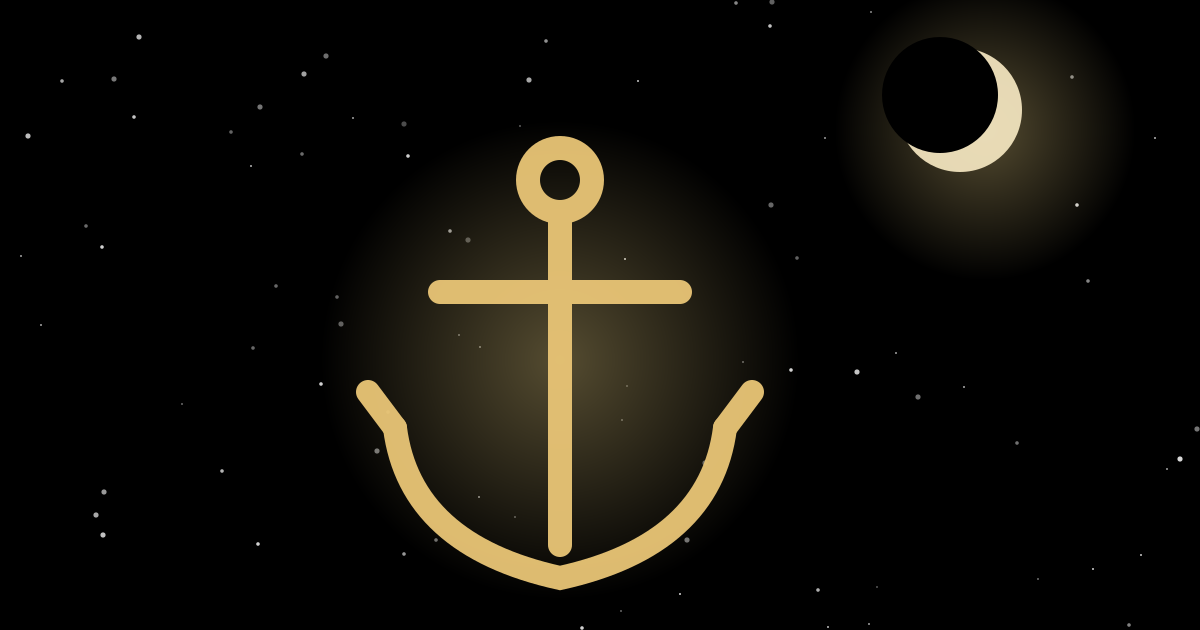
There is something deeply comforting about finding an anchor in your cup. While hearts quicken the pulse and snakes demand attention, the anchor simply settles things. It is the symbol of the storm passing, of solid ground beneath uncertain feet, of hope that isn't wishful but well-founded. Sailors have carved it into ships and tattooed it onto forearms for centuries; early Christians used it as a hidden emblem of hope. When it appears in tea leaves, it carries all of that history with it — a compact promise that steadiness is on its way.
This guide covers everything the anchor can tell you: its core meaning, how its shape and position refine the message, the combinations that add crucial detail, and what to do with this welcome news once the leaves have spoken.
The Core Meaning: Steadiness, Security, Hope
At its simplest, an anchor means stability — a situation settling, roots forming, an ending to drift. Wherever you have been feeling adrift — a job in flux, a relationship in limbo, finances that won't sit still — the anchor suggests the current is about to carry you into a harbor. It is one of the most consistently positive symbols in the cup, and experienced readers greet it warmly.
But the anchor is not only about calm. It also means security: the practical kind — a steady income, a roof that is yours, a plan with foundations. And it means hope: not the vague hope of wishing, but the anchored hope of sailors who throw something heavy into the water and trust it to hold. If your question was "will this be okay?", the anchor leans toward yes — with the quiet confidence of something that has weathered storms before.
Context, as always, colors the core. In a question about change, the anchor advises against drifting with every tide — commit to the course. In a question about risk, it suggests the risk is smaller than it feels, or that your safety net is stronger than you know. The anchor's message is never panic; it is always some version of hold fast.
Reading the Anchor's Details
Not all anchors are equal, and the leaves give you clues in the details. A clear, well-formed anchor — recognizable at a glance, with a distinct ring, shaft, and flukes — is the strongest version: stability that is real and near. A large anchor dominates the reading and suggests that steadiness is the central theme of this period; everything else in the cup orbits around it.
A faint or partial anchor — a suggestion of the shape rather than the thing itself — means stability that is forming but not yet complete. The harbor exists, but you're still sailing toward it. This is actually useful information: it tells you the direction is right even if the arrival hasn't happened. A small anchor tucked among other symbols is a quieter reassurance — one steady element in a busy picture, worth noticing and leaning on.
Watch for an anchor that looks broken, cracked, or dragging: a fluke snapped off, the ring incomplete, the whole shape tilting as if pulled. This is the anchor's cautionary form — instability, plans without foundations, or security you assumed that deserves a second look. It is not a disaster symbol. Think of it as the cup's way of saying check your moorings before the weather turns, not abandon ship.
Position: Where It Sits and What It Says About Timing
As with every symbol, position shapes the anchor's message. Near the rim, close to the handle: steadiness is imminent and personal — days to weeks. The situation you're closest to is about to settle. Near the rim, far from the handle: stability arriving through someone else or from an unexpected quarter — perhaps an employer's decision, a partner's commitment, or circumstances calming on their own.
In the middle band: stability developing over the coming months — a gradual settling rather than a sudden one. This is the "keep doing what you're doing" position; the foundations are being built even if you can't see the harbor yet. At the bottom of the cup: deep, long-term foundations — the kind of steadiness measured in years. A lasting partnership, a career built to endure, emotional roots finally taking hold. The anchor at the bottom speaks of the bedrock under your life, not just the weather on its surface.
Orientation matters too. An anchor pointing toward the handle (toward you) suggests security coming into your life; pointing away can mean you are the steadying force for someone else — or that you should offer stability rather than seek it. An anchor that appears upside down or capsized traditionally warns of plans built on shaky ground: slow down and inspect the foundations before committing further.
Anchor Combinations: Reading the Neighbors
Anchors gain their finest detail from the symbols around them. Anchor + ship: the classic pairing — a journey undertaken and completed safely, or a venture that ends well and brings you home steady. Many readers also see an important arrival in this combination: a person, an opportunity, a piece of news reaching safe harbor. Anchor + heart: a relationship becoming secure — commitment deepening, trust taking root. This is one of the cup's happiest love signals: not passion's fireworks, but love's foundations.
Anchor + key: security unlocked — a door opening to something lasting: the right job, the right home, the right arrangement. Anchor + star: hope fulfilled — what you've been wishing for has found its harbor. Anchor + mountain: endurance — steadiness that will last because it is built on something unmovable; this combination speaks of slow, certain permanence.
The cautionary pairings deserve equal attention. Anchor + clouds: delays and confusion before the calm — steadiness is coming, but the weather hasn't cleared yet; patience is the strategy. Anchor + snake: a warning about who you trust with your security — someone around the situation may not be as solid as they appear; verify before you moor yourself to their plans. Anchor + broken chain: a freeing kind of instability — sometimes the anchor needs lifting because the harbor was never the right one; not all steadiness is healthy.
The Anchor in Different Questions
The anchor adapts beautifully to whatever you asked. In a career question, it is among the best symbols you can find: a role settling in, a contract with real longevity, or a turbulent workplace calming down. If you've been job-hunting, the anchor suggests the search is ending — and that the position you find will be worth staying in. In a love question, the anchor means a relationship moving from exciting to secure — less butterflies, more bedrock. For singles, it can indicate a partner who offers genuine stability arriving soon.
In a finance question, the anchor is reassuring: income stabilizing, a debt plan working, or an investment with solid foundations. It counsels against panic-selling and toward steady, boring strategies — the kind that actually work. In a family question, the anchor speaks of roots: reconciliation that holds, a home that feels like home again, or an elder whose steady presence anchors everyone else. In a self-reflection reading, the anchor turns inward: it asks where your inner harbor is — the practices, people, and values that steady you — and invites you to spend more time there.
When the Anchor Looks Troubled
Sometimes the anchor arrives in a worried form, and it's worth knowing the difference between "stability coming" and "stability at risk." A broken or cracked anchor suggests foundations that need inspection — a plan you've committed to that rests on assumptions, a "secure" situation with fine print you haven't read. The advice is practical: review contracts, clarify commitments, ask the direct question you've been avoiding.
An anchor that seems to be dragging — tilted, trailing, pulled along — can indicate that you're clinging to steadiness that no longer serves you: a job kept only for safety, a routine maintained only from fear. Here the cup isn't saying hold fast; it's saying weigh anchor and sail. And if you asked about security and found no anchor at all, look for its quieter cousins: the mountain (endurance), the key (unlocking), the house (shelter), or the tree (rooted growth). Sometimes the cup answers with stability in another dialect — or suggests the season is still for sailing, not for mooring.
What to Do After Finding an Anchor
An anchor is a promise, not a guarantee — and the best response is to meet steadiness halfway. If the reading suggests a situation settling, help it settle: finalize the decision you've been postponing, put the agreement in writing, commit to the plan. Anchors hold better when you actually drop them; half-commitments drag.
If the anchor points to long-term foundations, think in longer time horizons: invest in the skill, the relationship, the savings plan that compounds. The anchor rewards the patient and the consistent — the people who show up, week after week, and let time do the heavy lifting. And if the anchor is yours to offer — if you are the steady one in the reading — accept the role gracefully: be the calm voice, the reliable plan, the harbor for someone sailing through weather of their own.
Many readers mark an anchor finding with a small grounding ritual: tidying the space they live in, writing down the commitments that matter most, or simply standing still for a minute and feeling their own weight — a physical reminder of what the leaves described. However you honor it, let the anchor remind you of tasseography's gentlest truth: you were never as adrift as you felt. The harbor was always there. The leaves just helped you see it.
Frequently asked questions
What does an anchor in tea leaves mean?
An anchor is one of tasseography's most reassuring symbols, meaning stability, security, and hope. It suggests that an unsettled situation will steady, or that you are about to find firm ground after a period of uncertainty — think of it as the cup's way of saying 'hold fast, calmer waters are ahead.'
Is an anchor in tea leaves a good sign?
Yes, traditionally the anchor is one of the most positive symbols in the cup. It signals steadiness and resolution — a job settling in, a relationship becoming secure, finances stabilizing. A broken, dragging, or unclear anchor tempers the message and suggests the stability you want hasn't arrived yet.
What does an anchor at the bottom of the teacup mean?
An anchor near the bottom of the cup points to long-term, foundational stability — the kind built over years rather than weeks. It can indicate deep roots forming: a lasting partnership, a career foundation, or emotional patterns finally settling. Near the rim, the same anchor means steadiness arriving soon.
What does an anchor next to a ship mean in tea leaves?
Anchor plus ship is the classic travel-and-return combination: a journey undertaken safely, or a venture that ends well and brings you home steady. Many readers also interpret it as an important arrival — a person, opportunity, or piece of news reaching safe harbor.
What does a broken anchor mean in tea leaves?
A broken, dragging, or poorly formed anchor suggests instability or plans that haven't yet found solid ground — not disaster, but a sign to check your foundations before committing. Paired with steadier symbols like the mountain or key, the message is that stability will come with patience.
Keep exploring
Tea Leaf Symbols Dictionary: 40+ Meanings from Anchor to Star
From anchor to star: explore 40+ classic tea leaf symbols and their traditional tasseography meanings, covering love, fortune, travel, caution and animals.
Read the meaning →
How to Read Tea Leaves: A Beginner's Step-by-Step Guide
Learn tea leaf reading step by step: choosing the right tea and cup, brewing with intention, swirling, inverting and interpreting the symbols left behind.
Read the meaning →
Heart Symbol in Tea Leaves: Love, Timing & What It Really Means
Seeing a heart in your tea leaves? Discover its tasseography meaning for love, how cup position reveals timing, key symbol combinations and what to do next.
Read the meaning →
What Does It Mean to Dream About Water?
Water in dreams mirrors your emotional state. Discover what dreaming about water means — calm seas, floods, drowning — and how each reflects feelings.
Read the meaning →