
Bird Symbol in Tea Leaves: Travel, News & What It Means
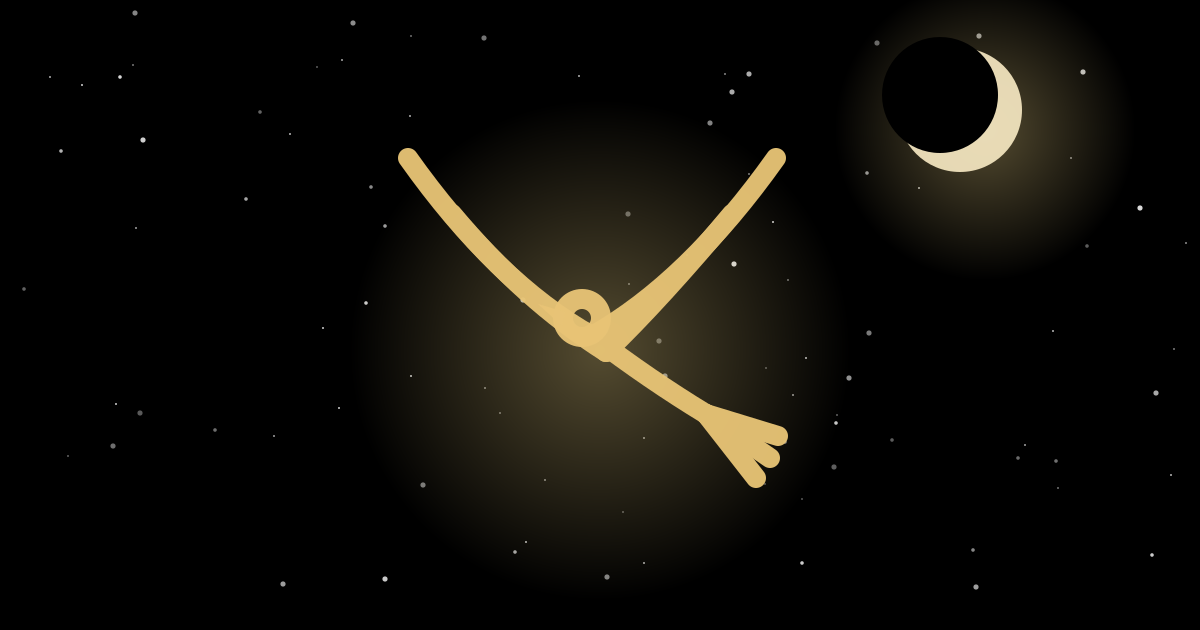
Few shapes in a teacup stir the imagination like a bird. Anchors promise steadiness, keys promise openings, but a bird promises movement — the beating of wings, a message winging its way to you, the first glimpse of a journey on the horizon. Birds have carried our meaning for millennia: the carrier pigeons of ancient messengers, the dove released from the ark with news of land, the swallows whose return meant spring was coming. When the leaves arrange themselves into that unmistakable swept-wing shape, readers smile, because the bird is the cup's way of saying something is coming — or something is about to be set free.
This guide covers everything the bird can tell you: its core meaning, how its flight path and species refine the message, the combinations that reveal exactly what kind of news or journey is heading your way, and what to do with this invitation once the leaves have spoken.
The Core Meaning: News, Travel, Freedom
At its simplest, a bird means movement in the air — things that travel through the sky of your life: messages, journeys, thoughts, hopes. The most traditional reading is news arriving: a message heading toward you, from the expected email to the out-of-the-blue call. Readers of old tasseography texts describe the bird as the cup's messenger, and when it appears, they advise their clients to pay attention to inboxes, letters, and passing remarks — something is being carried to them on unseen wings.
The second traditional meaning is travel: a journey approaching, whether a long-planned trip, a surprise visit, or a move that changes the scenery of your life. A bird in flight has always meant distance crossed and horizons widened, and in the cup it keeps that sense — the leaves are showing you wings because somewhere in your near future, you may have some of your own.
The third is freedom: release from whatever has been pinning you down. The bird is the opposite of the cage, the mountain, the anchor — it is the symbol of lightness, of rising above, of the situation that has been weighing on you finally losing its grip. If you have been asking when things will feel easier, the bird is the cup's encouraging answer: lighter days are aloft.
Reading the Bird's Details
The leaves never draw by accident, and the bird's posture sharpens its message. A bird in flight, wings raised — the classic tea-leaf bird — is the strongest and happiest form: active movement, news already airborne, freedom in progress. A bird with wings spread wide suggests something big on the horizon — a major journey, significant news, a sweeping change — while a small bird is a quieter promise: a small pleasure arriving, a friendly message, a modest but meaningful shift.
A perched or resting bird tells a different story: the news is real but not yet in motion — something paused before it flies to you. Patience is the strategy; the bird is simply waiting for the right wind. A bird diving downward traditionally suggests news that brings you back down to earth — a plan that needs grounding, an announcement with practical consequences, or a moment of realism after a high-flying stretch.
When the bird's species is recognizable, readers give it extra weight. A dove means peace and love — reconciliation, a heartfelt message, harmony returning to a troubled bond. An owl means wisdom arriving — a secret revealed, hidden knowledge coming to light, advice worth heeding. A swallow is the return bird — someone coming home, a familiar face reappearing, loyalty rewarded. An eagle or hawk means ambition taking flight — a career move, a bold plan, the moment to rise and be seen. A crow or raven is the messenger from the past — old connections resurfacing, unfinished business asking for attention. And multiple birds together — a flock — traditionally mean social news: gatherings, celebrations, gossip in the air, or good company approaching.
Position: Where It Sits and What It Says About Timing
As with every symbol, position shapes the bird's message. Near the rim, close to the handle: the news is personal and imminent — days to weeks. A message is already winging toward you; keep your attention open. Near the rim, far from the handle: the news comes from a distance — another city, another country, someone you haven't heard from in a while. The bird has flown far to reach you.
In the middle band: movement developing over the coming weeks to months — the journey being planned, the message being composed, the freedom being arranged. This is the "feathers gathering" position: what the bird promises is assembling itself, and your job is to be ready when it launches. At the bottom of the cup: a deeper, slower movement — news from the deep past, a journey tied to long-term plans, or a freedom that arrives only after groundwork. The bird at the bottom speaks of destiny-scale movement, not daily mail.
Direction matters too. A bird flying toward the handle (toward you) means the movement is coming to you — news arriving, visitors approaching, opportunity landing at your feet. Flying away from the handle means you are the one taking flight — travel you initiate, a message you send, a departure you choose. A bird flying upward is the most joyful orientation — rising fortunes, spirits lifting, good news on an upswing — while a bird diving down counsels groundedness: read the fine print of the news, pack carefully for the journey.
Bird Combinations: Reading the Neighbors
Birds gain their finest detail from the symbols around them. Bird + letter or envelope: the classic pairing — written news arriving: an email, a decision letter, a long-awaited message. If the bird sits near the rim, readers traditionally say it arrives within days. Bird + cage: the cup's bittersweet combination — wings with nowhere to go. This is the "held back" reading: a trip postponed, a message unsent, freedom delayed by obligation. The guidance is to find the bars and start loosening them.
Bird + heart: love on the wing — news from a sweetheart, a romantic message heading your way, or a relationship about to take flight. For singles, it can mean someone's interest is about to become visible, carried to you by mutual friends. Bird + mountain: a delayed journey — travel that meets obstacles, plans that need rerouting. Not canceled, just complicated: pack patience alongside everything else. Bird + sun or star: joyful news — the bird's promise crowned with brightness: good fortune arriving, a wish about to land, an outcome worth celebrating.
The cautionary pairings deserve equal attention. Bird + clouds: uncertain news — a message that raises more questions than it answers, or travel plans in foggy weather. Wait for clarity before acting on what arrives. Bird + snake: a warning about the messenger — news worth verifying before you trust it, or gossip that should be weighed, not swallowed whole. Bird + tree: family news — word from relatives, a visit home, or an announcement about the family circle. Bird + broken wing: stalled movement — a journey interrupted or a message that goes astray; check your bookings, resend the email, confirm the plan.
The Bird in Different Questions
The bird adapts beautifully to whatever you asked. In a career question, it is among the most encouraging symbols: news of an offer, an interview invitation, or word of an opportunity arriving from afar. An eagle-shaped bird doubles this reading — a moment to rise professionally. In a love question, the bird means communication arriving — a message from someone on your mind, a confession carried by courage, or a relationship moving to a new altitude. The dove deepens it: peace between you, harmony restored.
In a finance question, the bird counsels lightness and timing — money in motion, a payment arriving, or a financial worry that lightens sooner than you fear. Watch for the dove-versus-diving distinction: a soaring bird suggests the situation improves; a diving one suggests tightening the budget while the news settles. In a family question, the bird speaks of visitors and voices — news from a relative, someone coming home, or a family announcement that brings everyone closer. In a self-reflection reading, the bird turns inward and asks the gentle question: what in you wants to fly? The dream shelved, the restlessness ignored, the wing kept folded — the cup is inviting you to unfold it.
When the Bird Looks Troubled
Sometimes the bird arrives in a worried form, and it's worth knowing the difference between "movement coming" and "movement blocked." A caged bird is the clearest troubled form — freedom restricted by circumstance: the trip you can't take yet, the message you can't send, the obligation holding your wings. The advice is practical rather than fatalistic: name the bars (the deadline, the budget, the fear) and loosen them one by one.
A bird with a broken or drooping wing suggests movement interrupted — travel plans that unravel, a message that goes astray, news that disappoints on arrival. The remedy is mundane and effective: double-check bookings, resend the important email, confirm what matters. A bird surrounded by dark or heavy symbols — clouds, snakes, mountains — asks you to read the news with care when it arrives: not all wings carry good tidings, and a discerning eye protects a hopeful heart.
And if you asked about news or travel and found no bird at all, look for its quieter cousins: the letter or envelope (the message itself), the ship or boat (the journey), the key (the opening that follows the news), or the star (the wish the news would fulfill). Sometimes the cup answers with the destination rather than the messenger — or suggests that this season is for nesting, not flying, and that the sky will be there when you're ready.
What to Do After Finding a Bird
A bird is an invitation to movement, not a guarantee of arrival — and the best response is to be ready for it. If the reading suggests news coming, stay reachable and responsive: check the inbox you usually ignore, answer the message you've been putting off, keep your phone charged and your attention open. Messages have a way of finding people who are listening.
If the bird promises travel, start the gentle work of preparing: research the route, tell the person you want to visit, look at the calendar with an open mind. Journeys that begin as daydreams in October sometimes become departures by spring — the cup's bird is permission to start dreaming in itineraries. And if the bird speaks of freedom, do the unglamorous work of unclipping your own wings: delegate the task, set the boundary, release the grudge, close the tab on the worry. Freedom, in tasseography as in life, is usually something you give yourself — the bird just confirms the sky is ready.
Many readers mark a bird finding with a small ritual of readiness: opening a window and letting fresh air in, writing down the news they hope to receive, or simply spending a few minutes watching actual birds — a reminder that the oldest messenger service in the world is still operating. However you honor it, let the bird remind you of tasseography's most joyful truth: life is always in motion, and right now, it's moving in your direction.
Frequently asked questions
What does a bird in tea leaves mean?
A bird is one of tasseography's most welcome symbols. It traditionally means something is on the move: news arriving, a journey approaching, or freedom from a situation that has been weighing you down. Readers generally treat it as a happy sign — the cup's way of saying that movement is coming.
Is a bird in tea leaves good luck?
Yes, a flying bird is considered a lucky symbol, traditionally linked to good news, safe travel, and joyful outcomes. The one cautionary form is the caged bird, which suggests feeling held back — less a prediction of misfortune than a nudge to notice what is clipping your wings.
What does a bird flying toward the handle mean?
The handle represents you, so a bird flying toward it means the news or opportunity is coming directly to you — a message heading your way, a visitor arriving, an invitation on its way. A bird flying away from the handle can mean you are the one about to take flight: travel you initiate, or news you send out.
What does a caged bird mean in tea leaves?
A caged bird traditionally means restricted freedom — a commitment, obligation, or circumstance that has you feeling grounded when you want to fly. Rather than bad news, it is guidance: identify the bars (the deadline, the expectation, the fear) and start loosening them one by one.
What does a bird with a letter mean in tea leaves?
Bird plus letter or envelope is the classic 'news arriving' combination: written or digital communication heading your way — an email, a decision letter, a message you have been waiting for. If the bird sits near the rim, readers traditionally say it arrives within days to weeks.
Keep exploring
Tea Leaf Symbols Dictionary: 40+ Meanings from Anchor to Star
From anchor to star: explore 40+ classic tea leaf symbols and their traditional tasseography meanings, covering love, fortune, travel, caution and animals.
Read the meaning →
How to Read Tea Leaves: A Beginner's Step-by-Step Guide
Learn tea leaf reading step by step: choosing the right tea and cup, brewing with intention, swirling, inverting and interpreting the symbols left behind.
Read the meaning →
Key Symbol in Tea Leaves: New Doors, Solutions & What It Means
Spot a key in your tea leaves? Discover its tasseography meaning — new doors, solutions, and opportunities unlocking — plus position timing, key combinations, and what to do next.
Read the meaning →
Anchor Symbol in Tea Leaves: Stability, Hope & What It Means
Spotting an anchor in your tea leaves? Discover its tasseography meaning — stability, hope, and calmer waters ahead — plus position timing, key combinations, and what to do next.
Read the meaning →