
Cross Symbol in Tea Leaves: Faith, Sacrifice & What It Means
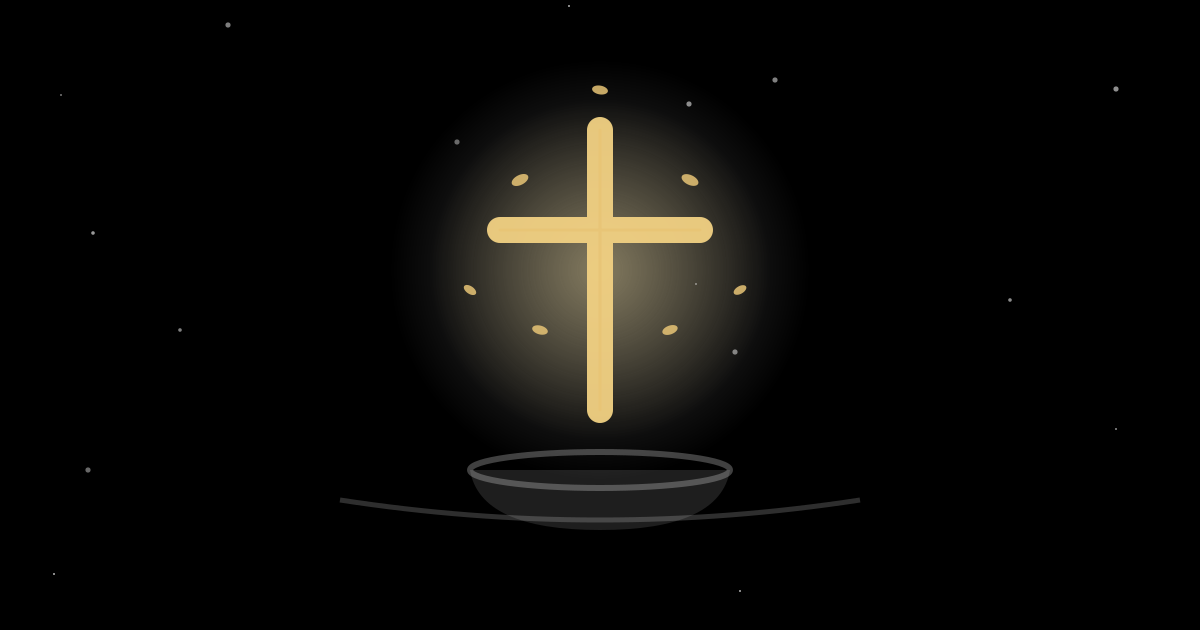
Few symbols stop a reader mid-sentence the way the cross does. Where the heart arrives with warmth and the star with promise, the cross arrives with gravity. Two lines meeting at a right angle — the simplest mark a hand can draw, and one of the oldest symbols humans have ever made. Long before any single religion claimed it, crossed lines marked crossroads, the meeting of earth and sky, the four directions, and the place where a traveler must choose. That ancient weight lives in the cup, and the classic tasseography texts read the cross as the symbol of sacrifice, trials to be endured, and decisions that cannot be avoided. When the leaves settle into two crossing lines at the bottom of your cup, the reading is about what you are carrying — and what carrying it is making of you.
This guide covers everything the cross can tell you: its core meaning in tasseography, how the cross's shape and size refine the message, how position reveals timing, the combinations that show exactly where the trial or decision sits in your life, and what to do once the leaves have shown you their cross.
The Core Meaning: Sacrifice, Trial, Crossroads
At its simplest, a cross means something must be carried, given up, or chosen. Where the anchor promises stability and the key promises an opening, the cross promises weight — the duty you cannot set down, the hard season you must walk through, the price of something you want. Readers of the classic tasseography texts describe the cross as the symbol of suffering borne with purpose: not punishment, but the honest cost of a life lived seriously.
The second traditional meaning is faith and spiritual testing. The cross asks what you believe when belief costs something. It appears, the old readers say, when a person's principles are being tried — when doing the right thing is harder than doing the easy thing, or when a private conviction must be defended in public. A cross in the cup can mean your faith, whatever form it takes, is about to be asked to prove itself.
The third is the crossroads itself: the place where two lines meet. A cross is literally an intersection, and in the cup it can mean a decision point — two paths crossing, two loyalties pulling, a moment when standing still is no longer an option. This is the cross at its most practical: not a prophecy of doom, but a map of the fork in your road, asking which way you will walk. And in its protective sense, the cross is also the symbol of guardianship through trouble — the old folk belief that a marked cross wards off harm, so the sign can mean you are watched over even while the trial lasts.
Reading the Cross's Shape and Size
Not all crosses speak the same way, and the leaves give you plenty of detail to work with. A small, neat cross is the mildest form: a passing trial, a minor sacrifice, a brief difficulty that resolves quickly. Think of it as the cup's way of saying this week will ask something of you, but not everything. A large, heavy cross is the opposite: a major burden, a long responsibility, or a sacrifice that will define a season of your life. Size is the first thing to weigh.
Shape matters just as much. A plain Latin cross, with the crossbar above the middle, is the classic form: sacrifice and faith in their traditional sense — a duty carried upright, a trial met head-on. A cross with equal arms, the old Greek form, leans toward balance and the meeting of opposites: earth and sky, body and spirit, two sides of a decision held in tension. A cross with a circle around it or beside it is the guarded cross: the circle encloses and softens the trial, suggesting the burden is contained, the sacrifice has a boundary, or help is already circling the problem.
Special forms carry their own weight. A cross tilted or leaning traditionally means a burden shifting — a trial changing shape, a duty that needs to be set down or picked up differently. A cross with a figure or shape hanging on it points to a personal sacrifice: someone giving something up for someone else. Two crosses together mean a double trial or a shared burden — two people carrying the same weight, or two difficulties arriving at once. And a cross made of broken or dotted lines suggests a trial already passing: the burden is loosening, the sacrifice nearly complete, the crossroads almost behind you.
Position: Where It Sits and What It Says About Timing
As with every symbol, position shapes the cross's message. Near the rim, close to the handle: the message is personal and imminent — a trial at your own door, a sacrifice you are being asked to make now, a decision that cannot wait. The cross is at your side of the cup, and the weight is already in your hands. Near the rim, far from the handle: someone else's burden in motion — a friend's trial, another person's sacrifice, or a decision in your wider circle that will still touch you.
In the middle band: the themes developing over the coming weeks to months — a responsibility growing, a difficult choice approaching, a season of testing taking shape. This is the "prepare yourself" position: the cross is telling you to gather your strength and your principles before the moment arrives. At the bottom of the cup: the deepest reading — a burden carried for years, a family duty, or a foundational belief being tested. The cross at the bottom speaks of the kind of trial that shapes character, or a sacrifice whose meaning only becomes clear in hindsight.
Direction matters too. A cross leaning toward the handle leans toward you — its message is yours to carry: the trial is personal, the choice is yours. A cross leaning away suggests the burden belongs to someone else, or a decision you are being asked to witness rather than make. A cross near the rim means the trial is soon or already beginning; a cross sinking toward the bottom can mean a long-standing weight, or a trial that will take time to resolve. The cup asks you to be honest about which one you are looking at.
Cross Combinations: Reading the Neighbors
Crosses gain their finest detail from the symbols around them. Cross + star: trial with guidance — difficulty lit by hope, a burden carried toward something bright, or faith rewarded at the end of the road. This is the cup's most encouraging pairing: the trial has a light. Cross + sun: suffering giving way to clarity — a hard season ending in success, or a sacrifice that leads to vitality and recognition.
Cross + heart: sacrifice in love — giving something up for someone you love, a relationship tested by hardship, or devotion proved through difficulty. Cross + key: the trial that unlocks something — a difficulty that, once faced, opens a door nothing else could open. Cross + ring: a commitment tested — a marriage, promise, or bond under pressure, or a duty tied to a vow you made.
Cross + tree: a long burden — a trial rooted deep, a family duty passed down, or growth through sustained difficulty. Cross + bird: news of a trial — word of someone's hardship arriving, or a message that brings a difficult decision with it. Cross + anchor: a burden held steady — stability through the trial, or a duty that keeps you grounded even while it weighs on you.
The cautionary pairings deserve equal attention. Cross + snake: a trial tangled with deception — a difficulty made worse by dishonesty, or a sacrifice demanded by someone untrustworthy: tread carefully and check the facts. Cross + clouds or a dark shape: a trial obscured — a burden you cannot yet see clearly, or a decision clouded by confusion: wait for the leaves, and the facts, to settle before you choose. Two crosses, or a cross beside a coffin-like shape: the heaviest reading in the old texts — a serious loss or a sacrifice that changes everything. Read it as a call to prepare and to lean on others, not as a fixed fate.
The Cross in Different Questions
The cross adapts to whatever you asked. In a career question, it is the symbol of a demanding season: a heavy workload, a responsibility that falls to you alone, or a professional sacrifice — a role, a project, a comfort — made for a larger goal. A cross with a key doubles this: the hard assignment that becomes the promotion. In a love question, the cross asks about sacrifice in affection — what you are willing to give up for the relationship, a trial the two of you must face together, or the honest question of whether the cost is still worth the bond.
In a finance question, the cross counsels sober stewardship — a tight season, a debt or obligation to be honored, or a sacrifice of spending for a longer goal. Watch for the companions: cross with sun suggests the tight season ending well; cross with clouds warns against deciding while the numbers are unclear. In a family question, the cross is the duty of kin — caring for someone who cannot care for themselves, a family obligation that falls to you, or your own role as the one who holds the family steady.
In a well-being reading, the cross speaks of endurance rather than ease — the discipline of a hard routine, the patience of recovery, the strength found in carrying what cannot be set down. It also points to the weight of worry itself: the cup asking whether the burden you carry is real, or whether you have picked up someone else's cross by mistake. This is reflection and encouragement, not diagnosis or medical guidance: the cup offers the image of the oldest symbol of bearing weight, and suggests you ask what is truly yours to carry.
When the Cross Looks Troubled
Sometimes the cross arrives in a heavier form, and it's worth knowing the difference between "a trial to face" and "a burden to set down." A large, dark, thick cross is the commonest troubled form — a major difficulty, a sacrifice that costs more than expected, or a decision with real consequences. The remedy is the cross's own: face it squarely, name what it costs, and do not carry it alone if you do not have to.
A cross broken in half can mean a burden ending — or a duty abandoned midway: the cup asks whether the break is freedom or failure, and only your honest answer tells you which. A cross upside down suggests a trial turned on its head — a sacrifice questioned, a belief challenged, or a decision that reverses an earlier one. A cross surrounded by scattered dots means a trial with many small parts — not one great weight but a hundred little ones: the reading asks you to deal with them one at a time instead of all at once.
And if you asked for guidance and found no cross at all, look for its quieter cousins: the anchor (a duty held steady), the mountain (an obstacle to climb), the key (a difficulty that opens), or the star (guidance through the dark). Sometimes the cup answers with the road rather than the crossroads — or suggests that this season is simply not a trial season, and the weight you feel is one you can set down.
What to Do After Finding a Cross
A cross is a way of standing, not a sentence — and the best response is the steady one: name the weight, decide what is truly yours, and carry it with help. If the reading suggests a trial, write down exactly what the burden is: the decision, the duty, the sacrifice. A cross unnamed grows heavier than it is; a cross named can be measured, shared, and scheduled.
If the cross speaks of a crossroads, do the traveler's work: lay out both paths honestly — what each costs, what each keeps, what each asks you to give up — and choose the one your principles can stand behind, not just the one that hurts less today. And if the cross arrived in a troubled form — large, dark, broken — do the honest work of asking for help: the oldest lesson of the cross is that no one is meant to carry the heaviest weights alone.
Many readers mark a cross finding with a small ritual of steadiness: lighting a candle and sitting with the decision for a full, unhurried hour, or writing a letter to yourself about what you believe and why, to be read when the trial peaks. However you honor it, let the cross remind you of tasseography's most sobering truth: the weight you carry is also the measure of what you love, and the road through the trial is the road that proves it.
Frequently asked questions
What does a cross in tea leaves mean?
A cross in tea leaves traditionally means sacrifice, a trial to be carried, or a crossroads decision. In the classic tasseography texts it is one of the weightier symbols: it can point to a burden you are carrying, a duty you cannot set down, or a moment where two paths meet and a choice must be made. It is rarely a lighthearted sign, but it is not a doom sign either — the cross also stands for faith, endurance, and protection through difficulty.
Is a cross in tea leaves bad luck?
Not necessarily. A cross traditionally signals a challenge or sacrifice, but the old readers also read it as a sign of faith and strength under pressure — the thing you carry is also the thing that proves what you are made of. A small, neat cross leans toward a passing trial; a large, heavy cross points to a bigger burden or responsibility. Read the neighbors: a cross beside a star or a sun is difficulty with light at the end of it.
What does a cross near the handle mean in tea leaves?
The handle represents you, so a cross near it is a personal message about your own burdens and choices. It traditionally means a trial close to home, a responsibility that is yours alone to carry, or a decision only you can make. It can also mean that your faith or principles are being tested in a way only you will see.
What does a cross at the bottom of the cup mean?
At the bottom of the cup, a cross speaks of something deep and long-standing: a burden carried for years, a family duty, or a foundational belief being tested. The bottom is the cup's distant and deepest zone, so a cross there traditionally points to a trial that shapes character over time rather than a passing difficulty — or to a sacrifice whose meaning only becomes clear in hindsight.
What does a cross with a circle mean in tea leaves?
A cross inside or beside a circle is traditionally read as protection around the trial: the circle encloses and softens the cross, suggesting the burden is contained, the sacrifice has a boundary, or help is already circling the problem. Some readers call it the guarded cross — difficulty, yes, but difficulty held within a ring of support.
Keep exploring
Tea Leaf Symbols Dictionary: 40+ Meanings from Anchor to Star
From anchor to star: explore 40+ classic tea leaf symbols and their traditional tasseography meanings, covering love, fortune, travel, caution and animals.
Read the meaning →
How to Read Tea Leaves: A Beginner's Step-by-Step Guide
Learn tea leaf reading step by step: choosing the right tea and cup, brewing with intention, swirling, inverting and interpreting the symbols left behind.
Read the meaning →
Dog Symbol in Tea Leaves: Loyalty, Friendship & What It Means
Spot a dog in your tea leaves? Discover its tasseography meaning — loyalty, friendship, and protection — plus posture details, position timing, dog combinations, and what to do next.
Read the meaning →
Heart Symbol in Tea Leaves: Love, Timing & What It Really Means
Seeing a heart in your tea leaves? Discover its tasseography meaning for love, how cup position reveals timing, key symbol combinations and what to do next.
Read the meaning →