
Dog Symbol in Tea Leaves: Loyalty, Friendship & What It Means
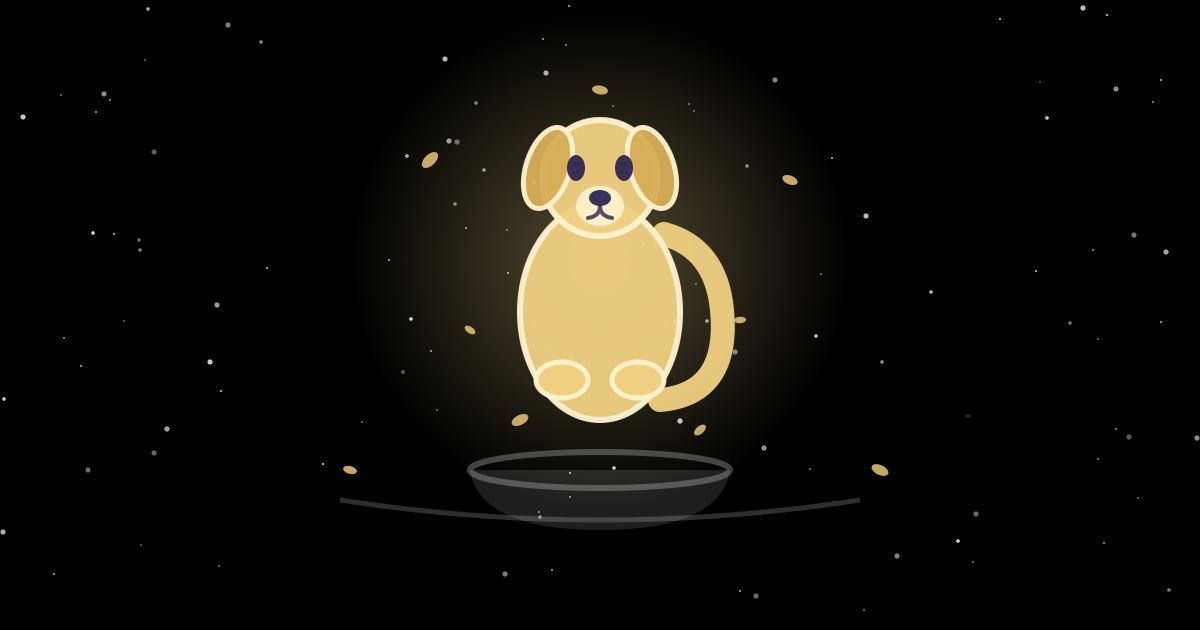
If the cat is the cup's most independent visitor, the dog is its most devoted one. Where the cat arrives on its own schedule, the dog arrives for you — ears up, tail ready, watching the door for trouble on your behalf. Dogs have walked beside humans for tens of thousands of years: guardians of the hearth, guides through the dark, the one animal that chose us back. That long partnership lives in the cup, and the classic tasseography texts read the dog as the symbol of loyalty rewarded, friendship you can count on, and protection standing watch. When the leaves settle into a pointed muzzle and floppy ears at the bottom of your cup, the reading is about the bonds that hold — and the bond-keeper you are becoming.
This guide covers everything the dog can tell you: its core meaning in tasseography, how the dog's posture and details refine the message, how position reveals timing, the combinations that show exactly where loyalty and friendship matter most in your life, and what to do once the leaves have shown you their dog.
The Core Meaning: Loyalty, Friendship, Protection
At its simplest, a dog means someone is loyal to you — or asking for your loyalty. Where the bird promises news and the heart promises love, the dog promises faithfulness — the friend who shows up, the partner who stands firm, the ally who does not flinch when things get difficult. Readers of the classic tasseography texts describe the dog as the symbol of devoted friendship: the cup's way of saying your support network is real, and stronger than you have been giving it credit for.
The second traditional meaning is protection and watchfulness. Dogs guard — literally — and the cup borrows that role as metaphor: the dog appears when you are being watched over, when your plans have a defender, when something you care about is under safe guard. A dog sitting alert at the rim is tasseography's quiet promise that the thing you are worried about is actually being handled.
The third is honesty and plain dealing: dogs do not pretend, and their appearance asks for the same from you. A dog in the cup can mean a truthful friend is about to speak plainly with you — or that you need to speak plainly yourself. And in the active sense, the dog is the symbol of service and companionship in the work ahead: the reminder that you do not have to carry everything alone, and that asking a faithful friend for help is not weakness — it is exactly what the bond is for.
Reading the Dog's Posture and Details
Dogs speak in body language, and the leaves borrow the whole vocabulary. A sitting dog, calm and attentive is the classic form: patient loyalty, a friend waiting in the wings, support that is ready when you are. This is the cup's most reassuring dog — someone is already positioned to help you.
Watch the tail. A dog with a wagging tail is the joyful form — good news arriving through a friend, a celebration shared, reconciliation with someone you care about. The wagging dog means the loyalty is happy, not just dutiful: warmth is coming your way. A dog lying down or sleeping means contented trust: the friendship at rest, no threat on the horizon, permission to relax your own guard. A sleeping dog in the cup is one of its gentlest signs — the old proverb about letting sleeping dogs lie applies in reverse here: peace is real, and you can trust it.
Special forms carry their own weight. A dog with its head raised, howling or baying is the call: a message traveling through friendship networks, news coming via word of mouth, or a loyal person raising their voice on your behalf. A dog standing alert with ears pricked is the guardian at full attention — pay attention yourself: something you care about needs your watchfulness too. Two dogs together traditionally mean a meeting of loyal people — a strong alliance, friends joining forces, a partnership built on mutual devotion. And a puppy softens everything into playfulness and new beginnings: a fresh friendship, a young bond being nurtured, joy returning to your life — handle it with tenderness and it will grow faithful.
Position: Where It Sits and What It Says About Timing
As with every symbol, position shapes the dog's message. Near the rim, close to the handle: the message is personal and imminent — a faithful friend thinking of you right now, help closer than you believe, loyalty keeping watch at your own door. The dog is at your side of the cup, and the support is already in your immediate orbit. Near the rim, far from the handle: someone else's loyalty in motion — a friend's situation, another person's devotion being tested, or a bond in your wider circle that needs your encouragement.
In the middle band: the themes developing over the coming weeks to months — a friendship deepening, an alliance forming, trust being built steadily. This is the "invest in your people" position: the dog is telling you that the relationships you nurture now will be the ones standing with you later. At the bottom of the cup: the deepest reading — a foundational truth about loyalty in your life: a lifelong friendship, a bond that has shaped who you are, or a lesson about what faithfulness really costs. The dog at the bottom speaks of the kind of devotion you will remember decades from now.
Direction matters too. A dog facing the handle looks toward you — its message is yours to receive: loyalty offered, help available, love unspoken but present. A dog facing away suggests the loyalty is directed elsewhere — a friend who needs your help rather than the reverse: the cup asks whether someone faithful in your life is quietly struggling. A dog walking toward the rim means help is approaching — the faithful one drawing nearer, the message or visit imminent. A dog walking toward the bottom can mean a bond receding — not necessarily broken, but drifting: the reading asks whether you have been feeding that friendship lately.
Dog Combinations: Reading the Neighbors
Dogs gain their finest detail from the symbols around them. Dog + heart: loyal love — the partner who stays, friendship turning romantic, or affection proved through actions rather than words. This is the cup's happiest pairing: devotion with warmth. Dog + house: the guardian at home — protection over your household, a family member's faithful care, or a home filled with the kind of loyalty that makes walls feel safe.
Dog + star: faithful guidance — a trusted advisor, a friend whose counsel you should heed, the person whose loyalty lights your path forward. Dog + key: loyalty unlocking doors — a friend's connection opening an opportunity, or faithfulness as the key to a situation that flattery could never open. Dog + bird: news from a friend — a message arriving through someone faithful, or word of a loyal person's whereabouts.
Dog + ring: committed bonds — an engagement or promise strengthened by true loyalty, or a friendship formalized into partnership. Dog + tree: deep-rooted friendship — bonds that have weathered seasons, the old friend who is practically family, growth through loyal connection. Dog + crown: loyalty honored — recognition for faithfulness, or the trustworthy person rising to a position of responsibility.
The cautionary pairings deserve equal attention. A barking or growling dog: an alert being sounded — a friend's warning you should not ignore, gossip brewing, or your own instincts raising the alarm. The bark is protective, not hostile: listen to the messenger. Dog + snake: loyalty tested by deception — a friend in a difficult spot, or someone's devotion pulling them in two directions: tread carefully and stay observant. A chained or restrained dog: loyalty under pressure — a faithful person feeling bound, or a friendship constrained by circumstance: the cup asks what needs loosening.
The Dog in Different Questions
The dog adapts beautifully to whatever you asked. In a career question, it is the loyal colleague's and the trusted deputy's symbol: a faithful work friend, a mentor in your corner, or recognition that your own reliability is your greatest professional asset. A dog with a key doubles this — a connection through work opening the right door. In a love question, the dog asks about devotion in affection — the partner who shows up, the love proved through consistency, or the nudge that the most faithful person in your orbit might be the romantic choice you keep overlooking.
In a finance question, the dog counsels trustworthy dealing — work with people whose loyalty you can verify, honor your financial promises, and be the reliable one in money matters. Watch for the companions: dog with tree suggests steady growth through sound bonds; a chained dog warns against obligations that constrain you. In a family question, the dog is the guardian of the household — fierce, tender family loyalty, a relative who would cross oceans for you, or your own role as the one who keeps everyone safe.
In a well-being reading, the dog speaks of companionship as medicine — the healing power of loyal company, the friend who listens without fixing, the comfort of being known. It also points to faithful habits: the routines that guard your health the way a dog guards its home — consistent, unglamorous, devoted. This is reflection and encouragement, not diagnosis or medical guidance: the cup offers the image of the animal that never abandons its post, and suggests you borrow its example.
When the Dog Looks Troubled
Sometimes the dog arrives in a worried form, and it's worth knowing the difference between "loyalty rewarded" and "loyalty strained." A barking or growling dog with bared teeth is the commonest troubled form — an alert, not an attack: gossip, a misunderstanding brewing, or a loyal friend's warning delivered urgently. The remedy is the dog's own: listen before you react, and check what the warning is guarding.
A dog with its back turned, walking away can mean a friendship cooling — not necessarily ended, but drifting: the cup asks whether you have been feeding that bond. A stray or neglected-looking dog suggests loyalty going unappreciated — someone faithful in your life feeling taken for granted, or your own devoted efforts unnoticed. Feed it: call the friend, thank the helper, notice the ones who notice you.
A dog fighting or tangled with another animal means conflict between loyalties — the tug of competing obligations, friends at odds, the painful position of being pulled both ways. The reading asks you to name the real conflict instead of barking at its edges. And if you asked for guidance and found no dog at all, look for its faithful cousins: the heart (loyal love), the house (guarded bonds), the key (trust that opens), or the star (guidance from someone true). Sometimes the cup answers with the question rather than the animal — or suggests that this season is for being the loyal one, and the dog will find you when you've proven worthy of it.
What to Do After Finding a Dog
A dog is a way of being, not a destination — and the best response is the faithful one: show up, stay steady, and let your loyalty be visible. If the reading suggests friendship, reach out to one faithful person today: the friend you keep meaning to call, the colleague who helped you, the family member who never asks for anything. Loyalty grows where it is noticed.
If the dog speaks of protection, do the guardian's work: tend the thing under your care — the project, the home, the person — with the dog's unhurried diligence. Protect what matters without fanfare. And if the dog arrived in a troubled form — barking, walking away, neglected — do the honest work of the faithful friend itself: listen to the warning, feed the cooling bond, thank the loyalty that has been feeding you.
Many readers mark a dog finding with a small ritual of gratitude: writing a letter of thanks to a faithful friend — sent or unsent — or spending unhurried time with someone loyal, doing nothing in particular together. However you honor it, let the dog remind you of tasseography's most devoted truth: nobody walks the whole road alone, and the ones who walk beside you are the fortune the cup is really talking about.
Frequently asked questions
What does a dog in tea leaves mean?
A dog in tea leaves traditionally means loyalty, friendship, and protection. It is the cup's promise that someone is in your corner — a faithful friend, a devoted partner, or an ally who will stand by you. A calm, friendly dog is one of the warmest signs in tasseography: support is near, and the bond you invest in is genuine.
Is a dog in tea leaves good luck?
Yes — a dog is one of the most encouraging symbols in tea leaf reading. It traditionally signals faithful friendship, reliable help arriving, and protection over your plans. A relaxed or playful dog means loyalty rewarded; only an aggressive or chained dog turns the reading cautionary, pointing to strained loyalty or a friendship that needs attention.
What does a dog near the handle mean in tea leaves?
The handle represents you, so a dog near it is a personal message about your own closest bonds. It traditionally means: a true friend is thinking of you right now, help is closer than you believe, and someone near you is ready to be of service. The dog at your side of the cup is loyalty keeping watch over you specifically.
What does a barking dog mean in tea leaves?
A barking dog is tasseography's alert: a warning being sounded on your behalf. Traditionally it means a loyal friend is trying to tell you something, a heads-up about gossip or a misunderstanding, or your own instincts raising an alarm. Listen to the messenger — the bark is protective, not hostile.
What does a dog with a puppy mean in tea leaves?
A dog with a puppy softens the loyalty reading into something new and tender: a fresh friendship beginning, a young bond being nurtured, or playfulness returning to your life. It traditionally points to new connections that will prove faithful, or a responsibility toward someone who trusts you completely.
Keep exploring

Tea Leaf Symbols Dictionary: 40+ Meanings from Anchor to Star
From anchor to star: explore 40+ classic tea leaf symbols and their traditional tasseography meanings, covering love, fortune, travel, caution and animals.
Read the meaning →
How to Read Tea Leaves: A Beginner's Step-by-Step Guide
Learn tea leaf reading step by step: choosing the right tea and cup, brewing with intention, swirling, inverting and interpreting the symbols left behind.
Read the meaning →
Cat Symbol in Tea Leaves: Independence, Intuition & What It Means
Spot a cat in your tea leaves? Discover its tasseography meaning — independence, intuition, and quiet mystery — plus posture details, position timing, cat combinations, and what to do next.
Read the meaning →
Heart Symbol in Tea Leaves: Love, Timing & What It Really Means
Seeing a heart in your tea leaves? Discover its tasseography meaning for love, how cup position reveals timing, key symbol combinations and what to do next.
Read the meaning →