
Moon Symbol in Tea Leaves: Intuition, Emotions & What It Means
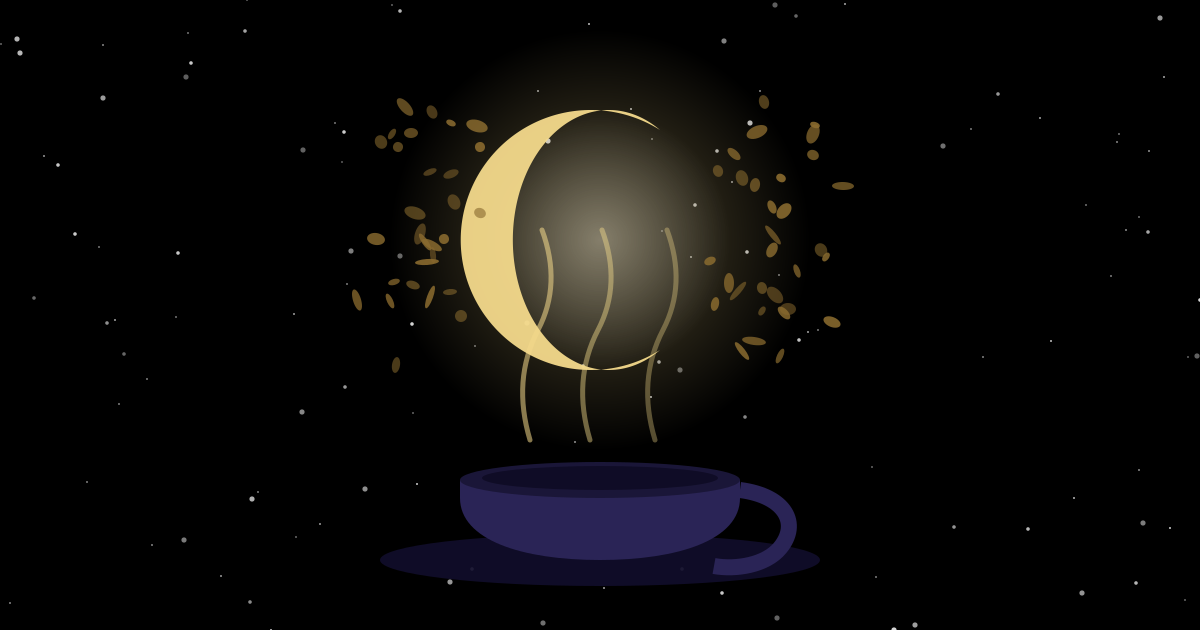
Few symbols carry as much quiet power as the moon. It has pulled the tides, marked the months, and stood watch over human sleep since before there were calendars to name its phases. In tasseography it plays the same role it plays in the sky: the great illuminator of what daylight hides. When the tea leaves settle into that curved, luminous shape, the reading turns inward — toward feelings, dreams, instincts, and the truths that surface only after dark. Where the star points outward at hope and direction, the moon points at you, and at everything moving quietly inside you.
This guide covers everything the moon can tell you: its core meaning, how the moon's phase and form refine the message, how position reveals timing, the combinations that show exactly where the moonlight is falling in your life, and what to do once the leaves have shown you your moon.
The Core Meaning: Intuition, Emotion, the Hidden Coming to Light
At its simplest, a moon means listen inward — something hidden is surfacing. It is the cup's symbol of the inner life: intuition, emotion, dreams, memory, and the parts of a situation that logic hasn't reached yet. Readers of the classic tasseography texts describe the moon as the sign that a truth is on its way up from the depths — not arrived yet, but moving: the feeling you keep pushing aside, the answer you already know, the change you sense before you can name it.
The second traditional meaning is cycles and timing. The moon is the keeper of rhythm — the menstrual month, the planting month, the month of high and low tides. When it appears in the cup, readers traditionally read it as a rhythm question: is something beginning, cresting, or waning? The moon asks you to look at where you are in the cycle rather than assuming everything is flat and linear.
The third is emotion made visible: feelings moving like water, a tender heart stirring, the feminine and receptive side of a situation asking for its due. The moon can herald romance, deepen a love reading, or simply signal that an emotional matter — yours or someone close to you — is reaching a point where it can no longer stay quiet. It is never an instruction to drown in feeling; it is an invitation to let feeling speak and then decide what to do with what it says.
Reading the Moon's Form: Crescent, Full, and In Between
The leaves rarely draw a generic moon — the phase matters enormously. A crescent moon is the commonest and gentlest form: new beginnings, something growing in the dark, a plan or feeling gathering strength. The waxing crescent (tips pointing up) traditionally means the new thing is strengthening — keep feeding it. The waning crescent (tips pointing down) means release — something old emptying out to make room. Either way the crescent is a patience symbol: what is forming needs its dark time before it can be seen.
A full moon is the dramatic reading: full illumination. Secrets revealed, emotions at their peak, a situation coming to its climax and becoming impossible to ignore. Old texts treat the full moon as the moment of exposure — whatever has been hidden comes into the open, for better or worse. It is also the peak of intuitive power: the reading traditionally says your inner knowing is strongest right now, so pay double attention to dreams and hunches.
A half moon splits the difference: a decision point, balance between the hidden and the shown, the moment of weighing. Readers treat it as the "two roads" moon — something is half-lit and you must choose whether to bring it fully into the light or let it rest. A thin sliver moon means the message is faint but real — a whisper of intuition, the very first stirring of a feeling or idea. Do not dismiss it for being small; slivers grow into full moons.
Special forms carry their own weight. A moon with a face — the old man-in-the-moon shape — is deeply personal: the reading involves a specific person, or your own conscience watching you. A double moon means doubled intuition or conflicting feelings: two truths tugging at once, and the need to sort which one is really yours. A moon wearing a halo (a ring of leaves around it) traditionally means protection around an emotional matter — the feeling is real, but you are safe to explore it.
Position: Where It Sits and What It Says About Timing
As with every symbol, position shapes the moon's message — and because the moon is the symbol of timing, position here works double duty. Near the rim, close to the handle: the inner matter is yours and it is now. Your intuition is peaking, an emotional realization is at the door, a private matter is coming into focus. The change is already in your immediate orbit; the moon is simply the night-light you have been needing.
Near the rim, far from the handle: someone else's inner world is about to touch yours — a loved one's feelings surfacing, a secret someone has been keeping, or news connected to family, home, or the night side of life. It can also mean influence arriving from afar: the distant thing you sense but cannot see.
In the middle band: the hidden is still ripening — the truth gathering over the coming weeks to months, the feeling still forming, the cycle mid-turn. This is the moon's classic "watch and wait" position: what is stirring is real, but it needs its dark time. At the bottom of the cup: the deepest reading — something from the unconscious moving up: a buried feeling, a forgotten dream, a pattern from long ago asking to be faced. The moon at the bottom speaks of the kind of inner work that changes you permanently.
Height matters here in a moon-specific way. A moon high in the cup means the revelation is close — the secret nearly out, the feeling nearly named, the dream nearly remembered. A moon low in the cup means the hidden is still deep — be patient, and keep listening. And a crescent pointing toward the handle traditionally means the new beginning is coming into your life; pointing away means it is moving toward someone else's orbit — perhaps a gift to give rather than receive.
Moon Combinations: Reading the Neighbors
The moon gains its finest detail from the symbols around it. Moon + star: intuition guiding hope — trust the quiet knowing: dreams, hunches, and night-time clarity point the way. This is one of the cup's most reassuring pairings — the feeling is right and the direction is good.
Moon + sun: the hidden and the shown in balance — a secret coming into the open, emotions finding their daylight expression, the private becoming public with your consent. Moon + heart: deep feeling — love moving beneath the surface: a romance you have not admitted to, affection growing quietly, or an emotional truth about a relationship ready to be spoken.
Moon + key: the secret unlocked — the hidden truth about to be revealed: the missing information arriving, the thing someone wouldn't say finally said. Moon + birds: news traveling in the dark — messages arriving late, the rumor reaching you, intuition confirmed by something you hear. Moon + clouds: the classic emotional fog — feelings confused, the truth obscured: do not make the big decision until the sky clears.
Moon + water or waves: emotions in motion — feelings rising like a tide: grief, joy, or longing moving through you rather than stuck in you. Moon + tree: family and the roots of feeling — something in the family's emotional soil stirring: the old pattern, the inherited sensitivity, the thing nobody talks about that everyone feels. Moon + ring: a bond seen by moonlight — a relationship entering its deeper phase: the commitment questioned, deepened, or redefined by what surfaces.
The cautionary pairings deserve equal attention. Moon + snake: deception hiding in the dark — someone's hidden motives, or your own self-deception about a feeling. Moon + cross or heavy lines: an emotional burden in the shadows — the worry you carry at night, the fear you haven't named. A dark or eclipsed moon: the truth obscured — confusion in the emotional waters, intuition blocked by noise. This is not a verdict of doom; it is the cup's way of saying wait for the clouds to pass.
The Moon in Different Questions
The moon adapts beautifully to whatever you asked. In a love question, it is among the most significant symbols: hidden feelings — yours or theirs — a romance deepening below the surface, or an emotional truth about the relationship ready to surface. Moon with a heart is the deepening-love reading; moon with a ring is the relationship entering a more serious or more honest phase. The moon asks lovers to say the thing they have been circling.
In a career question, the moon speaks of work behind the scenes: the project gestating, the promotion being discussed when you are not in the room, the creative idea forming in the dark. It can also warn of office undercurrents — the unspoken tension, the politics beneath the surface — and advises watching more than you say. In a finance question, the moon counsels caution around the hidden: money matters not fully visible, a deal with undisclosed terms, or your own emotional spending asking for honesty. Full moon finances often mean everything comes out — for better or worse, nothing stays buried.
In a family question, the moon is the household's inner weather — a family feeling no one has named, the matriarchal line's influence, or the home's emotional temperature shifting. It asks for gentleness: bring things into the light kindly, not explosively. In a question about children or creativity, the moon traditionally speaks of new life in the broadest sense — the baby, the book, the business, the garden — whatever is being born through you. (Take the old pregnancy association as folklore and a nudge toward reflection, never as a medical prediction.)
In a well-being reading, the moon speaks of rest, rhythm, and the inner weather: sleep asking for its due, emotional fatigue asking for kindness, the body's cycles asking to be honored rather than overridden. This is reflection and encouragement, not diagnosis or medical guidance: the cup offers the image of the tide turning, and the wise response is to work with your own rhythms — rest when you are low, act when the light is full.
When the Moon Looks Troubled
Sometimes the moon arrives in a worried form, and it's worth knowing the difference between "the hidden surfacing" and "the hidden stuck." An eclipsed or darkened moon is the commonest troubled form — the light blocked: a truth not yet visible, confusion in the emotional waters, or intuition drowned out by noise. The remedy is patience and clearing: reduce the noise, sleep on it, and wait for the shadow to pass. The light always comes back.
A moon behind clouds means the feeling is real but the view is obscured — you sense something but cannot name it yet. Do not force clarity; let it gather. A cracked or broken moon suggests disrupted rhythm — sleep broken, cycles interrupted, the inner life scattered by too much demand. The advice is restoration: guard your rest, simplify, and let the pieces reassemble on their own schedule.
A moon sinking into darkness is the cup's gentle warning about a feeling being buried too deep — the grief unexpressed, the anger swallowed, the truth you won't admit even to yourself. The reading asks you to bring it up gently: write it, speak it to one trusted person, or simply name it to yourself in the dark of your own room. And a moon paired with threatening symbols — snake, dagger, storm clouds — is the warning reading: hidden opposition, the concealed motive, the thing someone hopes you won't notice. Forewarned, the cup suggests, is forearmed — but verify before you act, because the moonlit world is also the world of shadows that aren't really there.
And if you asked for insight and found no moon at all, look for its quieter cousins: the candle or flame (the small light of knowing), the well or pool (the deep place where truth sits), the owl (the night watcher), or the mirror (the self reflected). Sometimes the cup answers with the guide rather than the goal — or suggests that this season is for daylight work, and that the moon will rise when the dark is ready for it.
What to Do After Finding a Moon
A moon is an invitation, not a verdict — and the best response is the night-watcher's one: get quiet, then listen. If the reading suggests intuition, make space for it to speak: ten minutes of writing without editing, a walk with no phone, the dream you jot down before your feet hit the floor. Intuition is a quiet voice; it doesn't shout over noise, so the first work is always the clearing.
If the moon speaks of a hidden truth, do the gentle work of uncovering: ask the direct question you have been avoiding, read the message twice, notice what you feel in your body when the topic comes up. Bodies keep the ledger the mind won't balance. And if the moon arrived in a troubled form — darkened, clouded, broken — do the unglamorous work of restoring the rhythm: protect your sleep, say no to one draining thing, let the cycle complete before you judge it. Moons are patient — they keep their schedule regardless of your worry, and they are still there when the clouds move.
Many readers mark a moon finding with a small night ritual: stepping outside to find the real moon and holding the question beside it, writing down the feeling the leaves surfaced and dating it to check later, or simply keeping a three-night dream journal starting that evening. However you honor it, let the moon remind you of tasseography's most luminous truth: the night is not the absence of knowledge — it is where the deepest knowledge waits to be heard, and right now, yours is speaking.
Frequently asked questions
What does a moon in tea leaves mean?
A moon is the cup's symbol of intuition, emotions, and the inner life. It traditionally means that something hidden is about to surface — a truth coming to light, a feeling that needs your attention, or your own instincts trying to get a word in. Readers treat the moon as a call to trust what you already sense.
What is the difference between a crescent moon and a full moon in tea leaves?
A crescent moon traditionally means new beginnings and things growing in the dark: a project, feeling, or plan gathering strength. A full moon means full illumination — secrets revealed, emotions at their peak, a situation coming to its climax and becoming impossible to ignore.
What does a moon near the handle mean in tea leaves?
The handle represents you, so a moon near it points at your own inner world: your intuition heightening, your emotional life demanding attention, or a private matter coming into focus. It traditionally suggests you already know the answer you are asking about — the moon is asking you to listen to yourself.
Is a moon in tea leaves a sign of pregnancy?
Traditional tasseography does link the moon — especially a full moon — with fertility, conception, and new beginnings, so old texts list pregnancy among its possible meanings. Readers today usually treat it more broadly: the birth of anything new, from projects and ideas to new chapters. Take the old reading as folklore and reflection, not a medical prediction.
What does a dark or eclipsed moon mean in tea leaves?
A darkened or eclipsed moon traditionally means something is being obscured: a truth not yet visible, confusion in the emotional waters, or intuition blocked by noise. It is read as a caution to wait for clarity rather than a bad omen — the light is coming back, but the sky is cloudy right now.
Keep exploring
Tea Leaf Symbols Dictionary: 40+ Meanings from Anchor to Star
From anchor to star: explore 40+ classic tea leaf symbols and their traditional tasseography meanings, covering love, fortune, travel, caution and animals.
Read the meaning →
How to Read Tea Leaves: A Beginner's Step-by-Step Guide
Learn tea leaf reading step by step: choosing the right tea and cup, brewing with intention, swirling, inverting and interpreting the symbols left behind.
Read the meaning →
Star Symbol in Tea Leaves: Hope, Guidance & What It Means
Spot a star in your tea leaves? Discover its tasseography meaning — hope, guidance, and good fortune — plus position timing, star symbol combinations, and what to do next.
Read the meaning →
Heart Symbol in Tea Leaves: Love, Emotion & What It Means
Spot a heart in your tea leaves? Discover its tasseography meaning — love, emotion, and matters of the heart — plus position timing, heart combinations, and what to do next.
Read the meaning →