
Black Moon Meaning: The Rare Second New Moon & Its Spiritual Significance
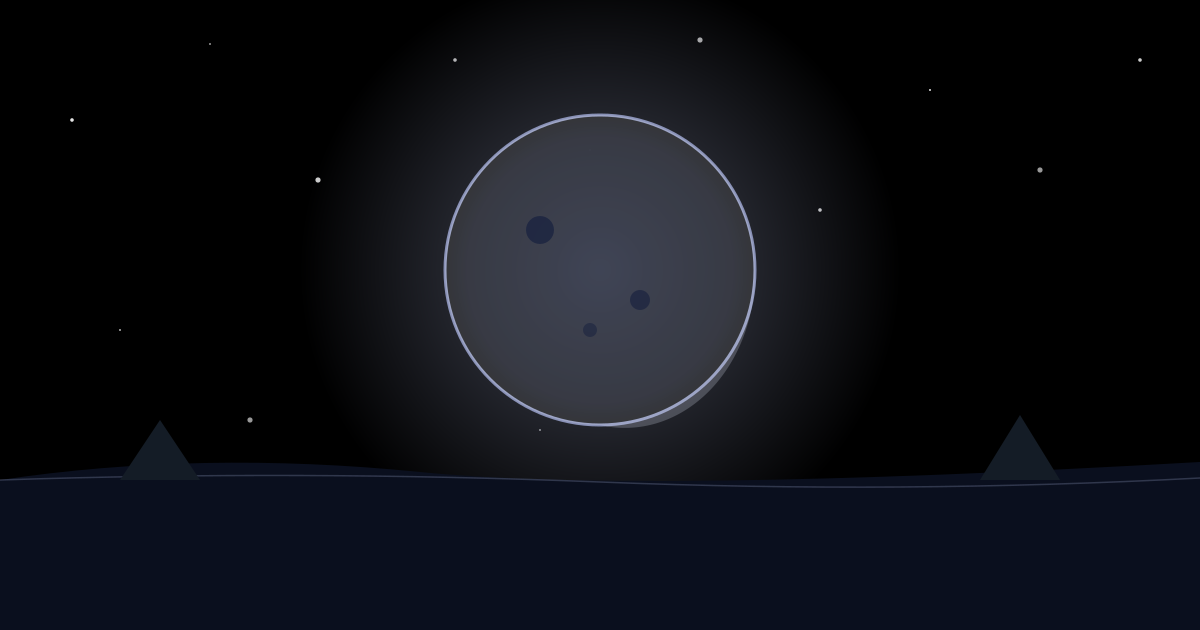
What Is a Black Moon?
The Black Moon is the new moon's answer to the Blue Moon, and it is defined by a calendrical quirk rather than anything you can see in the sky. The lunar cycle lasts about 29.5 days, while our calendar months run 28 to 31 days. That mismatch means that, every so often, the schedule slips and an extra new moon lands where one is not expected. That extra moon is the Black Moon.
There are two competing definitions, and both are in common use, which is worth knowing before you read any article that treats one of them as the only truth. The calendar definition is the most popular: a Black Moon is the second new moon in a single calendar month. This only happens in months with 31 days that open with a new moon early enough for a second one to fit before the month ends, which is why it is rare. The seasonal definition mirrors the older, seasonal definition of the Blue Moon: a Black Moon is the third new moon in an astronomical season that contains four new moons. A season normally has three new moons, one per month, so a season with four has an extra — and the third of the four takes the name.
Whichever definition you prefer, the astronomy underneath is the same: a new moon is the moment the Moon passes between Earth and the Sun, so its lit side faces away from us and its dark side faces us. It rises and sets with the Sun and is lost in daylight glare. A Black Moon is therefore not a moon you watch. It is a moon you mark. The event is calendrical and symbolic, not visual — and that invisibility turns out to be the whole point of its folklore.
Why Is It Called a Black Moon?
The name is modern, not ancient, and honesty about that matters. The named full moons — Wolf, Snow, Harvest, Hunter's — come from North American folk tradition popularized by the Old Farmer's Almanac, but the Black Moon does not appear in that tradition. It emerged in modern pagan and astrological writing as the natural counterpart to the Blue Moon: if the rare second full moon in a month is blue, then the rare second new moon in a month is black. The color is poetic, not literal — the Moon is not black, and no moon is ever blue either. Both names are folk labels for calendar extras.
The name also fits the moon's character. New moons are already the dark phase of the cycle, the nights when the sky is at its blackest and the stars are at their brightest. A Black Moon doubles that darkness: an extra night with no moonlight at all, arriving out of schedule. In modern witchcraft and lunar spirituality, the dark moon — the last day or two before the new moon — already has its own meaning: rest, banishing, and turning inward. The Black Moon inherits that whole vocabulary and amplifies it, because it is not just a dark night but a dark moon that was not supposed to be there.
There is also a second, looser use of the term worth untangling. In astrology, "Black Moon Lilith" is a calculated point in the chart — the Moon's empty focal point — not a phase of the actual Moon at all. Articles about Lilith and articles about the Black Moon phase are about two different things that happen to share a name. If you came here from a Lilith article, the phase described on this page is the calendrical one: a real new moon, in a rare slot, that you cannot see.
The Spiritual Meaning of the Black Moon
If a normal new moon is the moon of intentions, the Black Moon is the moon of the intentions you have not admitted yet. Its folklore gathers around three themes, and they are all darker, quieter, and more private than the usual new-moon language of fresh starts and vision boards.
Shadow work
The dominant theme is shadow work — the practice of looking honestly at the parts of yourself you usually edit out: the envy, the resentment, the fear, the want you are embarrassed to name. The Black Moon's lore frames darkness not as evil but as privacy. A seed germinates underground, in the dark, before anything green shows. The Black Moon is that underground phase. The reflective prompt is uncomfortable on purpose: what are you pretending not to want, not to feel, or not to be? The folklore says the extra dark moon is the one safe night to answer without an audience, even an audience of one journal page you might reread later.
Hidden potential
The second theme is potential that has not declared itself yet. Ordinary new-moon lore is full of announcements: write the goal, speak the intention, plant the seed where everyone can see it. Black Moon lore reverses that. Some beginnings are fragile precisely because they are announced too early — the idea that dies the moment it meets someone else's opinion, the plan that wilts under advice. The Black Moon's symbolism protects the unannounced: the draft nobody has read, the skill practiced in private, the decision still forming. Its emotional weather is patience without performance. Nothing has to be visible to be real.
Rest before the beginning
The third theme is the most practical and the most ignored: genuine rest. New-moon culture is oddly industrious — every dark moon becomes a productivity event with a checklist. Black Moon folklore pushes back. An extra new moon is, by definition, a surplus: a night the calendar did not plan for. The lore reads that surplus as permission to do nothing at all. Sleep early, cancel the ritual, let the night pass unmarked. The reflective question is the simplest of the three: are you tired in a way that a new beginning will not fix, because what you actually need is rest first?
Black Moon vs. Blue Moon: The Mirror Pair
The Black Moon and the Blue Moon are mirror images, and comparing them is the fastest way to understand both. The Blue Moon is the extra full moon: the second full moon in a month, or the third in a season with four. The Black Moon is the extra new moon: the second new moon in a month, or the third in a season with four. They occur with roughly the same rarity, about once every 29 months each, because both are produced by the same 29.5-day cycle slipping against the calendar.
The folklore mirrors too, in opposite directions. The Blue Moon is the moon of celebration and rarity — "once in a blue moon" is a saying about things that almost never happen, and its spiritual lore is about gratitude for the unusual and the joyful. The Black Moon is the moon of privacy and depth — its lore is about what happens out of sight. One is a spotlight; the other is a dark room. One says "look at this, it almost never happens." The other says "nobody is looking, and that is the point."
There is one more difference that matters for watching the sky: you can see a Blue Moon, and it is spectacular — a second full moon in a month is a bright, obvious event. You cannot see a Black Moon at all. Its gift is the opposite of spectacle: the darkest night of the month, when the stars are at their clearest because there is no moonlight to wash them out. If you want to mark a Black Moon, go outside and look at everything except the Moon.
What the Black Moon Means for You: Three Reflection Themes
If you want to work with the symbolism rather than just read about it, the lore suggests three questions, one per theme. These are journaling prompts, not cosmic instructions — the Moon will do whatever it does regardless, and the value is in the ten minutes of honesty.
The unadmitted want. What do you want that you have not said out loud, even to yourself? Write it in a form you will destroy or keep somewhere genuinely private. The Black Moon's lore treats naming a hidden want as the whole ritual — no plan, no timeline, no announcement required. Some wants only need to be admitted before they can start becoming real.
The unannounced beginning. What are you growing that is too young for opinions? A draft, a practice, a decision, a version of yourself that is still forming. The lore's instruction is to protect it: no advice sought, no progress posted, no premature unveiling. Give it one more dark moon of privacy and see what it becomes on its own.
The rest audit. Are you actually rested? Not "caught up," not "fine," but rested in the way that makes new beginnings possible rather than obligatory. The Black Moon's lore says that if the answer is no, the correct ritual is sleep — early, long, and without guilt. A beginning built on exhaustion is just a collapse with a prettier name.
A Simple Black Moon Ritual: The Blank Page
The Black Moon's ritual is deliberately the smallest one in this whole lunar series: ten minutes, one blank page, no supplies, no candles, no audience. You will need paper and a pen, and a room dark enough that you are not performing for anyone, including yourself in the mirror.
First, sit in the dark for two minutes and do nothing. This is not meditation with a goal; it is just letting your eyes adjust, the way they would outside on a moonless night. Then write one sentence: the thing you have not admitted you want, or the beginning you are keeping private, or simply "I am tired" if that is the truest sentence available. Write it once, plainly, without explaining it to yourself.
Then fold the page and put it somewhere private — inside a book you will not open for months, at the back of a drawer, or in the recycling if the point was the writing itself. The folklore says the hidden word works in the dark the way a seed does; the psychology says that writing a truth down once, without an audience, makes it harder to keep pretending you do not know it. Do it on the Black Moon night or any night in the week around it — the folklore is generous about timing, and darkness is forgiving about everything.
The Honest Fine Print
This is a mystical-entertainment site, and the usual honesty applies: a Black Moon will not change your luck, reveal your future, or punish you for ignoring it. It is an ordinary new moon that happens to fall in an unusual calendar slot, and the folklore around it is modern storytelling, not ancient wisdom and not a force of nature. The internet's wilder claims about Black Moons — that they bring disaster, open portals, or supercharge spells — are dramatization, not tradition. A moon you cannot see is not doing anything to you.
What the Black Moon genuinely offers is the year's best-timed excuse for privacy. It arrives exactly when the sky is at its darkest, and a named, storied dark moon is a better journaling prompt than a blank page. Take the symbolism, leave the superstition, and keep the page folded. The sentence is real regardless of what the Moon was doing.
Your Black Moon Game Plan
Black Moons are rare — roughly once every 29 months — so the next one is worth marking rather than rushing. If you want to catch it:
- When to look: you cannot see a Black Moon, so look at the stars instead — the moonless night is the darkest of the month, and the Milky Way and faint constellations show at their best.
- Where to look: anywhere away from city lights, after full dark; the absence of moonlight is the whole event, and a dark-sky spot makes it dramatic.
- The ritual night: do the ten-minute blank page on the new moon night itself, or any evening in the week around it — the folklore is generous about timing.
- The follow-through: the lore's real assignment comes after: the want you admitted, the beginning you protected, the rest you finally took. A dark moon is a prompt; the month after is the answer.
The Black Moon has been slipping quietly into the calendar for as long as there have been calendars to slip into. Go outside on the darkest night, look at the stars, and let the dark be what it is: the part of the cycle where things begin before anyone can see them.
Frequently asked questions
What is a Black Moon?
A Black Moon is a rare new moon event. Under the most common definition, it is the second new moon in a single calendar month. Under the seasonal definition, it is the third new moon in a season that contains four new moons. Both definitions describe the same idea: an extra new moon that the usual rhythm of one new moon per month does not account for.
Can you see a Black Moon?
No. A new moon sits between Earth and the Sun, so its dark side faces us and it is lost in the Sun's glare. A Black Moon is invisible for the same reason every new moon is invisible. What makes it special is not something you can photograph in the sky, but the rarity of the timing — an extra dark moon in the calendar.
What is the spiritual meaning of a Black Moon?
In modern spiritual folklore, the Black Moon symbolizes shadow work, hidden potential, and beginnings that start in darkness rather than in light. Where a normal new moon is about setting intentions, the Black Moon is about the intentions you have not admitted yet — the quiet truths, the shelved dreams, and the rest that comes before any real beginning. The practice is reflective entertainment, not a guaranteed result.
Is a Black Moon dangerous or bad luck?
No. A Black Moon is an ordinary new moon that happens to fall in an unusual slot in the calendar. It has no special physical effect on Earth beyond a normal new moon, and the folklore around it is overwhelmingly about reflection and rest, not danger. Claims that it brings disaster are modern internet dramatization, not traditional lore.
How often does a Black Moon happen?
Roughly once every 29 months, depending on which definition you use — about the same rarity as a Blue Moon, which is its full-moon mirror image. Because the lunar cycle is about 29.5 days and calendar months run 28 to 31 days, an extra new moon occasionally slips into a month or a season. Check a current moon-phase calendar for the next date.
Keep exploring
Blue Moon Spiritual Meaning: Rare Lunar Energy & How to Work With It
What is a blue moon? Discover the astronomy behind the rare second full moon, its spiritual significance, and a simple blue moon ritual.
Read the meaning →
New Moon Intentions Ritual: How to Set Intentions That Manifest
Discover the new moon intentions ritual step by step — how to write powerful intentions, time your ritual, and tend your goals through the waxing moon.
Read the meaning →
Full Moon Ritual Guide: Release & Manifest Under the Full Moon
Learn exactly how to perform a powerful full moon ritual for release, gratitude, and renewal — step-by-step guide with supplies, timing, and intention ideas.
Read the meaning →
Supermoon Meaning: Spiritual Significance of the Year's Biggest Full Moon
What is a supermoon? The astronomy behind the year's biggest full moon, the 2026 supermoon dates, its spiritual meaning, and a simple supermoon ritual.
Read the meaning →