
Tree Symbol in Tea Leaves: Growth, Roots & What It Means
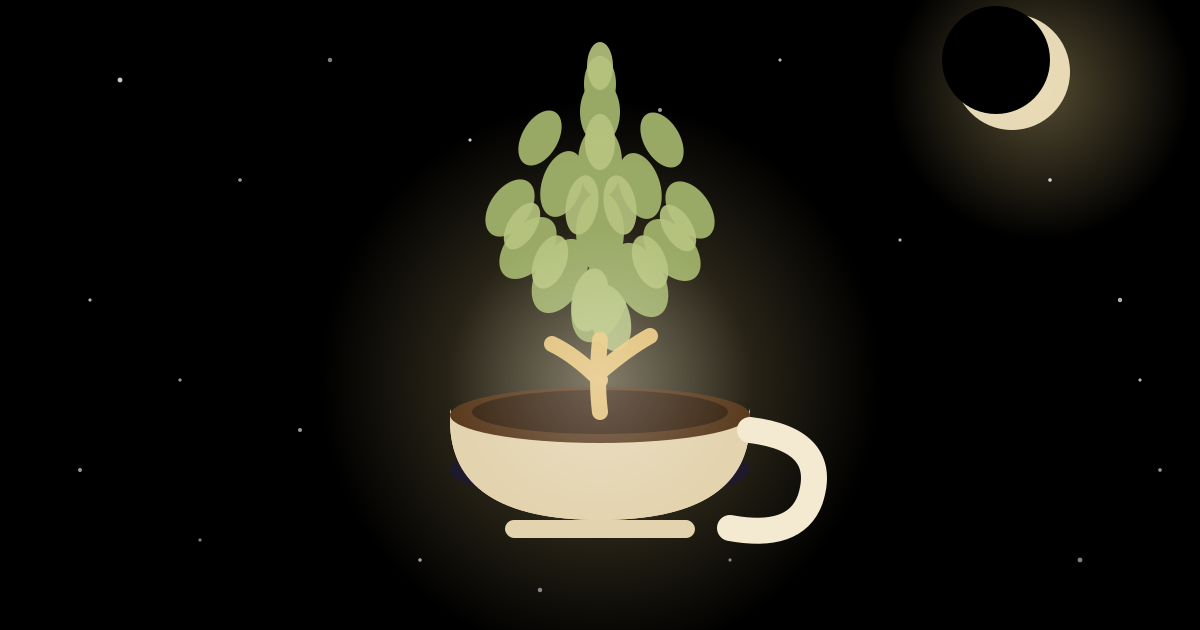
There is something quietly thrilling about finding a tree in your cup. Most tea-leaf symbols are small and quick — birds, keys, letters, hearts — but the tree is different. It has a trunk, branches, roots, seasons. It is the one symbol that seems to say: look how far this has come, and look how much further it will go. Across cultures, trees have stood for life itself — the Tree of Life, the family tree, the Bodhi tree under which understanding arrived, the oaks and yews that outlasted entire civilizations. When the leaves settle into that branching shape at the bottom of your cup, the reading is about endurance, growth, and the deep strength of roots you may not have known you had.
This guide covers everything the tree can tell you: its core meaning, how the tree's form and details refine the message, how position reveals timing, the combinations that show exactly what is growing in your life, and what to do once the leaves have shown you your roots.
The Core Meaning: Growth, Roots, Strength
At its simplest, a tree means something is growing and it is here to stay. Where the bird promises movement and the anchor promises steadiness, the tree promises development over time — a project maturing from seedling to something sturdy, a skill deepening from effort into mastery, a relationship settling from spark into root system. Readers of the old tasseography texts describe the tree as the cup's most patient symbol: it never promises overnight change, but it quietly confirms that the slow work is working.
The second traditional meaning is roots — family, heritage, home, and the foundations beneath your life. A tree in the cup often points to the family circle: bonds that hold, support that runs deeper than you admit, or a question about where you come from and where you belong. It can also mean a literal rooting — settling into a home, a city, a community, a commitment — after a season of movement.
The third is strength and health: vitality returning, resilience building, a sense of being able to weather things that once would have snapped you. The tree is the cup's image of the person who bends in the storm and stands taller after it — and when it appears, readers traditionally read it as encouragement: you are stronger than this season has let you feel.
Reading the Tree's Details
The leaves never draw by accident, and the tree's form sharpens its message. A tall, full tree with spreading branches is the strongest form: thriving growth, ambitions reaching high, a project or bond that is flourishing in every direction. A young sapling or small tree is the early-growth reading — something new is taking root: a fresh venture, a new relationship, a habit just beginning. Small does not mean weak here; saplings are the future forests, and the cup is asking you to protect this beginning.
Look at the foliage. A tree heavy with leaves traditionally means abundance and vitality — energy available, resources flowing, a healthy season. A bare-branched tree is the winter reading: a dormant phase, a rest before the next growth spurt, a time to conserve energy rather than worry about the lack of leaves. A tree with blossoms or fruit is the harvest reading — efforts bearing results, rewards arriving, the season of planting giving way to the season of picking. And deep, visible roots mean foundations: the strength is in what is underneath — the preparation, the family support, the groundwork — and it will hold.
When the tree's species is recognizable, readers give it extra weight. An oak means enduring strength and protection — something built to last, a person or promise you can lean on. A willow means grace under pressure — bending without breaking, emotional resilience, the wisdom of flexibility. A pine or evergreen means constancy — the thing that stays green all year: loyalty, a permanent bond, an unchanging foundation. An olive tree means peace taking root — reconciliation, harmony arriving in a troubled area. A fruit tree means the payoff — abundance arriving from patient effort. And multiple trees together — a grove or forest — traditionally mean community: family networks, friendships, a whole circle of people growing alongside you.
Position: Where It Sits and What It Says About Timing
As with every symbol, position shapes the tree's message. Near the rim, close to the handle: the growth is personal and imminent — your own project flourishing, your own vitality strengthening, your own roots deepening. The change is already underway in your immediate life; the tree is simply confirming what you have been sensing. Near the rim, far from the handle: growth at a distance — a family member's success, a project in another place taking root, good news from the extended circle.
In the middle band: growth developing over the coming weeks to months — the project still in its sapling stage, the relationship still putting down roots, the habit still becoming second nature. This is the "tending" position: what the tree promises needs your continued watering, and your job is consistency, not urgency. At the bottom of the cup: the deepest reading — foundational change: a shift in your roots, your identity, your sense of home, or a long-term development unfolding at destiny scale. The tree at the bottom speaks of the kind of growth you will look back on in five years.
Size matters with trees more than most symbols. A large tree dominating the cup means a major growth theme — the dominant story of this season: the career you are building, the family you are rooted in, the self you are becoming. A small tree tucked in a corner is a quieter promise — a modest but meaningful development, the seedling worth protecting. And a tree leaning in a particular direction suggests where the growth is heading: toward the handle, toward you and your immediate life; away from it, toward the wider world.
Tree Combinations: Reading the Neighbors
Trees gain their finest detail from the symbols around them. Tree + sun: thriving growth — the cup's happiest combination: health, success, and vitality all flourishing together, the season going well in every direction. Tree + house: the rooted home — settling in, family stability, domestic foundations strengthening: the move that works out, the household finding its rhythm.
Tree + birds: growth taking wing — a maturing project ready to be shared, roots strong enough to support flight: the launch after the long build, the family member striking out on their own with your support behind them. Tree + ring: a deepening commitment — roots growing together: engagement, partnership, a bond becoming permanent. Tree + heart: love putting down roots — a relationship maturing past the infatuation stage into something rooted and real, or family love strengthening.
Tree + mountain: growth that requires patience — slow progress through obstacles, the project that takes longer than planned but arrives stronger. Not stalled, just tested: the tree on the mountainside grows slowly and becomes the sturdiest of all. Tree + coins or money: prosperity growing — financial foundations strengthening, savings putting down roots, a business maturing toward stability. Tree + clouds: uncertain growth — the development is real but the season is foggy: a project with an unclear outcome, a family situation awaiting clarity. Tend it, but wait for the sky to clear before harvesting.
The cautionary pairings deserve equal attention. Tree + axe or sharp lines: a threat to what is growing — a cut that needs attention: the overspending that threatens the savings, the neglect that threatens the relationship, the burnout that threatens the health. Prune the threat, not the tree. Tree + snake: a warning about the soil — something in the environment working against the growth: a draining influence, a toxic pattern, or advice that needs verifying. The tree can still grow, but check what is planted around it.
The Tree in Different Questions
The tree adapts beautifully to whatever you asked. In a career question, it is among the most encouraging symbols: a career putting down roots, skills maturing into mastery, a business growing steadily toward real stability. A fruit-bearing tree doubles this reading — the payoff phase of the professional project, the promotion or client that finally arrives. In a love question, the tree means deepening — the relationship moving from spark to root system, love becoming part of the foundation of life rather than its decoration. The oak deepens it: endurance, the bond that weathers storms.
In a finance question, the tree counsels long-term thinking — savings growing, investments maturing, financial foundations strengthening year by year. Watch for the sapling-versus-oak distinction: a young tree suggests the strategy is right but early; an old tree suggests established security. In a family question, the tree is the most direct symbol of all — the family tree itself: bonds holding, generations connected, a question about roots or heritage finding its answer. A grove of trees means the whole circle — everyone growing, everyone held. In a health or well-being reading, the tree speaks of vitality — strength returning, resilience building, the body and spirit recovering their green. This is reflection and encouragement, not diagnosis: the cup offers the image of strength, and the wise response is to keep tending yourself.
When the Tree Looks Troubled
Sometimes the tree arrives in a worried form, and it's worth knowing the difference between "growth in progress" and "growth under strain." A broken or fallen tree is the clearest troubled form — something that needs tending: the family tension to address, the project that has stalled, your own energy running on empty. The advice is practical rather than fatalistic: trees recover — they are regrown from stumps, grafted back together, given a season to rest. Name what is strained and start the repair.
A bare or withered tree suggests dormancy or depletion — a project in its winter, a relationship in a cold season, your own reserves running low. The remedy is rest, not panic: winter is not death; it is the season before spring. A tree with severed roots — roots cut or shallow — points to foundations needing attention: the move that never quite became home, the commitment that never quite became real, the support you never quite accepted. The reading asks you to plant yourself more fully wherever you are.
And if you asked about growth and found no tree at all, look for its quieter cousins: the seed or seedling (the beginning itself), the sprout (first green), the mountain (the slow climb), or the sun (the energy that makes things grow). Sometimes the cup answers with the season rather than the plant — or suggests that this season is for sowing, not harvesting, and that the tree will be there when it is ready.
What to Do After Finding a Tree
A tree is an invitation to tend, not a guarantee of a harvest — and the best response is the gardener's one: steady, patient care. If the reading suggests growth, keep watering what is working: the habit that is sticking, the project gaining momentum, the relationship deepening. Trees reward consistency far more than intensity — a little care every day beats a heroic effort once a year.
If the tree speaks of roots, do the grounding work: call the family member, mend the fence, unpack the last box, commit to the place or the person. Rootedness is built from small acts of staying. And if the tree arrived in a troubled form, do the unglamorous work of tending the strain: rest the tired branch, prune the draining obligation, address the tension before it hardens. Trees are forgiving — they want to grow, and they will, if you give them a season.
Many readers mark a tree finding with a small ritual of grounding: planting something — even a herb on a windowsill — as a living echo of the reading, spending time under a real tree and noticing how it holds its ground, or simply writing down what they want to grow this season. However you honor it, let the tree remind you of tasseography's most patient truth: the things that last are the things that are tended, and right now, you are growing something worth keeping.
Frequently asked questions
What does a tree in tea leaves mean?
A tree is one of tasseography's most grounded symbols. It traditionally means growth, strength, and roots: a project maturing, family bonds holding firm, or personal development finally showing results. Readers treat it as a sign of long-term stability — something in your life is putting down roots and beginning to flourish.
Is a tree in tea leaves good luck?
Yes, the tree is considered a very positive symbol, linked to growth, health, prosperity, and family continuity. The one cautionary form is the broken or fallen tree, which suggests a period where something needs repair or rest — less a prediction of disaster than a nudge to tend what matters.
What does a tree near the handle mean in tea leaves?
The handle represents you, so a tree close to it means the growth is personal and imminent: your own project flourishing, your own health and vitality strengthening, your own roots deepening. It traditionally suggests the change is already underway in your immediate life rather than far off.
What does a broken or fallen tree mean in tea leaves?
A broken or fallen tree traditionally means something needs tending: a family tension to address, a project that has stalled, or your own energy running on empty. It is guidance rather than doom — trees recover, and the reading asks you to prune, rest, and rebuild rather than panic.
What does a tree with fruit mean in tea leaves?
A tree with fruit or blossoms is the cup's way of showing the payoff: efforts bearing results, a harvest moment approaching. It traditionally means abundance, rewards, or a project about to deliver — the season of planting is giving way to the season of picking.
Keep exploring

Tea Leaf Symbols Dictionary: 40+ Meanings from Anchor to Star
From anchor to star: explore 40+ classic tea leaf symbols and their traditional tasseography meanings, covering love, fortune, travel, caution and animals.
Read the meaning →
How to Read Tea Leaves: A Beginner's Step-by-Step Guide
Learn tea leaf reading step by step: choosing the right tea and cup, brewing with intention, swirling, inverting and interpreting the symbols left behind.
Read the meaning →
Anchor Symbol in Tea Leaves: Stability, Hope & What It Means
Spotting an anchor in your tea leaves? Discover its tasseography meaning — stability, hope, and calmer waters ahead — plus position timing, key combinations, and what to do next.
Read the meaning →
Bird Symbol in Tea Leaves: Travel, News & What It Means
Spot a bird in your tea leaves? Discover its tasseography meaning — travel, good news, and freedom taking flight — plus position timing, bird combinations, and what to do next.
Read the meaning →